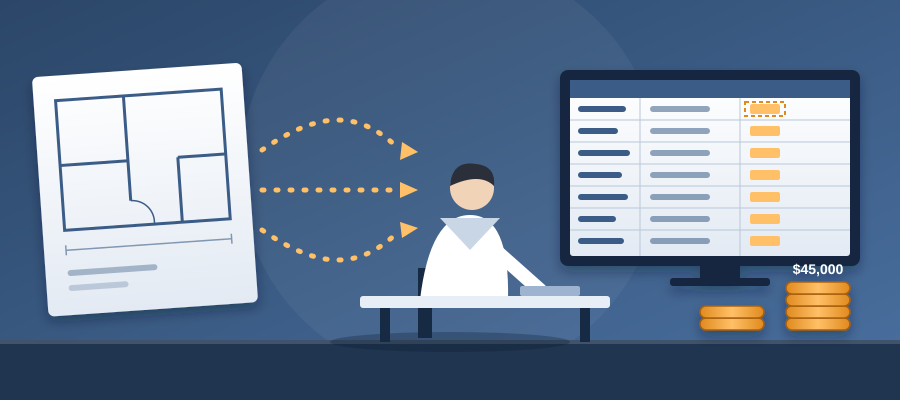
You Are Paying an Estimator $45,000 a Year to Be a Copy-Paste Machine
The $45,000 Line Item Nobody Puts in the Budget
Run the math on a senior estimator at $120,000 a year. That works out to $60 an hour once you load salary with benefits and overhead. Fifteen hours a week spent moving quantities from a model export into a spreadsheet, lining up columns, and re-keying numbers that already exist somewhere else lands you at about $45,000 a year in salary. That money buys you no new scope, no better coverage, and no sharper pricing.
The work itself feels productive because it is tedious. Someone has to pull the door count out of the model, find the matching line in the spreadsheet, check whether it belongs to the current revision, and paste it in. Repeat that for every assembly, every floor, every discipline. By Friday you have a clean column of numbers and no idea whether any of them still match the model the architect sent Wednesday morning.
Here is the part that stings. Your most expensive estimating brain is doing the least valuable task in the office. You hired that person to read a drawing and know that the mechanical schedule implies a heavier hanger spacing than the spec calls for. Instead they are comparing row 412 to row 412 in two windows side by side, and they are doing it at 4:47 PM on a Thursday.
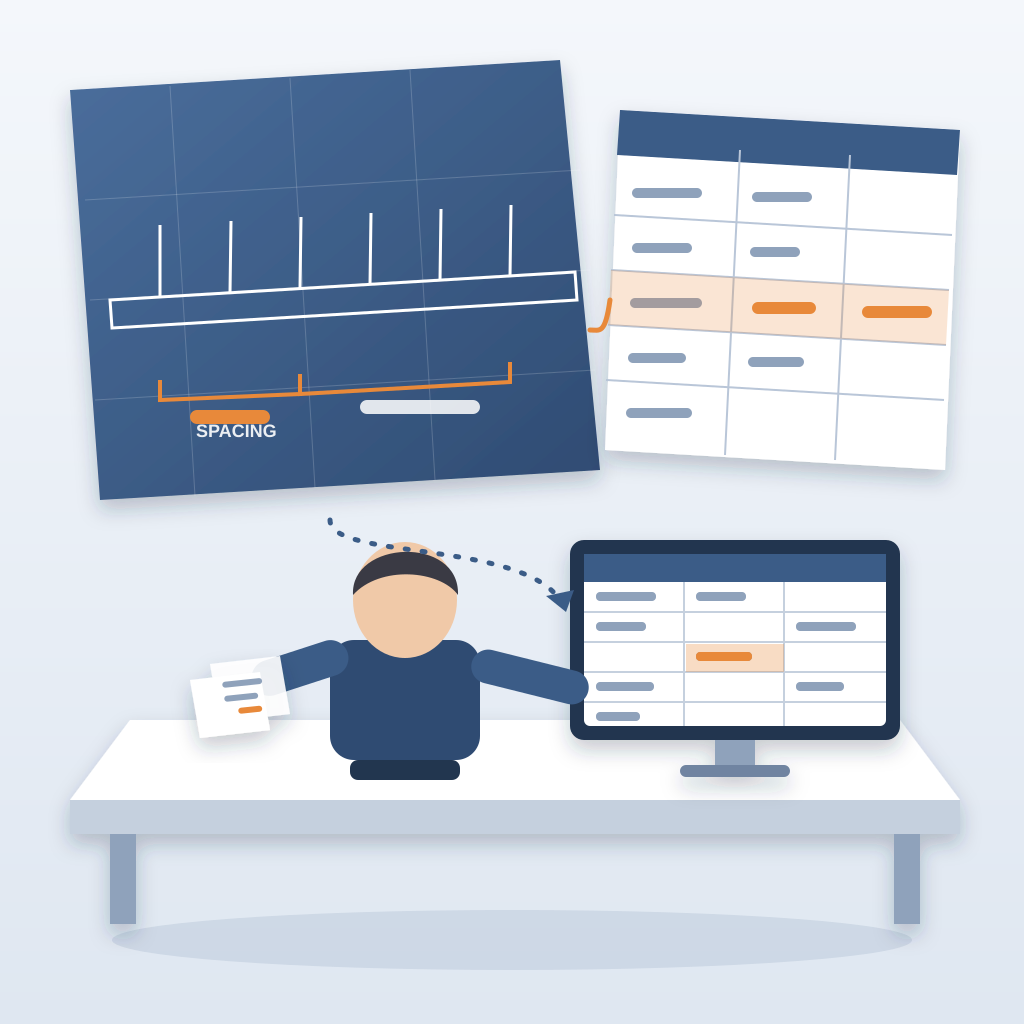
Machine learning cost prediction gets framed as a technology story, and that framing misses the point. The real story is payroll. Every hour your senior estimator spends copying is an hour they are not spending on value engineering with BIM models, on scope gaps, or on the walkthrough conversation that wins the job.
So before you evaluate any tool, price the task. Sit with your estimator for one afternoon and count the copy-paste cycles. In many firms it lands well into double digits every week. At a $120K salary, that is a five-figure annual bill for work a script should be doing.
Where the Fifteen Hours Go
The first bucket is export and reformat. The model comes out as a schedule or an IFC, the line items arrive in a structure no estimating package accepts, and someone spends an hour or two reshaping it. This is pure translation work. Nobody's judgment is involved, and nobody will ever bill a client for it.
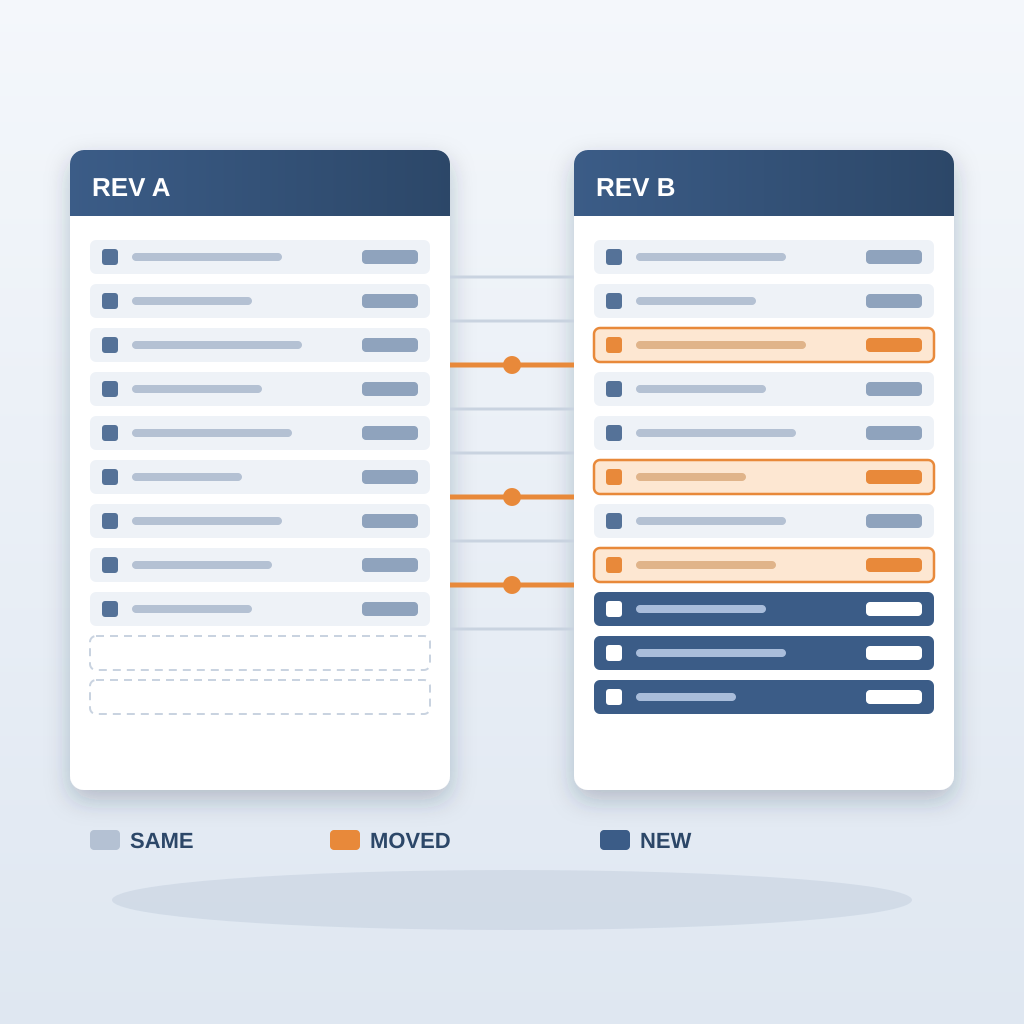
The second bucket is reconciliation. The architect issued a revision. Now you have two exports, and you need to know which quantities moved, which stayed, and which line items are entirely new. In a 1,200-door building, a hundred flipped doors is a rounding error in the model and a $380,000 problem in the bid if you miss it. Someone has to find that delta by hand because nothing in the workflow surfaces it.
The third bucket is price lookup. Assemblies need prices, and those costs need to be current. Estimators bounce between a regional cost database, a national one, and whatever the subcontractor emailed last week. Each lookup is small. Stacked across a full takeoff, they consume the better part of a day.
The fourth bucket is the re-run. This is the expensive one, because it is not scheduled. The client changes the layout on a Tuesday, the model updates, and the estimate you built on Friday is now partially fictional. Someone drops everything and redoes it. That redo happens inside a deadline that just got shorter, which is exactly when mistakes get made.
None of these four buckets require estimating judgment. All four require attention, patience, and a tolerance for repetition. That is the definition of a task you should stop paying a professional to perform. The reason firms keep paying is not that they have not noticed. It is that they have not found a version of the workflow that survives contact with a real project schedule.
What Happens When the Number Keeps Up With the Design
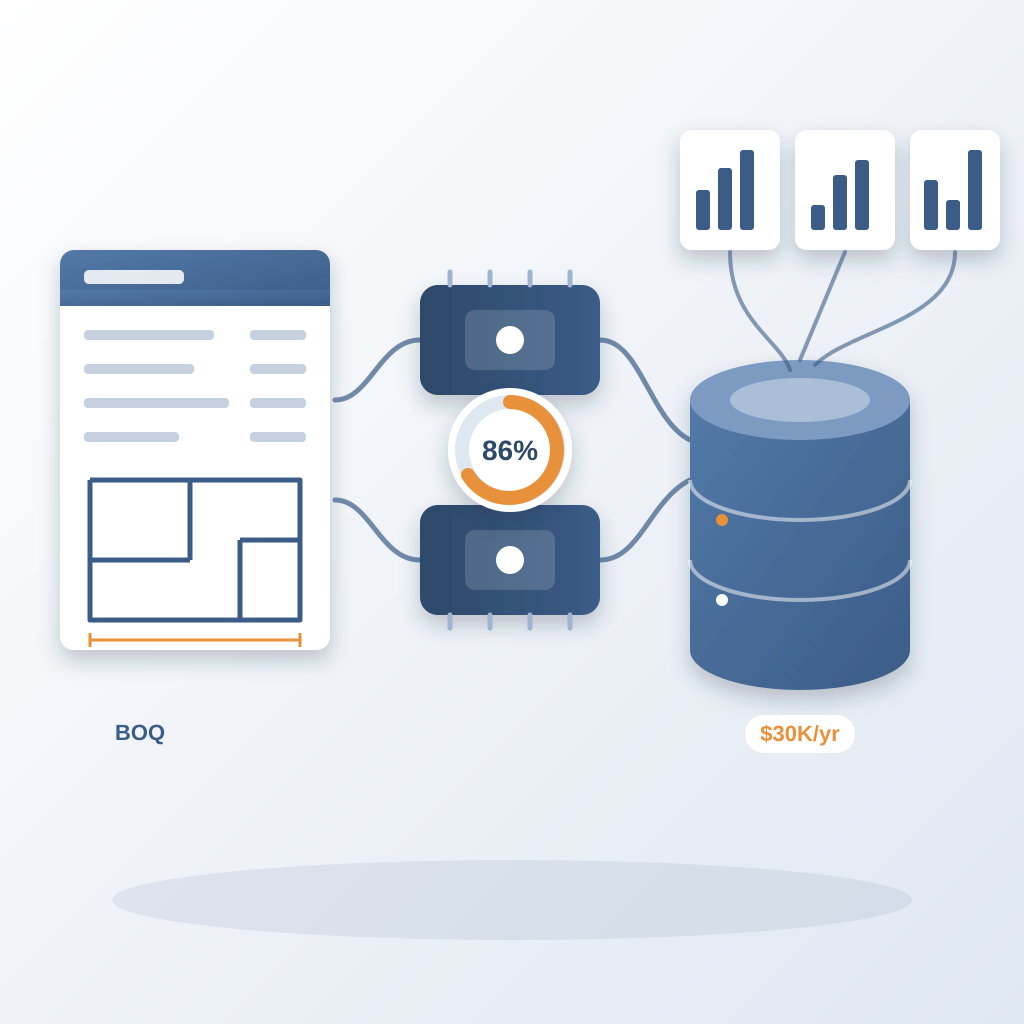
BidLight keeps one live record of the project inside Revit and Navisworks. You export your model and get labour, equipment, material, and time costs in minutes. When the design changes, the number changes with it, without anyone opening a second spreadsheet. The copy-paste cycle does not get faster. It stops existing.
The cost side draws on two AI models that read geometry and metadata and classify BOQ line items at 86% accuracy, then pull current pricing from a database that costs roughly $30,000 a year to maintain, plus Craftsman, 1Build, and RSMeans. That accuracy number matters less than what it unlocks. Your estimator reviews classifications instead of building them, which is the difference between checking someone's work and doing it from scratch.
Think about what that does to a late revision. The client moves a corridor wall. The model updates. The quantity changes, the pricing refreshes, and the estimate reflects it before the meeting starts. You walk in with a number that matches the model you are both looking at, which is a very different conversation than promising to get back to them by Friday.
This is where AI and human estimators stop competing and start dividing labour. Let the machine handle extraction, classification, and price lookup. Point your senior person at the parts that need a human: whether the spec and the model agree, whether the sequence is buildable, whether the number is defensible in a post-bid interview. Construction estimating accuracy benchmarks look different when the mechanical steps are removed from the process entirely.
Teams that make this switch describe the same experience. The estimate stops being a snapshot and becomes a live view. The walkthrough meeting gets shorter because the number on the screen is not stale. And the estimator stops ending the week exhausted by work that produced nothing anyone could point to.
The Win Rate Is the Real Return
Saved hours are easy to talk about and hard to feel. Win rate is the opposite. You feel every loss, and you usually feel it in the weeks that follow when the backlog thins out. Firms that close more work are not always better estimators. They are often just faster to a defensible number, and they get there while the client is still deciding.
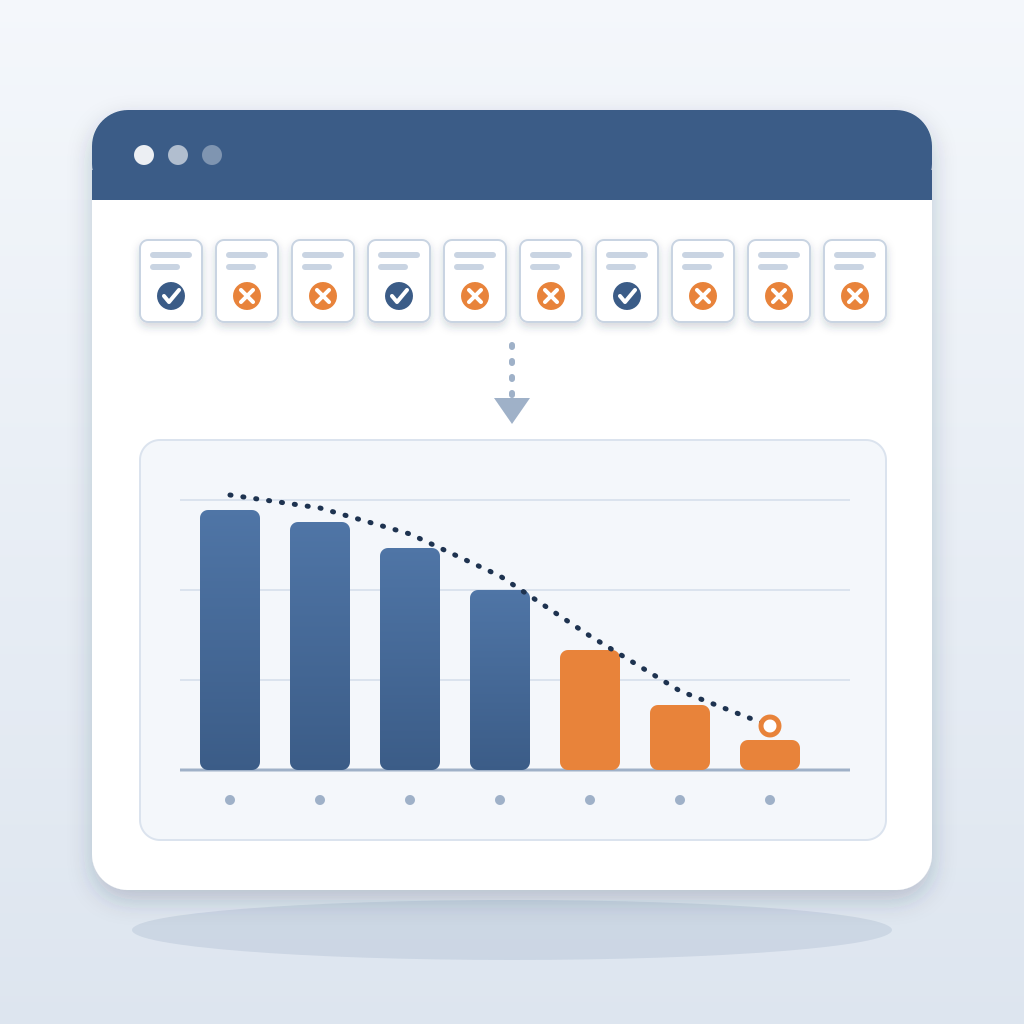
If a faster estimate cycle moves your win rate from something like 25% to something like 35%, that is not a rounding error. It is a different company. On a $20M annual bid volume, ten points of win rate is $2M in additional awarded work, and that work arrives without a proportional increase in estimating headcount. That is the compounding part of the equation most firms miss when they price software.
There is a second return that shows up in the field. A crew standing around waiting on a clarification costs money whether or not anyone is measuring it. When your model and your estimate share one live record, the question about what was specified gets answered from the same source, faster, with less back and forth between the trailer and the office.
One team using this approach reports 680 hours saved. That number is worth translating. It is about a third of a full-time year, and it was never work anyone wanted to do. It was the tax you paid for having a model that could not talk to a spreadsheet. Improving your bid win rate usually starts with how fast you can produce a number you are willing to defend.
Bill the Service You Have Been Giving Away
Here is the other side of the ledger. That estimator you are paying to copy-paste is also sitting on expertise your clients will pay for, and you have been handing it over for free. Early-design cost models, value engineering with BIM models, a documented comparison of three structural schemes. That work has a price, and somebody in your market is already charging it.
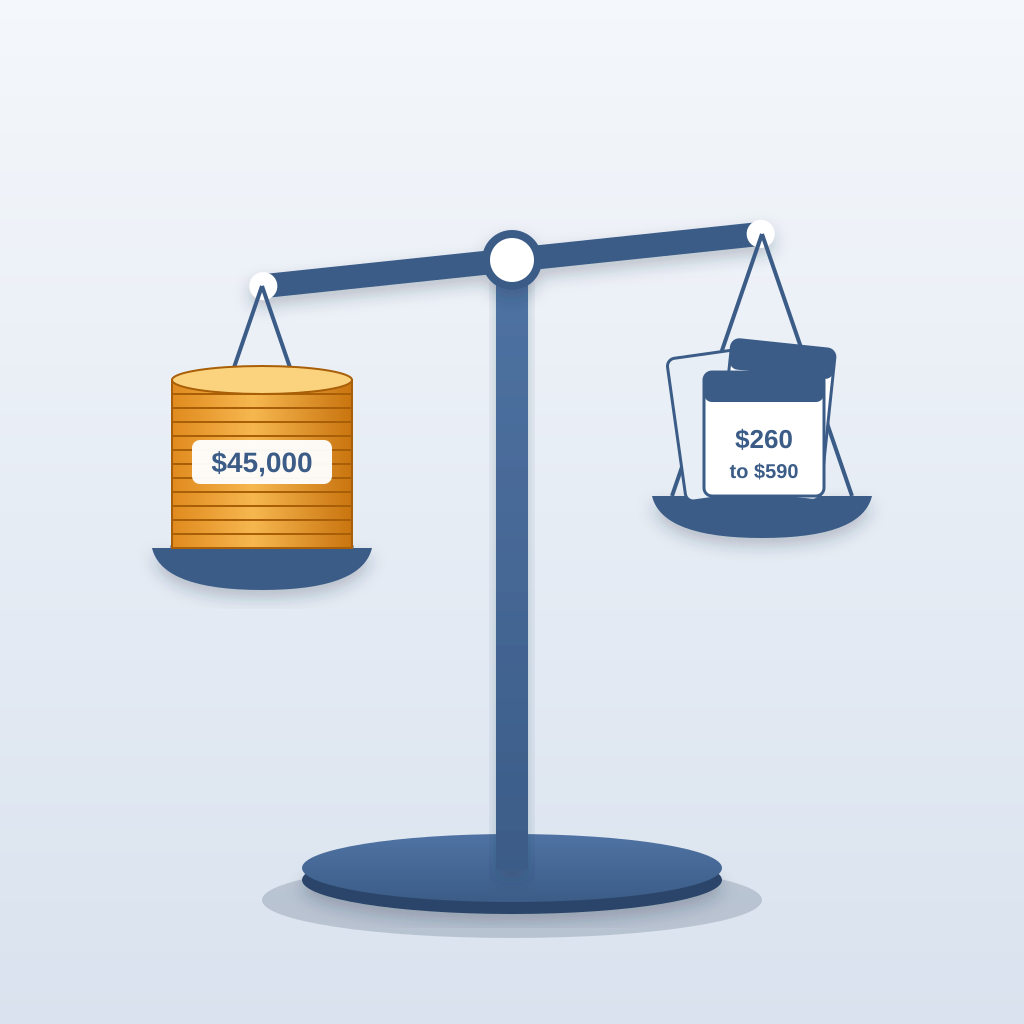
BidLight is priced from Basics at $260 per licence per year to Max at $590, with custom Enterprise pricing. Compare that to the $45,000 you are currently spending on the copy-paste cycle. The trade is not close, and it does not require a long procurement cycle to evaluate. Run one project through it and compare the hours.
Beyond the software, BidLight does done-for-you BIM work: execution plans, 4D and 5D, fabrication detailing. Some firms want the tool and will run it themselves. Others want the output and will pay for it. Both are legitimate, and both are better than continuing to absorb the clerical cost quietly inside your overhead.
An estimating team that produces defensible numbers in hours instead of days is a billable capability, not a back-office function. Start pricing it that way and the $45,000 stops looking like a cost of doing business.
Start With One Project
Do not try to change the whole estimating process in a single quarter. Pick the next project where the architect is known to issue frequent revisions. That is where the copy-paste tax is highest, and it is where the change will be most obvious to everyone involved. Run it one way on the current job and the other way on the next one.
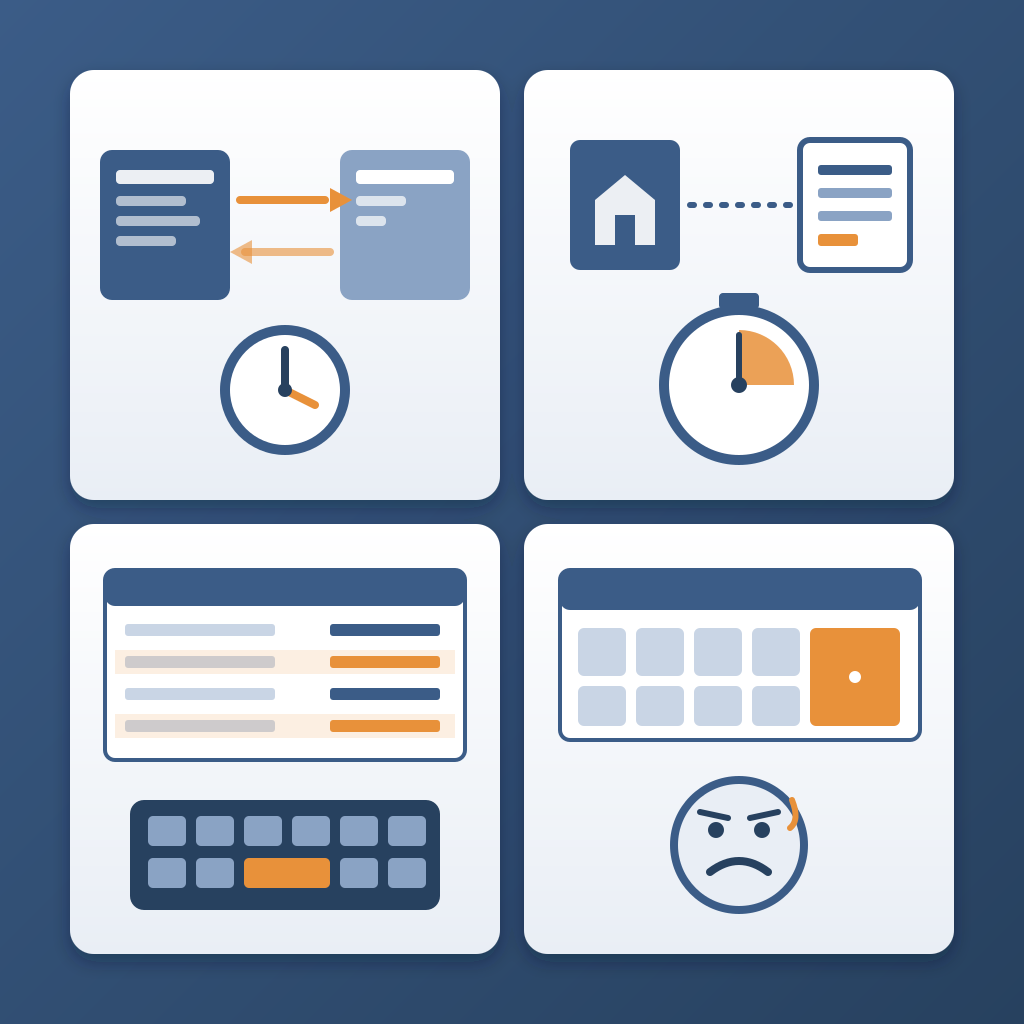
Track four things. Hours spent moving quantities between systems. Time from model update to updated estimate. Number of line items that had to be re-keyed by hand. And how the estimator describes their week on Friday afternoon. Those numbers will tell you more than any demo, and they will be specific to your firm, your building types, and your people.
Expect the first reaction to be relief, not excitement. Estimators do not enjoy the copying. They just assume it is part of the job because it always has been. When the extraction and classification happen without them, the reaction is usually some version of finally, and then they go back to the parts of the work they trained for.
The takeaway is simple. You are paying $45,000 a year for a task that adds zero value to the bid, and you can stop paying it. The salary stays the same. What changes is what that salary buys. Give your senior estimator back fifteen hours a week and point them at the work that wins jobs, protects margin, and can be billed to a client. That is the whole trade.