The Submittal That Had to Match the Model Commit
The Approval That Was Already Out of Date
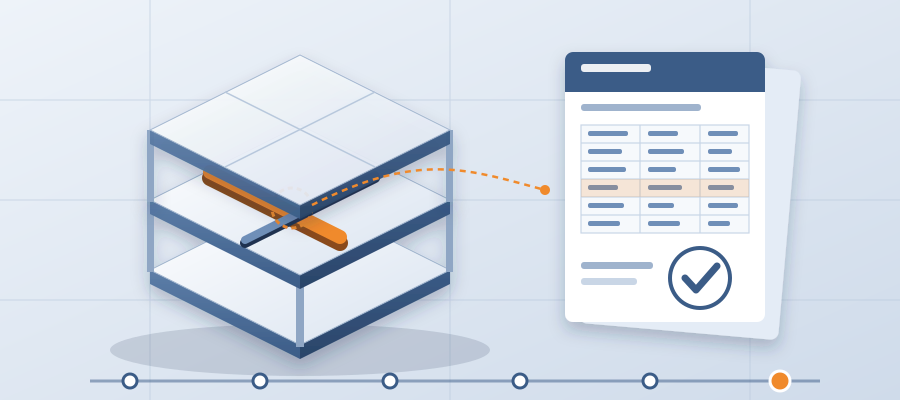
You know the scene. A trade sends over a submittal package. The coordinator opens it, flips through the sheets, checks the dimensions against what they remember, and signs off. The package goes to the field. Weeks later, a duct is in the wrong place or a sleeve is missing. The model has moved on, but the submittal was approved against a version that no longer exists.
The cost of that mistake is not just the rework. It is the idle crew standing around while someone works out what happened. It is the RFI that takes a week to answer. It is the change order that eats the margin. A clash caught in the model costs about $50 to fix. The same clash found in the field costs $5,000 to $50,000. And an unresolved one can burn $15K to $50K a week in idle field labour.
The root cause is almost always the same: nobody can say with certainty which model version the submittal was checked against. With multiple trades, multiple exports and multiple revisions flying around, the current model becomes a moving target. Teams lose 11 hours a week just working out which version is current. That is time not spent coordinating.
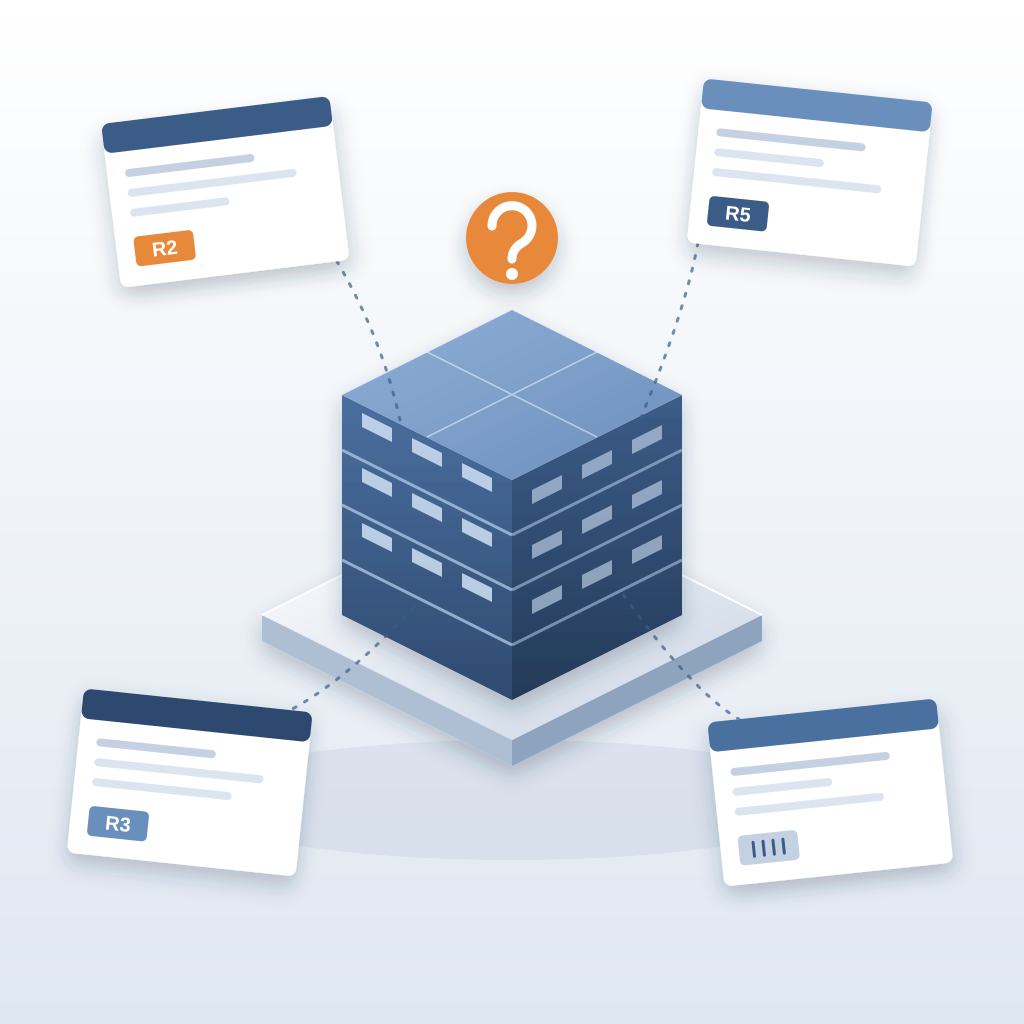
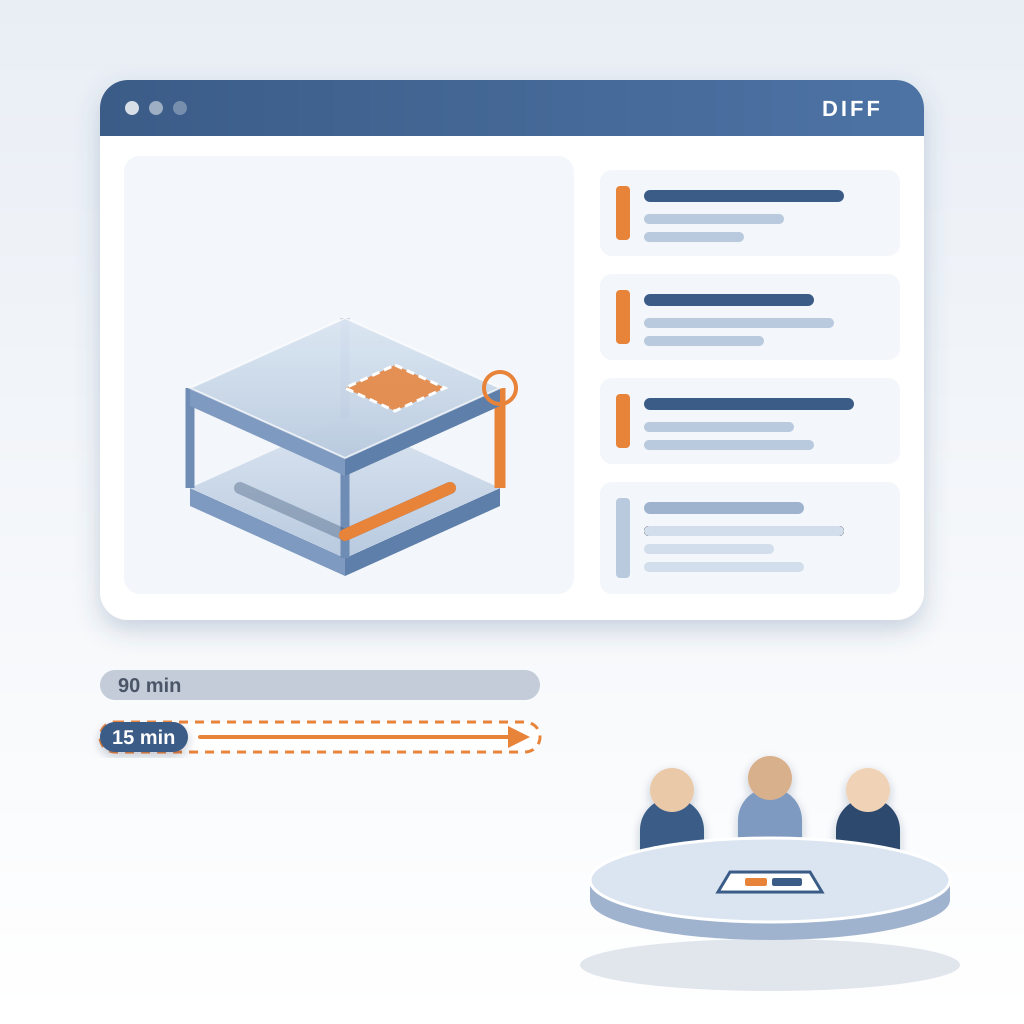
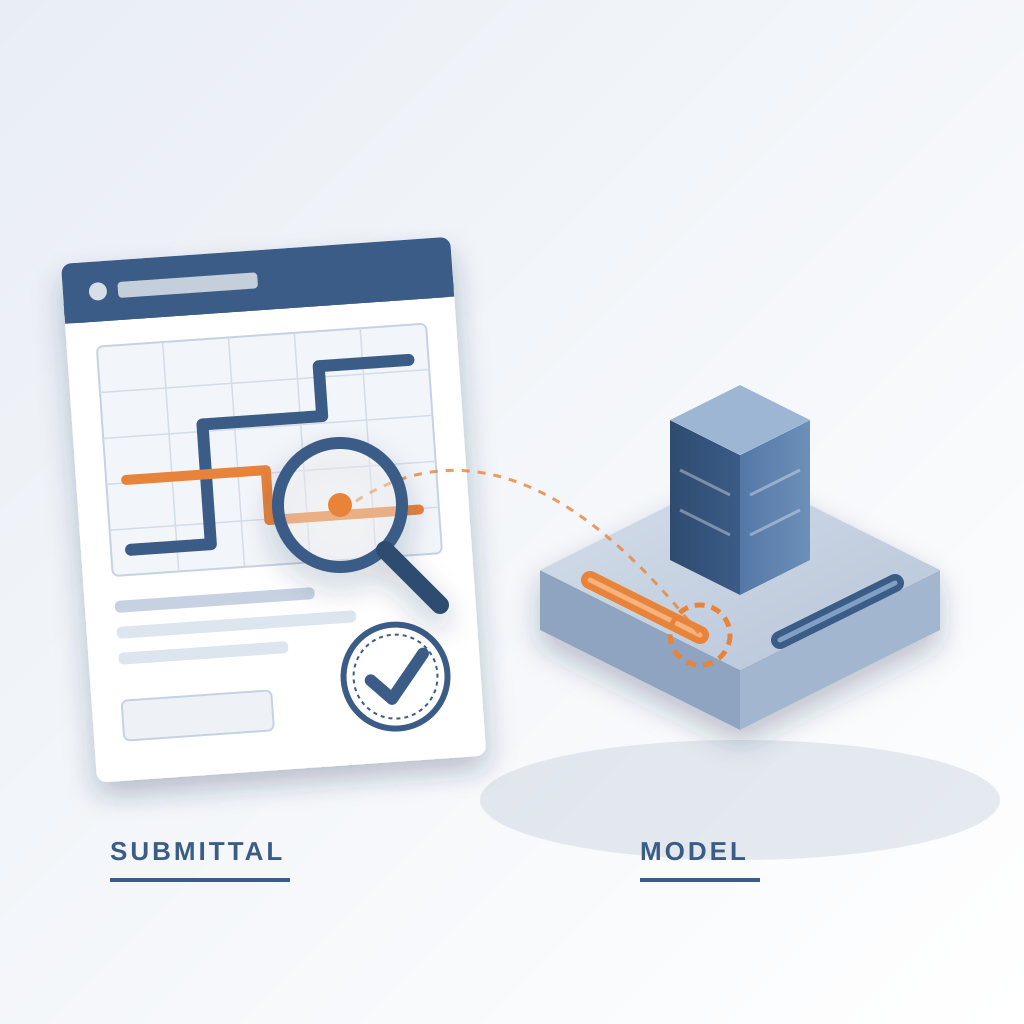
BidLight solves this by treating every export as a versioned snapshot. Every time you export from Revit or Navisworks, BidLight records it and diffs it element by element against the previous version. So when a submittal comes in, you can open the current model and the submittal side by side and see exactly what changed since the last approval. The comparison takes about 15 minutes instead of a 90-minute meeting.
Checking a submittal against the model is not just about finding cheaper materials. It is about making sure the design you are building is the design you coordinated. When the submittal matches the model commit, you avoid the rework, the idle time and the change orders. That is where the real savings are.
The 15-Minute Comparison That Saves $50K
The old way of checking a submittal against the model meant printing sheets, opening the model and eyeballing the two. If you were thorough, you might overlay them in Bluebeam. But with hundreds of elements, you cannot catch every discrepancy. And you certainly cannot do it in 15 minutes.
With BidLight, the comparison is built in. When a submittal arrives, you pull up the latest model export in BidLight. The system shows you a diff against the version the submittal was based on. You see every element that was added, removed or moved, by category: structural, MEP, envelope, interior. If the submittal shows a pipe at elevation 10 feet and the model now has it at 12 feet, that gap is flagged in red.
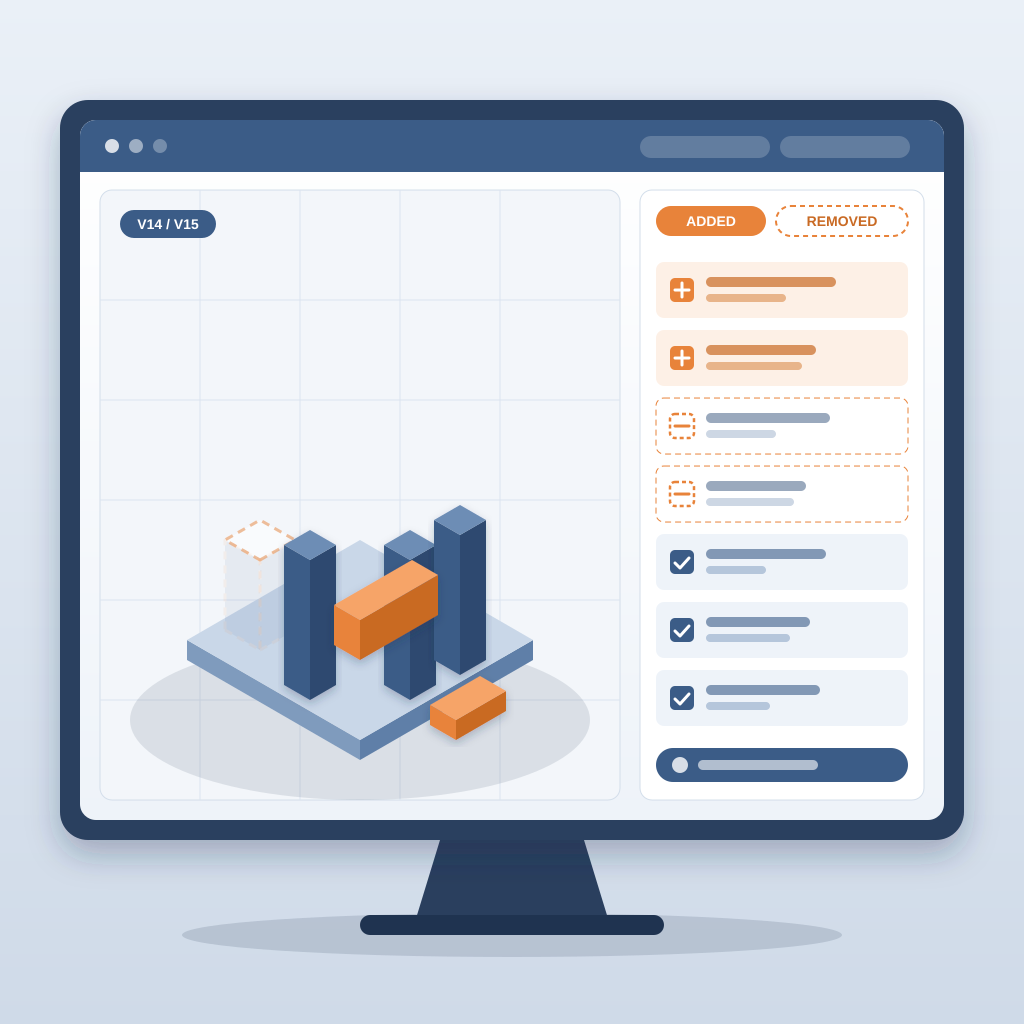
The time savings are real. Instead of blocking out 90 minutes for a coordination meeting to discuss what changed, you spend 15 minutes reviewing the diff and sending back a marked-up submittal. That is 75 minutes back in your week, per submittal. Multiply that by the number of submittals on a job and you are recovering days of coordination time.
But the bigger saving is the one you do not see: the rework that never happens. Catching a discrepancy at the submittal stage means the fabricator cuts the right length of duct, the electrician installs the conduit at the right elevation, and the crew does not have to rip out and redo work. That is where the $50 vs $5,000 to $50,000 equation comes in. Catch it in the model and it costs a conversation. Catch it in the field and it costs a crew, a change order and a schedule slip.
And it is not just about the money. It is about the schedule. An unresolved clash can hold up a crew for a week. That is a week of idle labour, a week of delay and a week of pressure on the next trade in line. The 15-minute comparison keeps the schedule moving.
So when you think about submittal review, think about the diff. It is not glamorous, but it is where the biggest avoidable costs hide. A 15-minute diff can save you $50K in field labour and rework. That is a return worth having.
How Gated Issue Closure Keeps the Submittal Honest
Finding the gap is step one. Closing it is step two. And that is where most coordination processes fall apart. An issue gets marked resolved, but there is no proof. The same problem comes back in the next submittal or, worse, in the field.
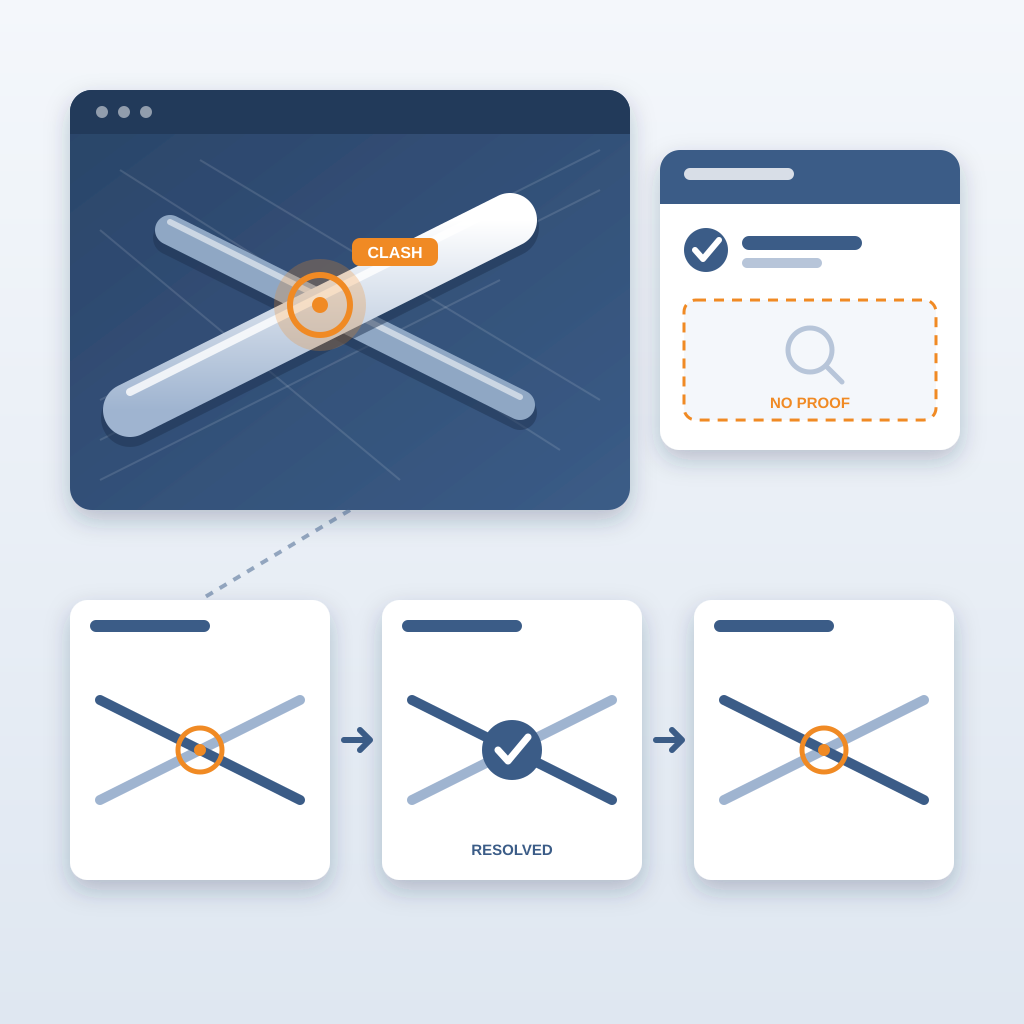
BidLight changes that by gating issue closure. An issue cannot be closed without a screenshot showing the fix, a tagged user who made the fix, and a link to the model commit that includes the fix. That means every closed issue has a paper trail. You can trace it back to the exact element in the exact version of the model.
This matters for submittals because it creates accountability. When a trade submits shop drawings, they are based on a specific model commit. If the coordinator requests changes, those changes are tracked as issues against that commit. The trade revises the submittal, and the new submittal is checked against the latest model commit. The closure of each issue is proof that the submittal now matches the model.
It also prevents the same problem from resurfacing. If an issue was closed with a model commit, but a later change reintroduces the problem, BidLight will flag it in the next diff. You cannot accidentally approve a submittal that reintroduces a resolved clash because the diff will show the element moving back into conflict.
The result is a submittal process that is not just faster but more reliable. You are not relying on memory or on a coordinator's diligence. You are relying on a system that records every change and requires proof of resolution. That is how you keep the submittal honest and the field moving.
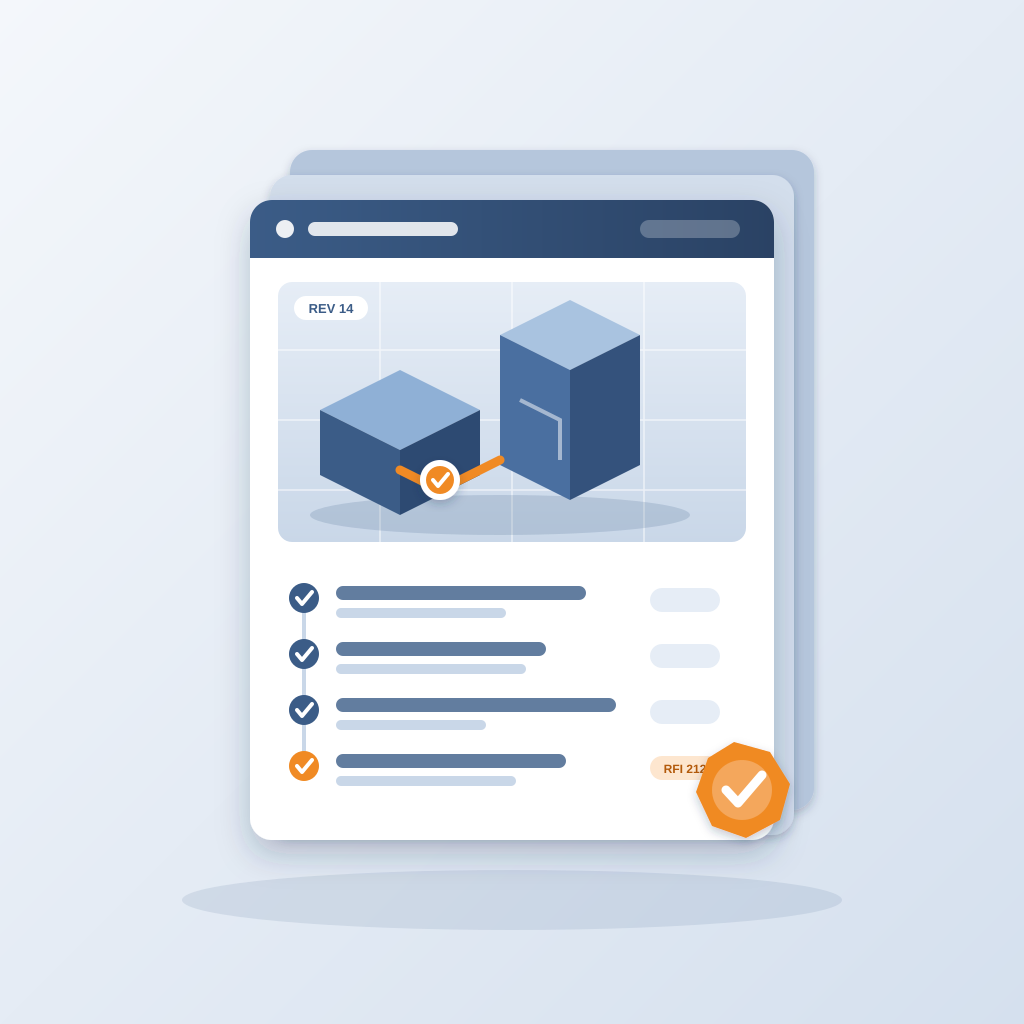
And when the owner or the GC asks for documentation, you have it. Every issue, every fix, every model commit is recorded. That is the kind of audit trail that protects you in a claim and proves your team did the work.
From Submittal to Site: What This Means for Your Week
Let us bring it back to the day-to-day. You are a BIM coordinator with a dozen submittals in your queue. You have a coordination meeting this afternoon. You have a trade asking why their duct is not installed yet. You have a project manager asking for a status update.
With BidLight, your morning starts with the 6am digest. It tells you which issues are open, who owns them, and what changed in the model overnight. You see the status of every submittal at a glance. You know which ones match the current model and which ones do not. You can prioritise the ones that need attention before they become field problems.
When you open a submittal, you do not have to hunt for the right model version. You open the latest export in BidLight, and the diff shows you what changed since the submittal was prepared. If there is a gap, you mark it up and send it back. The whole process takes 15 minutes. You have time to do the other things that need doing.
And when you go to the coordination meeting, you are not spending 90 minutes explaining what changed. You send out the diff beforehand, and the meeting is for decisions, not for recaps. That is a 75-minute saving per meeting. Over a month, that is hours you can put back into the job.
The cost of all this? Plans start at $260 per licence per year for Basics and go to $590 for Max. That is less than what you would pay for a single hour of field labour. And it is a fraction of the cost of one rework event.
If you are still doing submittal reviews by eyeballing printed sheets against a model that might be out of date, you are leaving money on the table. Not just in coordinator time, but in rework, idle crews and change orders. The fix is not complicated. It is a versioned model and a diff.
Send Us a Submittal and a Model Export
Here is a direct ask. Send us a model export and a submittal package from your current project. We will run the comparison through BidLight and show you what the diff reveals. You will see the gaps that your current process might be missing. And you will see how long it takes: about 15 minutes instead of a 90-minute meeting.
We are not asking you to change your whole workflow. Just try it on one submittal. See if it catches something you would have missed. See if it saves you time. See if it gives you confidence that the submittal you are approving is based on the current model.
If it works, you can roll it out to the rest of the project. If it does not, you have lost nothing but a few minutes. But we think you will find that it works. Because the problem is real, and the solution is simple.
The submittal that matches the model commit is not a fantasy. It is what happens when you have one live record of the project and you use it. BidLight gives you that record. It is the same model you already work in, versioned and diffed, with issues pinned to the element and closed with proof. That is how you keep the job moving and the costs down.