The Coordination Meeting Where Nobody Brings a Laptop
The 90-Minute Meeting That Should Have Been a 15-Minute Diff
You know the scene. Fifteen people around a table. One laptop projecting Revit. Somebody asks which version is current, and the room splits into three opinions. The architect says Friday's export, the MEP lead says Thursday's, and the file on the screen has a timestamp nobody trusts. Forty minutes in, you are still working out which model you are looking at. No coordination has happened yet.
The cost of that argument is not just the hour. It is the 11 hours a week your team loses working out which model version is current. That is time not spent catching clashes, not spent resolving them, not spent moving the job. Multiply it across a coordination team and you are paying for a full extra person who does nothing but reconcile file names and email attachments.
Now picture the same meeting where everyone walks in already knowing what changed. No laptop. No projector. The structural lead knows the three beams that shifted. The MEP coordinator knows the two duct runs that moved to avoid them. The envelope team knows the curtain wall revision that landed Tuesday. The diff is done. The meeting starts with decisions, not detective work.
That is not a fantasy. It is what happens when every model export is versioned and compared element by element, by category, before anyone sits down. The team reads the diff on their own time, in about 15 minutes, and the meeting becomes a confirmation of who does what next. You cut a 90-minute argument down to 15 minutes of actual coordination.
BidLight was built for exactly this. It runs inside Revit and Navisworks, on the model your team already works in. Every export gets a version, and every change is diffed at the element level. The answer to 'what changed?' is already in the project view when the invitation hits the calendar.
What an Element-Level Diff Shows You
A diff is not a screenshot. It is a list of every element that changed, sorted by category: structural, MEP, envelope, interior. Each change carries the sheet and the revision that raised it. You see a column moved 300 millimetres, a duct rerouted, a wall type swapped. You see what was added, what was deleted, what was modified. The noise is stripped out. You are not scrolling through a whole model to find the one thing that matters.
This is the difference between a coordination meeting that reacts and one that plans. When the diff tells you a beam moved, you can check the clash report before the meeting and know whether the duct below it is now a problem. You can walk in with a fix. The field crew is not waiting on a meeting to find out whether their day is clear.
A lot of teams try to answer 'what changed?' with a Revit quantity schedule. They pull a material takeoff schedule, compare totals, and hope the numbers tell them something. But a Revit material takeoff schedule only calculates totals. It does not tell you which element moved or why the number changed. A wall type change might net out to the same area, and you would never see it in the schedule. An element-level diff shows you the specific element and the commit that changed it. That is the record you need when a clash surfaces on site.
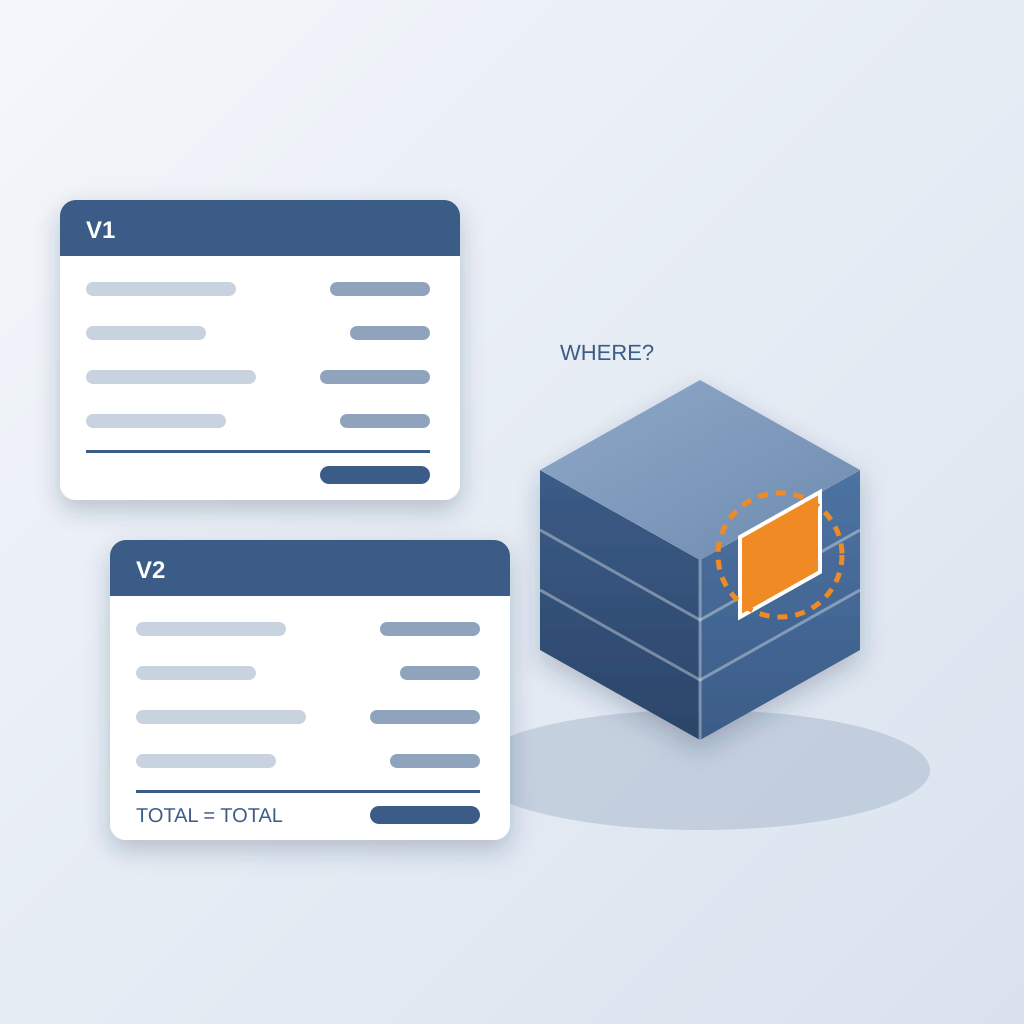
BidLight pins every issue to the element it concerns. If the diff shows a moved wall and there is a coordination issue on the duct crossing it, the issue carries the sheet and the revision that raised it. Closing it requires a screenshot, a tagged user and the model commit that fixed it. Nobody can close an issue by saying it looks fine. The record shows what changed and who changed it.
That rigour changes how the team prepares. People read the diff because they know it is the source of truth. They stop bringing laptops because the laptop would only show them what they already read.
The $50 Clash and the $50,000 Clash
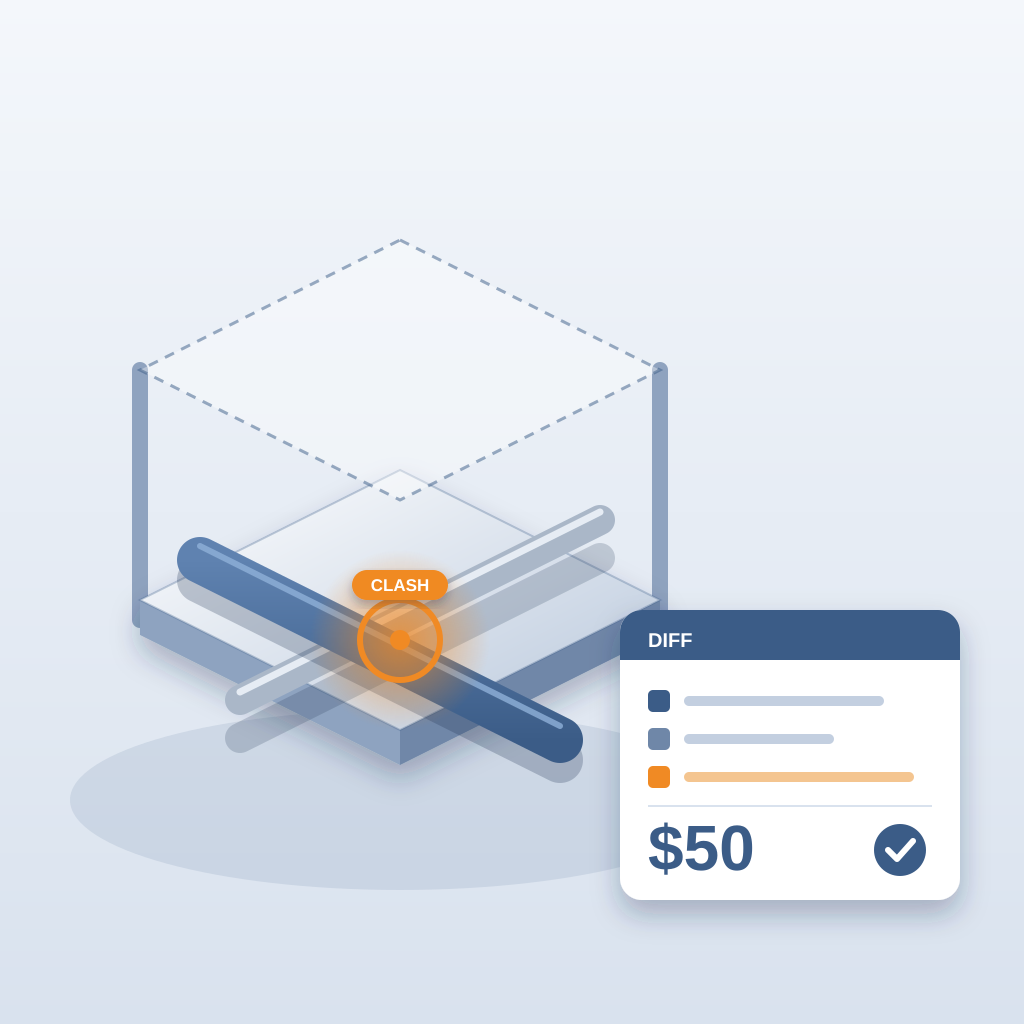
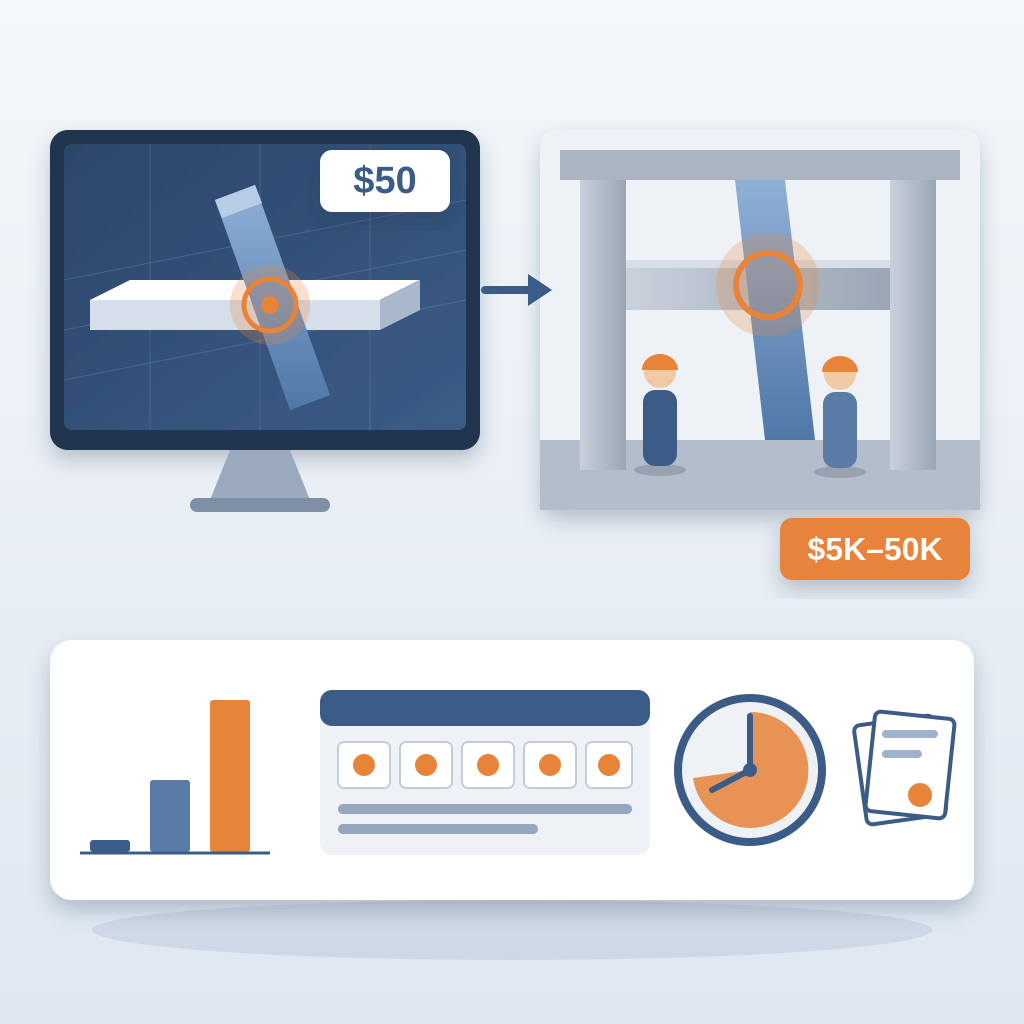
A clash caught in the model costs about $50 to fix. A clash found in the field costs $5,000 to $50,000. The difference is not the fix itself. It is the rework, the idle crew, the RFI, the change order and the schedule slip that come with finding it late. The same duct, the same beam, the same conflict. One is a detail change in Revit. The other is a hole in a slab and a crew standing around.
An unresolved clash can burn $15,000 to $50,000 a week in idle field labour. That is the number that should sit on the wall of every coordination meeting. When a clash sits open in a log for three weeks, you are not saving time by deferring it. You are spending money every day it stays unresolved. The field crew is either waiting or working around a problem that will come back.
This is why the diff matters before the meeting. If the team walks in already knowing the element-level changes, they can spot the new clash before it becomes an issue. They can resolve it in the model, on the same day, for about $50. The meeting becomes a place to confirm the fix, not to discover the problem.
BidLight's differentiator is that coordination runs on the model the team already works in. It is not a separate portal that someone has to update. Every export is versioned and diffed, so the clash is caught at the export where it first appears. The issue is pinned to the element, and it closes only with proof. That proof is the screenshot, the tagged user and the model commit. The same clash does not come back next week because someone forgot to check.
The cost control comes from this loop. Catch it early, fix it cheap, prove it is fixed. The field never sees it. The schedule never slips for it. The change order never gets written. That is how you protect margin on a job where everything else is already tight.
The 6am Digest and the Project View That Show Who Is Behind
The meeting is only as good as the accountability behind it. If nobody knows who owns the open issue, the meeting becomes a status update that goes nowhere. That is why BidLight sends a 6am digest to every owner. It tells them what they own, what is open, what is waiting on them. They read it before the day starts, and they walk into the coordination meeting already knowing their part.
The project view shows every issue against its owner, with per-person resolution rates. BidLight calls this the Problem Solver Index. It is not a way to shame anyone. It is a way to see who is behind while there is still schedule left to move work. If one trade is sitting on five open issues and the others are clear, you know where to put your attention. You do not find out three weeks later when the crew is already on site.
This changes the tone of the meeting. Instead of arguing about which version is current, the team looks at the project view and sees the open issues, the owners and the age of each one. The conversation goes to the ones that are stuck. The ones that are moving get a quick confirmation. The meeting ends with a clear list of who does what by when, because the record already shows the rest.
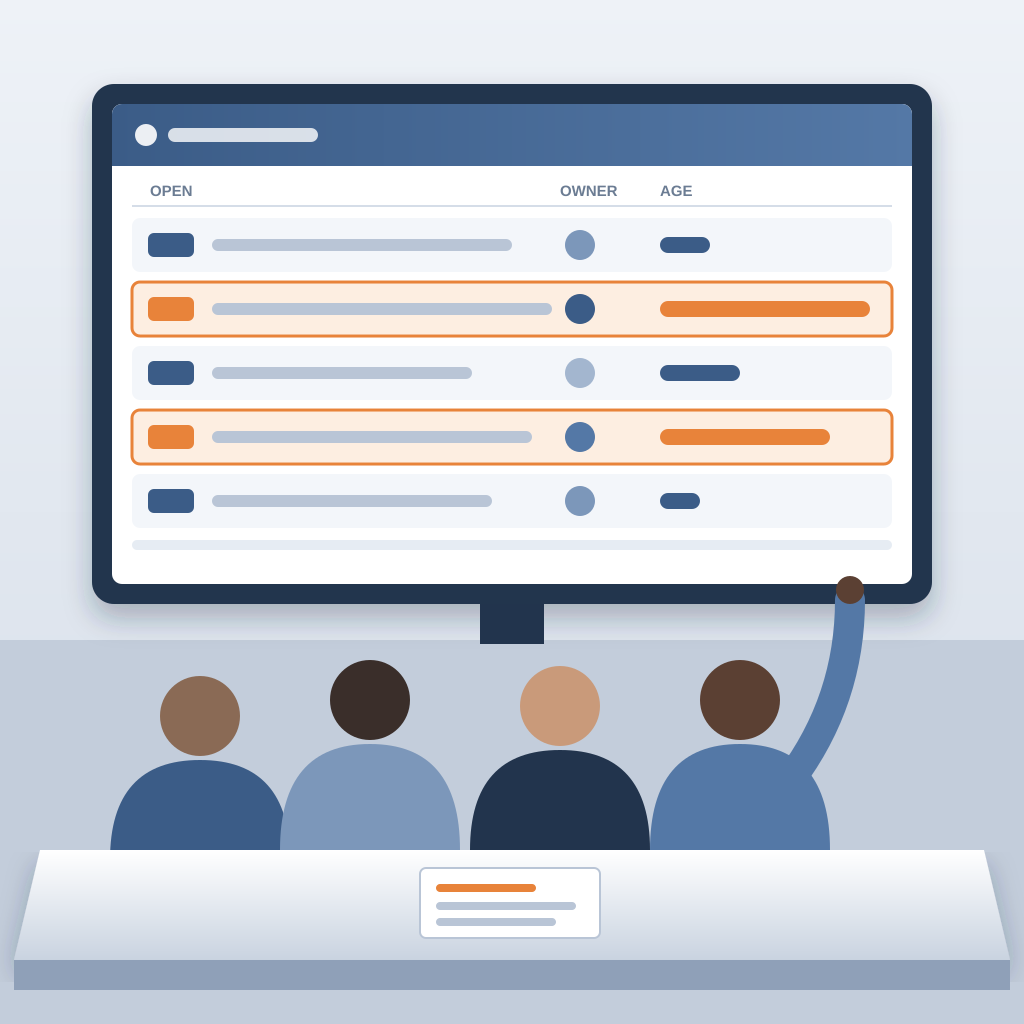
The 6am digest also solves the scattered update problem. You are not chasing people across Teams, email and Bluebeam. The digest lands in the same place every morning. It is the one message that does not get lost. And because it is tied to the model record, it is accurate. It is not someone's summary of what they think happened. It is what the diff shows.
That is the point of walking in without a laptop. The laptop would only show you the model. The digest and the project view show you the work. The team already knows what changed. The meeting is about what to do next.
How to Run the Meeting When the Diff Is Already Done
Start with the diff, not the recap. The first item is the element-level changes by category. Structural goes first, then MEP, then envelope, then interior. Each lead confirms they have seen their changes and names any new clash. If there is a fix, it is already in the model. If there is not, it becomes an issue with an owner and a due date.
Second item is the open issues. The project view shows them by owner and age. The question is not 'what is the status?' but 'what is blocking this and who is fixing it?' If an issue has been open for more than a week, it gets attention. That is the $15,000 to $50,000 a week conversation. Nobody needs to explain why it matters. The number is on the screen.
Third item is the next export. The team agrees on what will be in the next version and who needs to deliver what before it. Because every export is versioned and diffed, the next meeting will start with the changes from this one. The record builds itself. Nobody has to write a recap email that nobody reads.
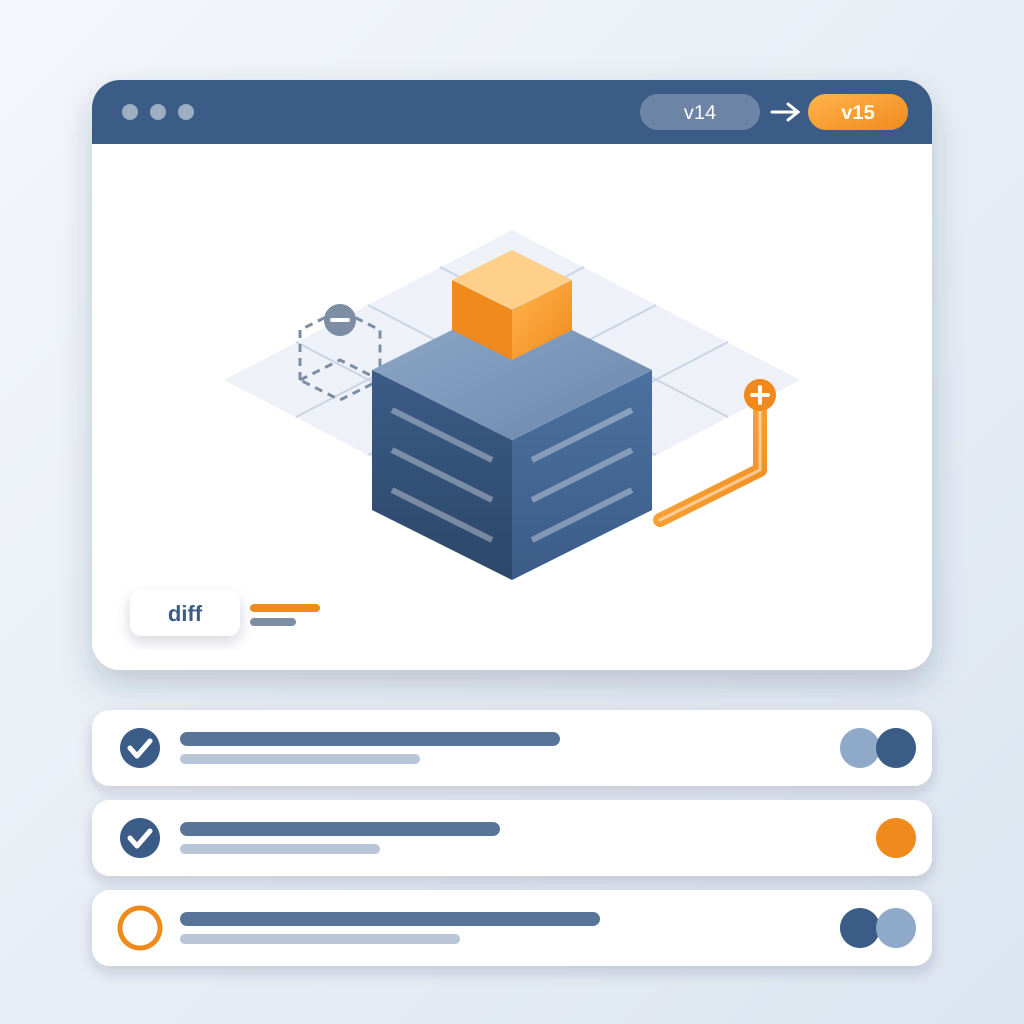
The meeting ends on time. Fifteen minutes of coordination instead of 90 minutes of argument. The team walks out knowing what they own and what changed. The field crew gets a clear answer before they start work. The schedule stays where it should be.
BidLight does not replace the meeting. It makes the meeting worth having. The work of coordination happens in the model, in the diff, in the digest. The meeting is where the team confirms it and moves on. That is how you turn the weekly coordination meeting on its head.
What This Means for Your Team on Monday
You do not need a new process. You need the model to tell you what changed before anyone sits down. That is what versioned exports and element-level diffs give you. The team reads the diff in about 15 minutes. The meeting starts with the answer, not the question. The 90-minute argument disappears because there is nothing to argue about. The record is the record.
Start with one category. Pick the one that causes the most clashes on your job. Run the diff before the next coordination meeting and see how much time you get back. Then add the next category. The habit builds. The team stops bringing laptops because they do not need them. The meeting becomes a place to decide, not to discover.
The numbers are not abstract. About $50 to fix a clash in the model. $5,000 to $50,000 to fix it in the field. $15,000 to $50,000 a week in idle labour behind an unresolved clash. 11 hours a week lost working out which version is current. Those are the costs of the old meeting. The new meeting costs you 15 minutes of reading and a decision.
BidLight keeps one live record of the project inside Revit and Navisworks. Every export is versioned and diffed. Every issue is pinned to the element and closes only with proof. The 6am digest tells every owner what they own. The project view shows who is behind while there is still time to move work. That is how you catch the clash in the model instead of the field.
On the hyperscale programme, that approach saved 18,000+ hours and $12.3M in cost. Not because the team worked harder. Because they stopped arguing about which version was current and started coordinating on the one that was. Your job can do the same. The diff is already there. Read it before the meeting.