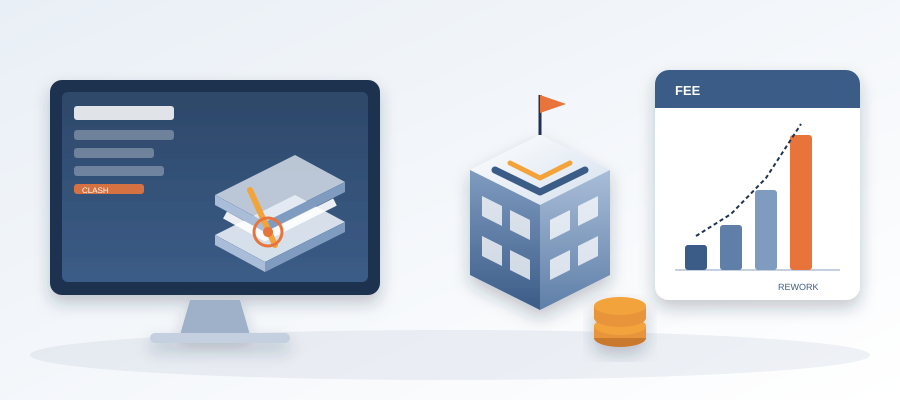
Why Architects Should Charge for Early Coordination
The Hidden Cost of Free Coordination
Most firms give away early coordination for free. They see it as a foot in the door, a way to win the client's trust before the real work begins. But what if that free work is costing you more than you realize? Every hour you spend chasing model versions and writing notes is an hour you could have billed. And when the client walks, you have nothing to show for your time.
Think about what early coordination actually involves. Someone works out which model is current. Someone compares the new revision to the last. Someone lists the conflicts, assigns them and follows up. On most projects that is a large share of a coordinator's week, and about 11 hours of it go to working out which model version is current.
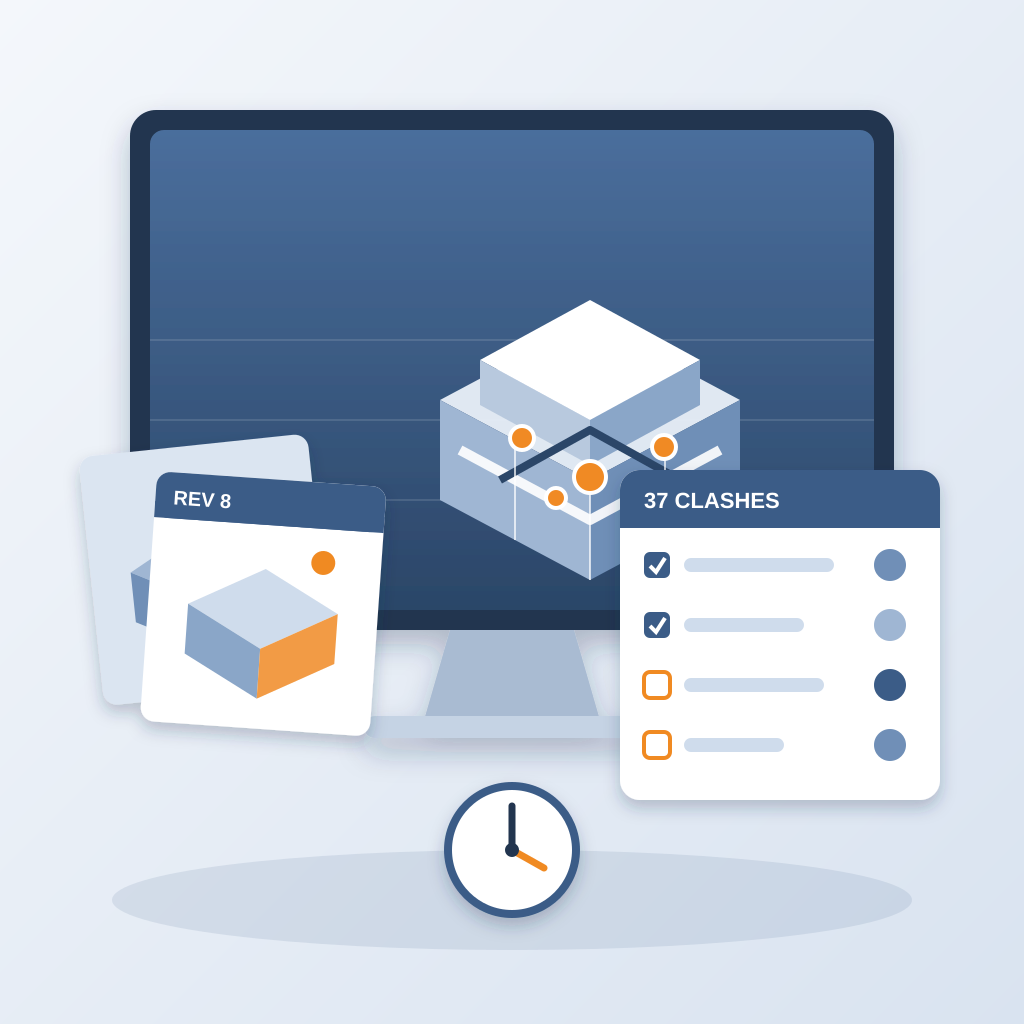
The problem is trust. Clients expect free coordination because everyone gives it. But when you deliver it free, the client has no stake in it. They can ignore your notes, pass them to someone else, or simply disappear. You absorb the cost.
There is a better way. Treat early coordination as a distinct service with its own fee. When you attach a fee, you signal value. The client who pays for a coordination record is more committed, more likely to stay through design development, and more likely to act on what you find. Firms that charge for it do not lose serious clients. They gain a new revenue stream.
What You Are Actually Selling
A fee only works if the client can see what they bought. Sell the record, not the hours. In BidLight, the record is concrete:
- Versioned publishes. Every export from Revit or Navisworks becomes a snapshot with its own files, author and milestone.
- Element-level comparison. Any two revisions compare element by element, grouped by category: structural, MEP, envelope, interior.
- Issues pinned to the element. Each carries the sheet and revision that raised it.
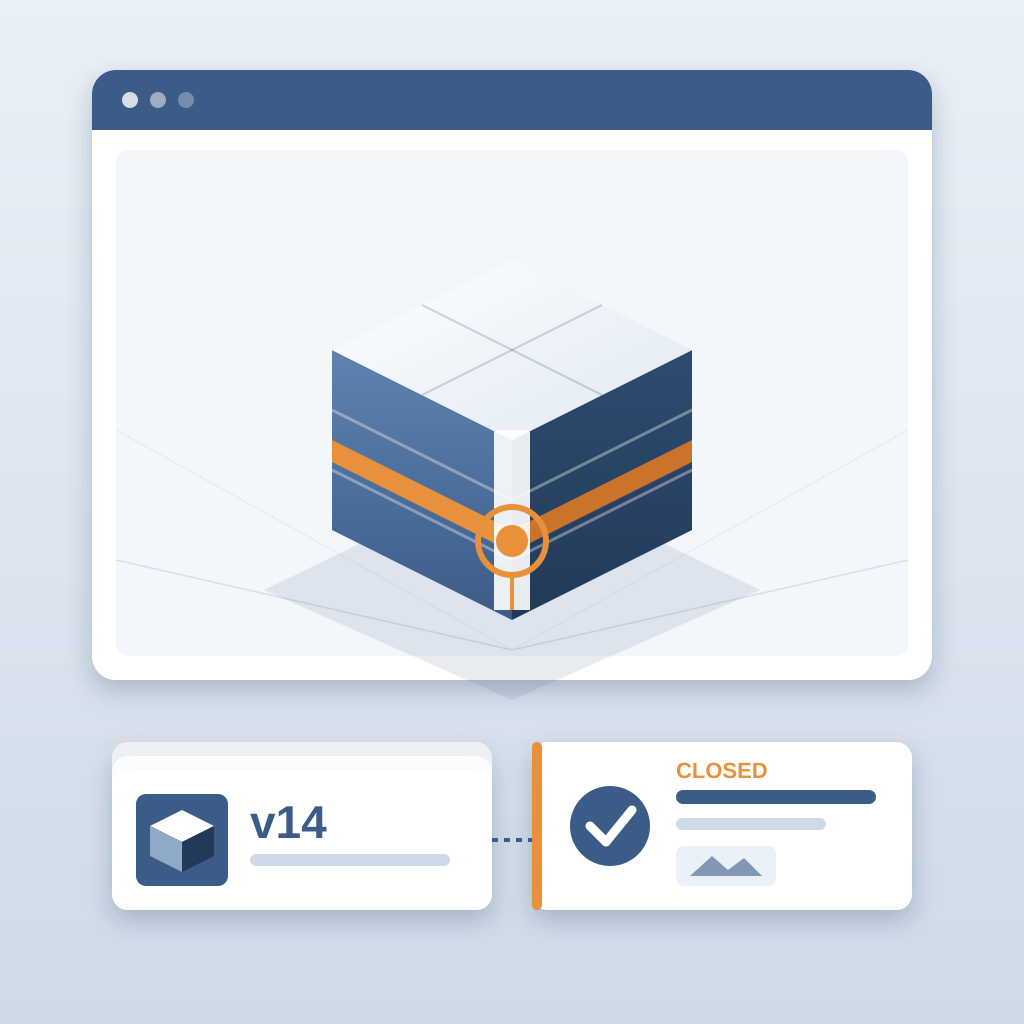
- Proof of closure. An issue closes with a screenshot, a tagged user and the model commit that delivered the fix.
- Accountability. A 6am digest tells each owner what they own, and the project view shows who is behind.
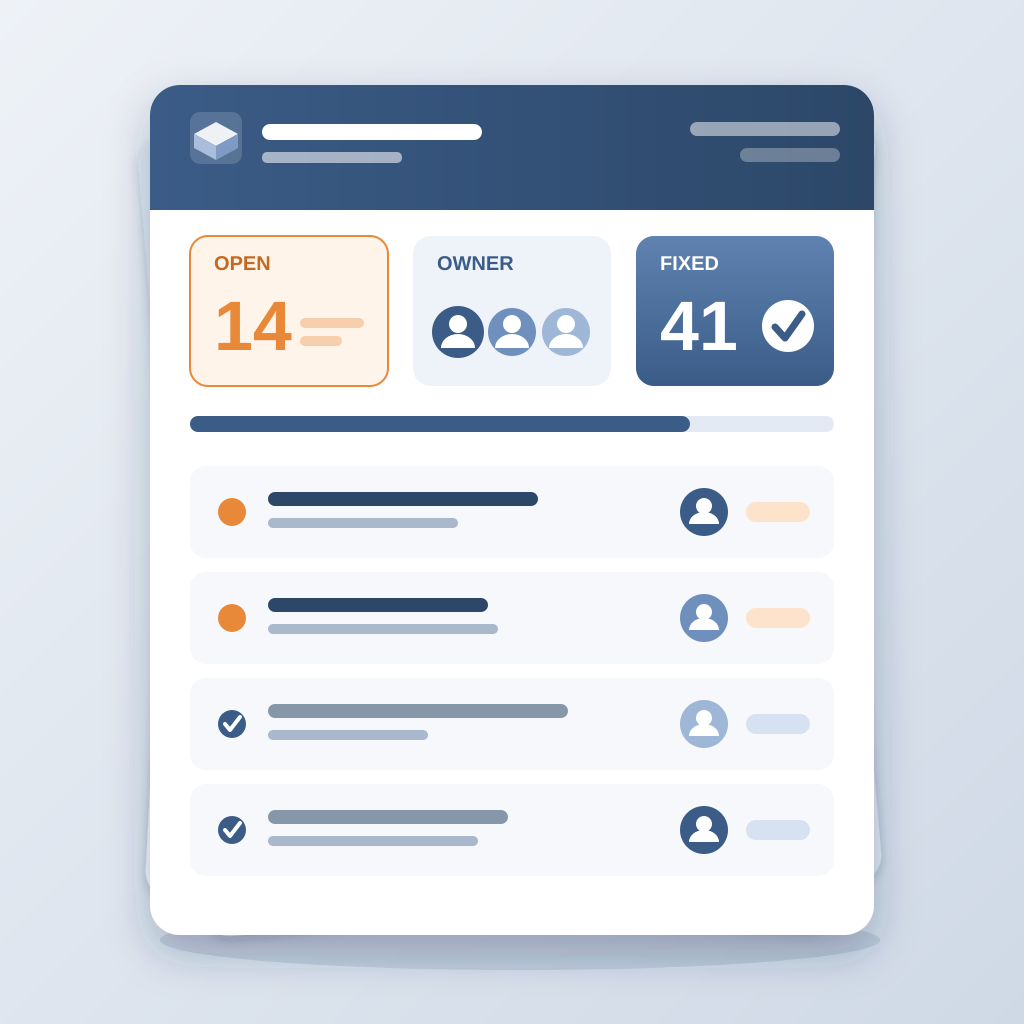
That is a deliverable a client can open and read. It answers the question owners always ask: what is open, who owns it, and what has been fixed?
Why Early Coordination Is Worth Paying For
Early coordination is worth paying for because of when it finds problems. A clash caught in the model costs about $50. Found in the field, it costs $5,000 to $50,000. An unresolved one can burn $15K to $50K a week in idle field labour. One that sat 47 days cost $28,000.
When you charge for early coordination, you change the client conversation. Instead of saying "here are some notes, do not hold me to them," you say "here is the record tied to your model, and every open item has an owner." That confidence wins work. Paid coordination filters out tire-kickers and leaves the serious buyers.
There is a structural reason this works. Early models are incomplete, and that is exactly when conflicts are cheapest. Each publish adds to the record, and the comparison shows how the model matures. The client pays for certainty about what changed and who is dealing with it. In a market where schedules are tight and trades are scarce, that certainty saves weeks of back and forth.
How to Build a Billable Coordination Service
You do not need a large team to build this. You need two things: a record the client can see, and a fee structure that matches the value you deliver. BidLight works for any firm that uses Revit. It is priced per license, from Basics at $260 a year ($30/month) to Max at $590 a year ($69/month), with unlimited projects on every plan and custom Enterprise pricing. The done-for-you BIM services, including execution plans, 4D sequencing and fabrication detailing, can be added later.
Start by defining the scope in terms of activities, not hours. A sensible scope might include:
- An initial publish and baseline review.
- A set number of revision comparisons during each design phase.
- Issues raised, assigned and tracked to closure with proof.
- A summary of what is open, who owns it and who is behind.
Fix the fee against that scope. Because each comparison is a short review rather than a long meeting, the work stays steady. A 90-minute meeting becomes about 15 minutes with the diff in front of you.
Add a human check. The record shows what changed, but a person decides what matters: site constraints, owner preferences, what a trade can actually build. The combination of a reliable record and your judgment is what makes the service worth buying.
Where It Fits in the Project
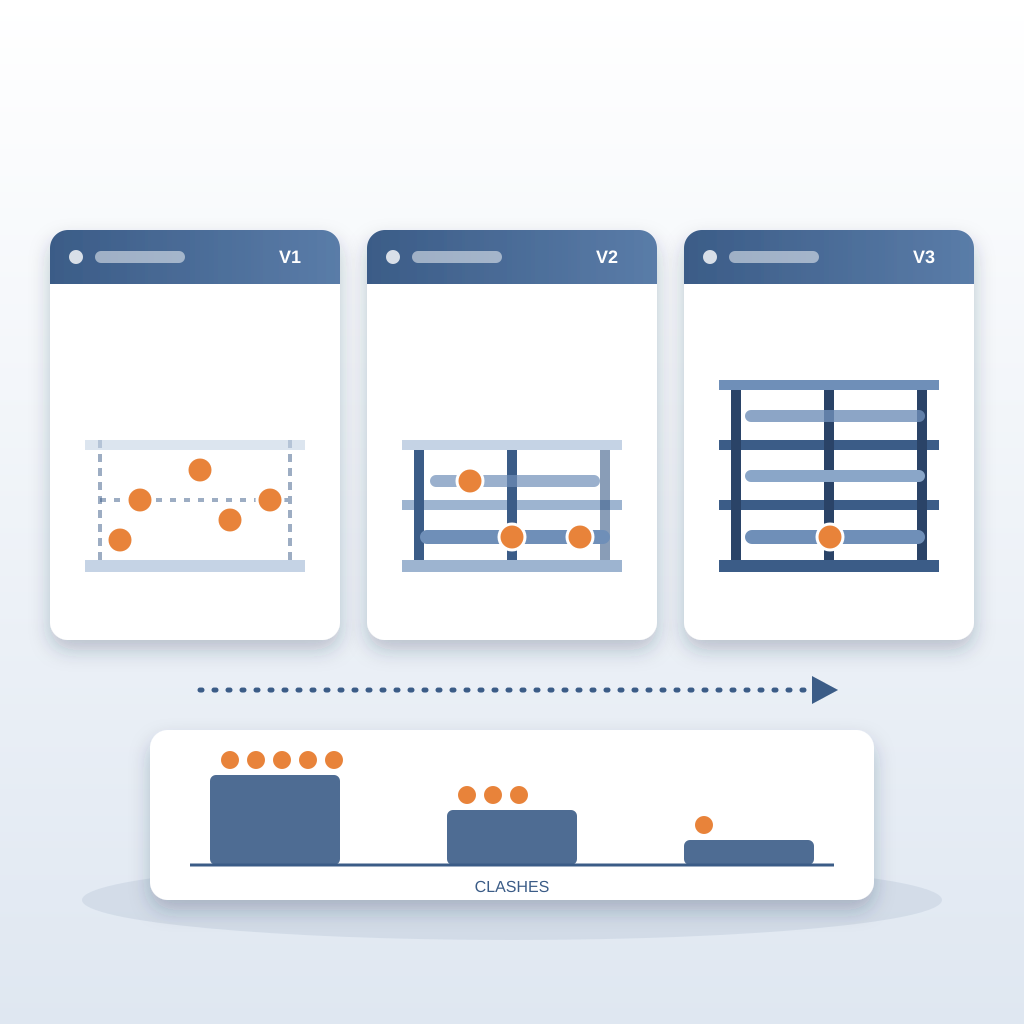
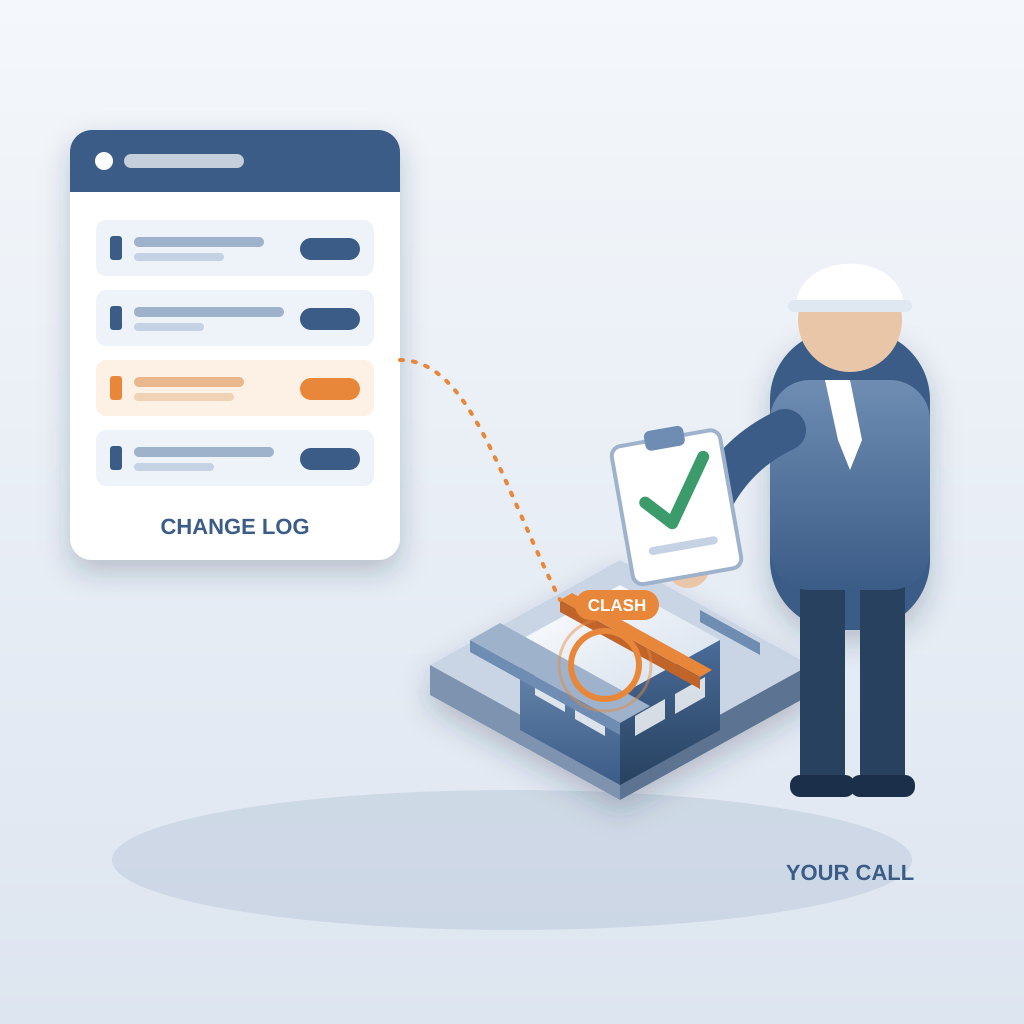
Early coordination is not a single event. It runs alongside design. At schematic, the record is thin: a baseline publish, a few known conflicts and the first owners. By design development, it carries dozens of pinned issues, each with a sheet, a revision and a name. By construction documents, the open list should be short and every closed item should have proof behind it.
That arc is what the client is buying. They can see the project getting cleaner. They can see which trade is behind, while there is still time to move work. They can see that the problem they would have found on site was found in the model.
Talking to the Client About It
Communicate the value clearly. Explain that the service saves the client from late surprises and reduces rework on site. Show them the record from a past project, with names removed. Walk them through a comparison and an issue closed with proof.

Many clients have no idea an architect can provide this. Once they see a clean record with a name against every open item, they understand why it has a fee. Offer to credit part of the fee against later work if they stay. That removes the fear of paying twice.
The Takeaway: Make Coordination a Service
Preliminary coordination is not a loss leader. It is a premium service that clients will pay for when it is delivered with a record they can read. The key is the workflow. Without versioned publishes and element-level comparison, producing a clear record is a lot of manual work. With them, it becomes part of how you run the project.
If you are still giving away early coordination, run the numbers. Count the hours your firm spent last year on notes, version hunting and follow-up that nobody paid for. Multiply by your billing rate. That is the revenue you left on the table.
BidLight lives inside Revit and Navisworks, versions every publish and closes issues with proof. The software scales from a solo architect to a large firm.
Stop chasing scattered updates. Turn early coordination into a service you can bill for. The client gets a record they can trust. You get paid for the work you were already doing. And when the project moves forward, you are already ahead.