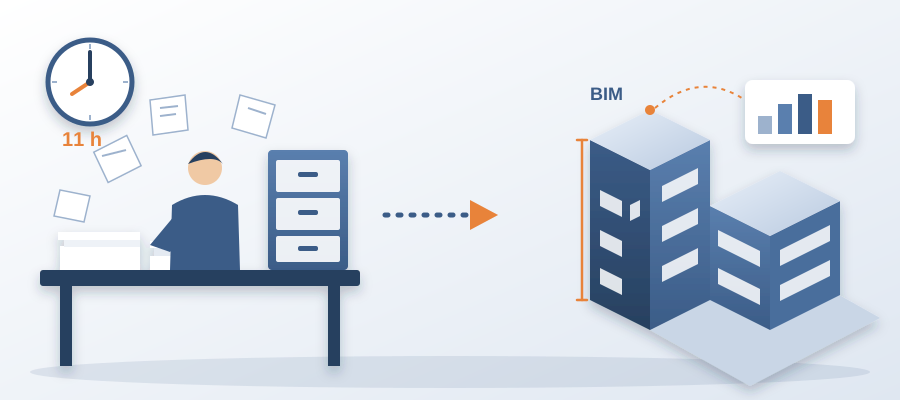
The 11 Hours a Week You Are Paying an Estimator to Be a File Clerk
Eleven Hours Is Not a Wild Number. Ask Your Estimator.
Pull your senior estimator aside on a Friday and ask what they did all week. Not the polished version. The actual version. You will hear about a structural model that came in Tuesday, a revised architectural set Thursday morning, and a mechanical file that landed without a title block change. Same filename, new contents, no note attached.
Forty percent of that week is now gone to working out which document is true. Downlights moved on the second floor. The roof screen shifted two feet. Someone swapped a wall type on the east elevation. None of it was written down anywhere a human could find in ten seconds. So your estimator opened files, compared dates, called the architect's office, called the BIM coordinator, and tried to remember what the last meeting actually decided.
That is eleven hours of file clerk work. You are paying a senior rate for it. The person doing it is not slow or disorganized. They are the only one who cares enough to chase the answer down.

Traditional cost estimating has always carried this tax. The model is one thing. The paper set is another. The takeoff spreadsheet is a third. The current price book is a fourth. Every change ripples through all of them by hand, and the person doing it is the most expensive person in the room.
BIM vs traditional cost estimating is usually framed as a technology debate. It is not. It is a question of how many copies of the truth you are maintaining, and who pays for the copies that drift.
What Actually Changes When Cost Rides on the Model
BidLight keeps one live record of the project inside Revit and Navisworks. That is the whole idea, and everything else follows from it. You export the model and get labor, equipment, material, and time costs in minutes. When the design moves, the number moves with it, because the number is reading the same geometry your team is drawing.
There is no separate spreadsheet to reconcile, because there is no separate spreadsheet. There is no folder of dated PDFs to sort, because the model is the record. The file clerk job does not get faster. It stops existing, and the eleven hours come back to the person who was hired to think about scope, risk, and margin.
Two AI models read geometry and metadata and classify BOQ line items at 86% accuracy. That 86% is not a marketing number pulled from the air. It is the rate at which the models correctly place line items into the right cost category, and it means a senior estimator reviews and corrects, rather than builds from zero. Pricing pulls from a database worth roughly $30,000, plus Craftsman, 1Build, and RSMeans. Your estimator is not guessing at drywall rates from memory or from a price list that shipped in 2019.
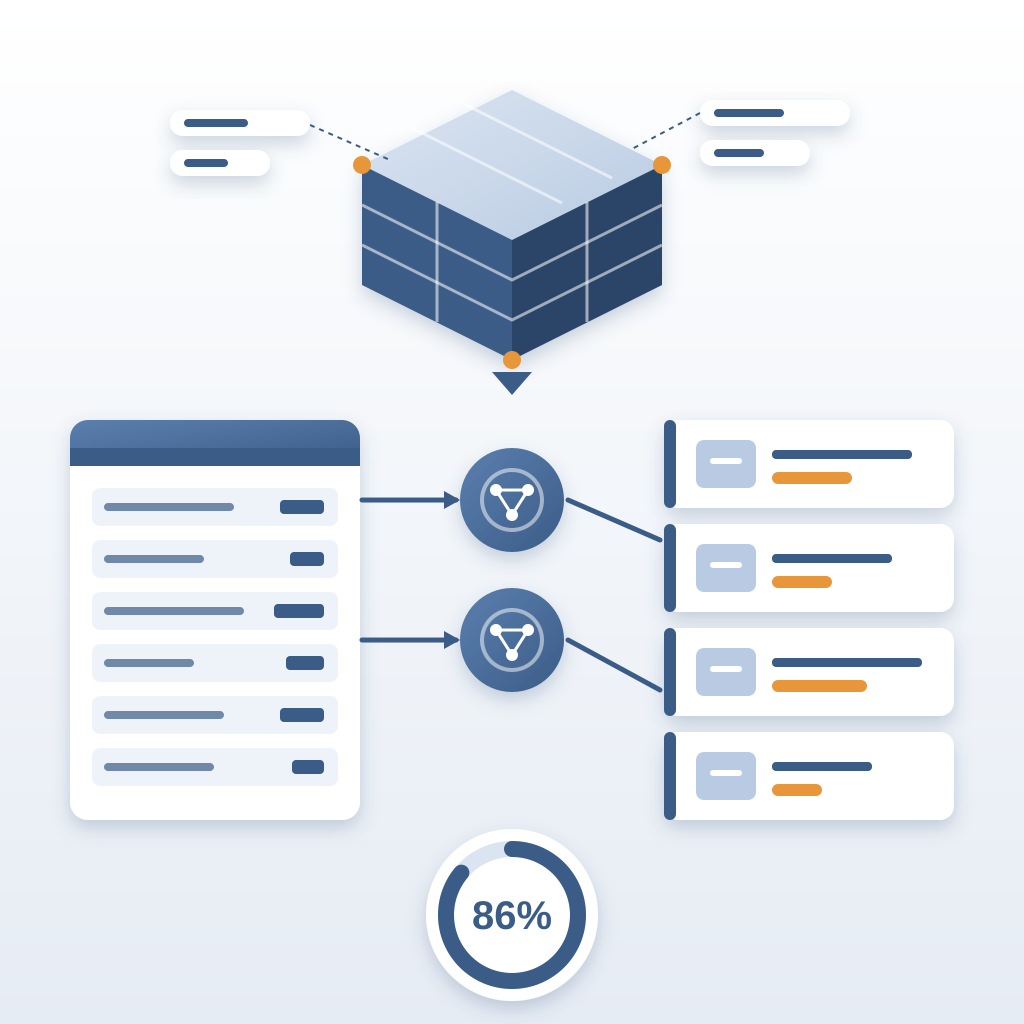
Here is the part people miss. When the model is the record, a change is not an event. It is just the current state. The architect moves a wall at 2 PM, your estimator refreshes, and the number is right. No meeting required, no re-takeoff, no version to name. Cost stops being a monthly snapshot and starts being a live reading.
So the return is not that takeoffs are faster. It is that no one has to reconcile anything. The seventeen phone calls, the four open tabs, the version names like final_v3_approved_REAL, all of it goes away because there is one file and it is the model.
The Estimator Hours You Get Back Are the Expensive Ones
Run the math on one senior estimator. Eleven hours a week chasing current files is roughly 550 hours a year. That is a quarter of their working life spent on clerical work you could not bill to anyone. If their loaded cost is $45 an hour, you just spent $24,750 on file management, and you have nothing to show for it but a bid that was correct as of Tuesday.
Now imagine those hours going where they matter. Scope review. Risk pricing. Talking to the client early enough to shape the design instead of reacting to it. That is the work that wins jobs and protects margin. It is also the work the file clerk tax quietly crowds out, because it always gets done second, and it never gets done at all during a bad week.
There is a retention angle too. Good estimators leave when the job becomes chasing files. They did not train for years to sort PDFs and confirm which revision is live. They stay when the work looks like estimating, when their judgment is the scarce input and the busywork is gone. Replacing a senior estimator costs more than the eleven hours ever did, and the replacement will inherit the same problem unless the workflow changes.

The question of ai vs human estimator in construction usually gets framed as a threat. It is not a replacement story. It is a division of labor. The models read geometry and metadata, classify line items, and pull current pricing. The human prices risk, reads the client, and decides what to carry for weather, site access, and the subcontractor who always finds a reason. You want your senior estimator doing the second list, all day, and none of the first.
That is the honest answer to how to use ai in construction estimating. Not to fire anyone. To stop paying a licensed professional to be a search engine.
Traditional Estimating Charges You for the Same File Twice
Walk through a normal change cycle without a live model. The architect issues a revision. The BIM team updates the model. Someone exports a new set. A coordinator emails it with a subject line that does not say which revision it is. Your estimator downloads it, opens it, compares it to the last one, and starts a manual takeoff. Three days later they find out the mechanical model was updated separately and nobody told them.
That is the same file costing you twice. Once when the design changed, and again when someone had to discover that it changed. Traditional cost estimating does not fail because estimators are bad. It fails because the truth lives in four places and only one of them is ever current by accident.
BIM moves the truth into one place. That is the actual difference between bim vs traditional cost estimating, and everything else is detail. When cost rides on the same model the design team is working in, there is nothing to reconcile. The number is a reading of the model, not a parallel document that has to be maintained by hand.

People search for construction cost estimating software free download because the pain is real and the budget is tight. But a free spreadsheet does not fix this. A free takeoff tool does not fix this either. The problem is not the arithmetic. The problem is that the arithmetic is attached to a file that might not be current.
Cost estimating software for construction earns its keep when it removes the reconciliation step, not when it makes the spreadsheet prettier. If your tool still needs a human to confirm which revision is live, it is solving a smaller problem than you have.
What the Number Looks Like When It Never Goes Stale
Picture the weekly design meeting with a live model on screen. The client asks what it costs to add a loading dock door. You do not say you will get back to them. The model carries the cost, so the answer is a refresh, and it lands in minutes rather than the 90 minutes it takes to re-run a manual takeoff and check it. Fifteen minutes instead of 90, on a question that used to stall the room.
That speed changes the conversation. Design options get priced while people are still deciding. The client stops guessing and starts choosing, and your firm stops giving away free estimating as a favor. Firms running live-model estimates report win rates around 35% higher, not because they bid lower, but because they answer faster and with numbers they can stand behind.
Defensible numbers matter more than fast ones. When a change order gets challenged six months later, you can show the model state the number was read from. Not a screenshot, not a spreadsheet footnote. One live record with a date on it. That is an auditable trail, and it protects you in the meeting where someone asks why the number moved.
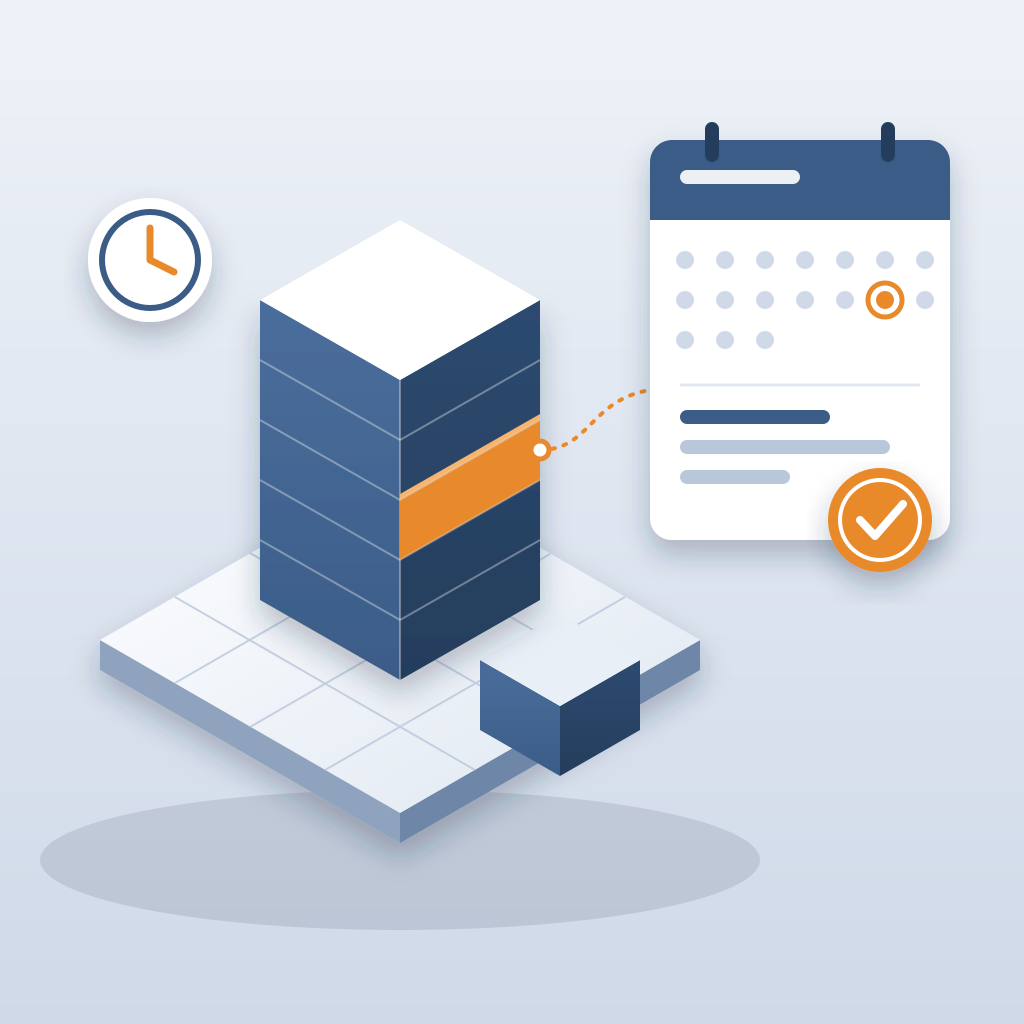
Then there is the billable side. Early estimates are a service clients will pay for when you can turn them in a day instead of a week. Most firms give that work away to win the job. You can price it, deliver it, and still win the job, because the estimate costs you minutes instead of a full-time week.
BidLight also does done-for-you BIM work when you need hands: execution plans, 4D and 5D, fabrication detailing. Same record, same discipline. The estimate and the model never separate.
The Eleven Hours Are a Choice You Are Still Making
No one decided to spend eleven hours a week on file management. It accumulated. A folder here, a version name there, and suddenly the most senior estimator in the firm is a librarian with a hard hat. The fix is not a better folder structure. It is one live record of the project inside the software your team already uses.
Start by measuring it honestly. For one week, have your estimator log every minute spent confirming which file is current, chasing missing updates, and re-doing takeoffs after a change they heard about late. Do not estimate the number. Count it. Most firms find it lands between eight and fourteen hours, and the number tends to sit in the middle of the seniority scale, which is the worst place for it to be.
Then ask a harder question. If those hours came back, what would your estimator do with them? If the honest answer is more rework, the problem is bigger than software. If the answer is quoting more jobs, pricing risk better, or answering clients the day they ask, then the eleven hours are the most expensive thing in your estimating department.
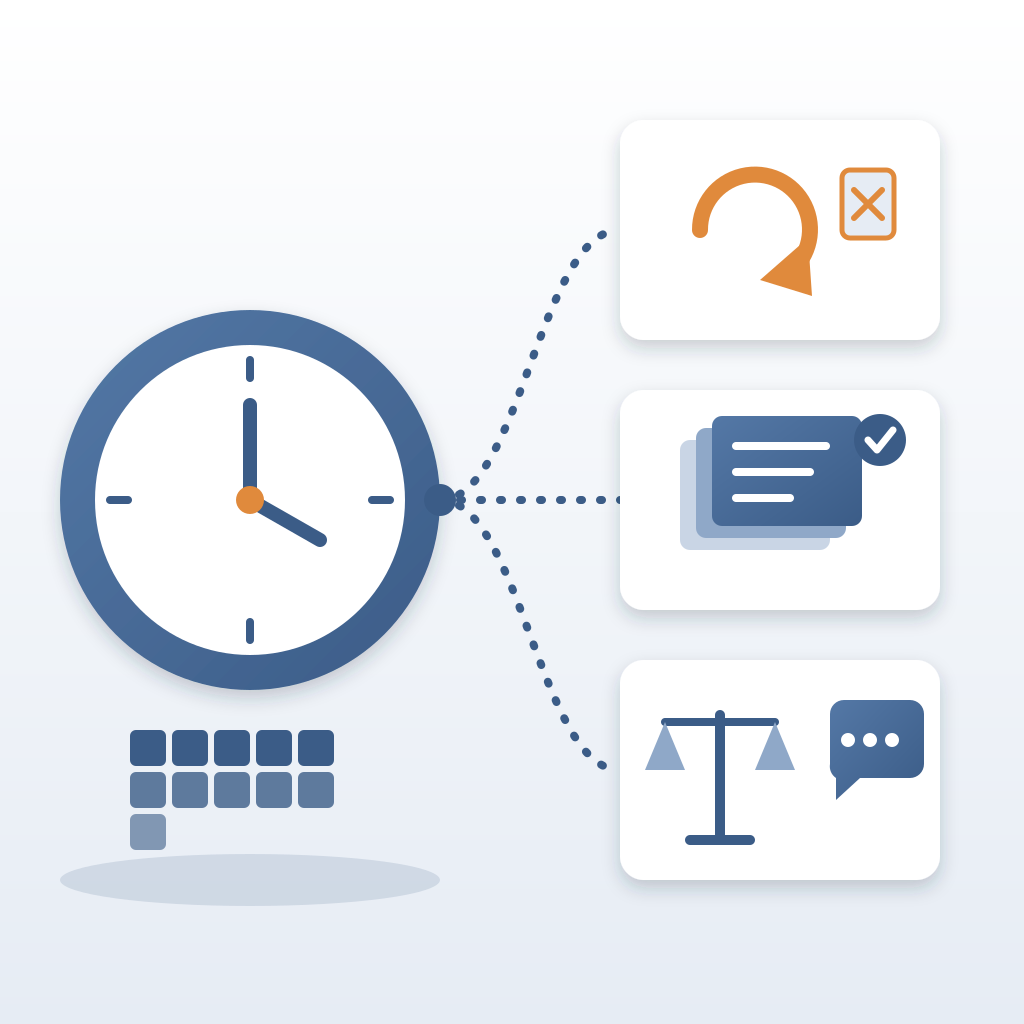
Plans run from Basics at $260 per licence per year to Max at $590, with custom Enterprise pricing. Compare that to $24,750 a year of senior time on clerical work, and the arithmetic is not close. The point is not the price. The point is that a live model costs less than the paperwork it replaces.
The takeaway is simple. One live record of the project inside Revit, with cost riding on the same model. Stop paying senior rates for file clerk work, and give the eleven hours back to the person who can actually win you the next job.