Why Subcontractor Changes Go Unnoticed Until It’s Too Late
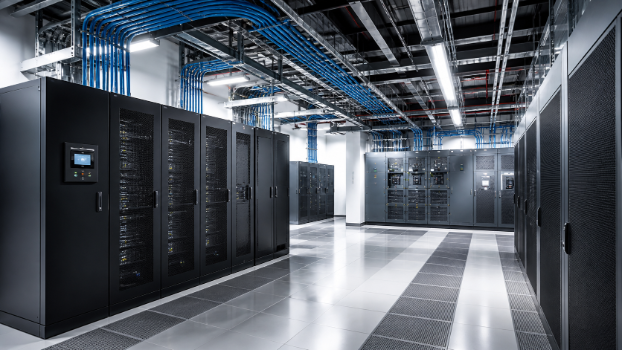
Subcontractor changes usually do not fail loudly at first. They begin as small adjustments: a conduit bank shifted around a beam, a cable tray raised slightly to clear ductwork, a UPS feeder rerouted in the field, or a mechanical contractor changing access space around cooling equipment. On paper, each change may look manageable. In a live construction environment, especially inside data centers and mission-critical facilities, these small moves can quietly affect BIM coordination, power distribution, redundancy, cooling performance, schedule logic, and downstream trades. By the time the issue appears in the field, the project is no longer dealing with a simple change. It is dealing with rework, RFIs, cost overruns, delayed commissioning, and avoidable risk to uptime.
Why Subcontractor Changes Go Unnoticed Until It’s Too Late
Subcontractor changes often go unnoticed because construction teams are not always looking at the same version of reality. The design team may be reviewing one model, the field team may be building from another, and trade contractors may be reacting to site conditions faster than documentation can catch up.
In dense MEP environments, this gap becomes dangerous. Electrical, mechanical, HVAC, plumbing, controls, fire protection, and low-voltage systems all compete for limited physical space. A change that solves one subcontractor’s immediate problem can create a hidden coordination issue for another trade two weeks later.
The Hidden Nature of Small Field Changes
Most field changes are not dramatic. A conduit run is adjusted slightly. Cable trays are moved a few inches. A support location changes because of overhead congestion. These decisions are often made to keep work moving, but they can quietly disrupt routing zones, elevation prioritization, and critical routing paths.
The problem is not always the change itself. The problem is that the change is not fully reflected in the federated model, shop drawings, clash reports, or coordination records. That creates a blind spot between what the project thinks is coordinated and what is actually being installed.
Why Late Discovery Creates Bigger Project Risk
Late discovery is expensive because the work has already absorbed labor, material, access planning, and sequencing. Once cable trays, conduit runs, switchgear feeders, or HVAC supports are installed, correction is no longer a design discussion. It becomes field rerouting, costly rework, schedule extensions, RFIs, and possibly change orders.
In mission-critical facilities, late discovery also creates operational risk. Electrical infrastructure, cooling systems, redundancy paths, and backup power systems are tightly connected. A small coordination miss can affect maintainability, safety clearance, commissioning logic, or continuous operation.
The Role of Construction Change Management
Construction change management should act as the control layer between design intent and field execution. It is not just administrative paperwork. It is the system that connects scope, schedule, cost, documentation, approval workflow, and technical impact.
Strong change management makes sure design changes, subcontractor adjustments, RFIs, and change orders do not live in separate silos. Every approved change should trigger a review of the BIM model, affected trades, downstream systems, and schedule impact.
How Change Orders Become Disconnected From the Field
A change order may capture commercial impact without capturing coordination impact. For example, a revised electrical feeder route may be priced and approved, but if that route is not checked against cooling systems, structural supports, and access zones, the project still carries risk.
This is where change order management often fails. The financial record says the change is handled, but the model updates, shop drawings, and field installation plan may not be aligned. That disconnect is how changes become visible only after installation starts.
The Gap Between Design Changes and Actual Construction Work
Design changes move through engineers, general contractors, subcontractors, trade contractors, and field supervisors. Each handoff introduces the chance for outdated information, manual reviews, and compliance gaps.
In data centers, this gap is amplified because power distribution, redundancy, cooling, controls, and security systems must work as an integrated architecture. A change to one system can affect clearance, airflow, heat rejection, cable capacity, or future maintenance access.
BIM Coordination as the First Line of Defense
BIM coordination gives teams a shared technical environment where clashes, routing conflicts, and model updates can be identified before they become physical problems. But BIM only works when it reflects the current state of decisions.
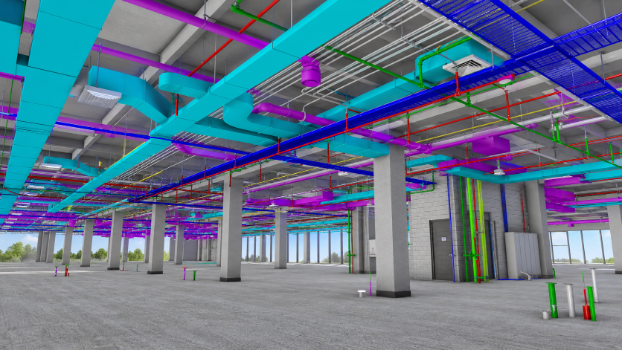
A coordinated model is not a one-time deliverable. It is a living reference for scope, sequencing, trade coordination, and installation accuracy.
Federated Models and Shared Project Visibility
A federated model brings architectural, structural, MEP, electrical, fire protection, and specialty trade models into one coordinated view. This allows stakeholders to see how subcontractor decisions affect the broader project.
For data center work, this visibility is essential. Electrical rooms, UPS galleries, generator connections, cable pathways, switchgear lineups, transformers, and cooling distribution cannot be reviewed independently. Their physical relationships define constructability and reliability.
Model Updates and Change Tracking
Every meaningful subcontractor change should create a model update or at least a documented review. Without tracking, teams lose accountability. Nobody can clearly answer what changed, who approved it, which trades were affected, or whether the latest model matches field conditions.
Model updates also protect downstream trades. A mechanical reroute may affect conduit clearance. A cable tray shift may affect fire stopping or structural supports. Tracking keeps these consequences visible.
Clash Detection and Clash Reports
Clash detection helps identify physical conflicts before construction reaches the field. However, clash detection is only useful when paired with disciplined resolution. A clash report should not be treated as a checklist. It should be used to understand root cause, responsible trade, required action, and schedule urgency.
Coordination meetings should review unresolved clashes, new changes, RFIs, and downstream impact together. Otherwise, teams solve symptoms while the underlying coordination risk remains.
Where Subcontractor Coordination Breaks Down
Subcontractor coordination usually breaks down when each trade optimizes for its own scope without enough visibility into shared space. This happens often in overhead MEP corridors, electrical rooms, utility yards, and prefabricated assemblies.
The result is congestion, trade stacking, access conflicts, and rework that could have been avoided with earlier coordination.
Siloed Trade Decisions
Electrical contractors may adjust conduit or cable trays. HVAC teams may revise duct routing. Low-voltage or controls teams may need new pathways. Each choice may be reasonable alone, but together they can create a crowded and unbuildable condition.
That is why coordination meetings must focus on shared impact, not just individual progress.
Missing Routing Zones and Elevation Prioritization
Routing zones and elevation prioritization are critical in dense infrastructure. Cable trays, conduit runs, ductwork, piping, and structural supports need clear spatial hierarchy.
When that hierarchy is missing, the first trade installed can unintentionally block critical routing paths for downstream trades. This creates field rerouting, delays, and scope disputes.
LOD Execution Problems
LOD execution determines how reliable the model is for coordination and fabrication. LOD 350 may be sufficient for coordination, while LOD 400 is needed for prefabrication and shop drawings.
Poor LOD execution creates false confidence. The model appears coordinated, but it lacks the detail needed to support real installation decisions.
Technical Systems Most Affected by Unnoticed Changes
The systems most affected are usually the ones with high physical density and low tolerance for disruption: electrical infrastructure, cooling systems, power distribution, and redundancy architecture.
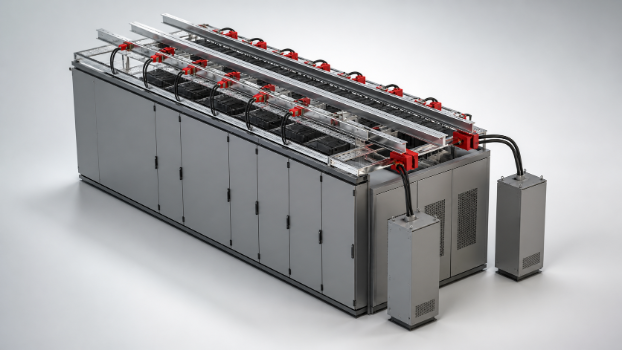
In mission-critical facilities, these systems are not independent. They support uptime together.
Electrical Infrastructure and Power Distribution
Electrical changes carry high risk because power distribution relies on clear routing, access, separation, and maintainability. Conduit, cable trays, switchgear, transformers, panel paths, and feeder routes all need precise coordination.
A small routing change can affect clearance, load path, installation sequence, or future expansion capacity.
Backup Power Systems and Redundancy
UPS systems, uninterruptible power supply paths, backup generators, and redundant power distribution require strict coordination. Redundancy is not just having extra equipment. It is maintaining independent, reliable paths that support continuous operation.
Unnoticed changes can compromise that separation or make maintenance harder.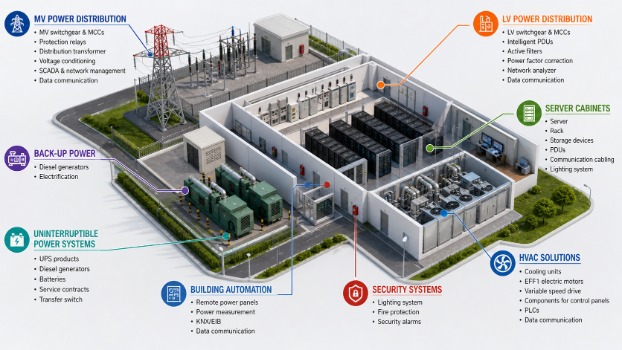
Cooling and HVAC Interaction
Cooling systems interact directly with electrical layouts. Power consumption generates heat, and heat requires airflow, containment, and cooling capacity.
If electrical routing blocks airflow, access, or equipment spacing, energy efficiency and operational reliability can suffer.
Cable Tray and Conduit Congestion
Cable tray and conduit congestion is one of the clearest signs that coordination failed upstream. Once pathways become compressed, every later trade pays the price through slower installation, tighter access, and increased rework.
The Cost of Unnoticed Changes
The cost is not limited to one correction. Unnoticed changes trigger labor remobilization, material waste, RFIs, change orders, budget overruns, and margin erosion.
The real damage comes from compounding effects across trades and schedule dependencies.
Rework and Schedule Extensions
Rework consumes labor twice and delays other trades. In data centers, it can also compress commissioning windows, which are already difficult to protect.
Budget Overruns and Margin Erosion
Small missed changes often become expensive because they are found late. Overtime, replacement materials, redesign, and subcontractor disputes all reduce project margin.
Stakeholder Trust and Accountability
When documentation and tracking are weak, accountability becomes unclear. Owners, GCs, engineers, and subcontractors lose confidence in the coordination process.
How to Prevent Subcontractor Changes From Slipping Through
Prevention depends on connecting change management, BIM coordination, documentation, and field execution into one workflow.
Centralize Change Documentation
RFIs, change orders, design changes, model updates, and approval notes should be traceable in one connected process.
Connect Change Management With BIM Workflows
Every approved change should trigger BIM review, model checking, and clash detection before field installation.
Improve Coordination Meetings
Coordination meetings should focus on new changes, unresolved clashes, downstream trades, routing zones, elevation conflicts, and schedule impact.
Use Better Model Checking
Manual reviews are not enough. Stronger model checking helps catch compliance gaps and hidden conflicts before they become field issues.
Modern Delivery Methods That Reduce Late-Stage Risk
Modern construction methods reduce risk only when coordination quality improves with them.
Prefabrication and Shop Drawings
Prefabrication depends on accurate LOD 400 models and reliable shop drawings. If unnoticed changes enter late, prefabricated assemblies may arrive wrong.
Modular Construction and Earlier Coordination
Modular construction shifts decisions earlier. That improves efficiency but makes late changes more expensive.
Sustainable Construction and Energy Efficiency
Sustainable construction depends on energy efficiency, lower power consumption, renewable energy, cooling optimization, and net zero emissions goals. Poor coordination can weaken operational performance.
Future Trends in Data Center and Mission-Critical Coordination
Future facilities will be denser, faster to build, and more dependent on precise coordination.
Higher Power Density and Liquid Cooling
Liquid cooling and higher power density increase routing complexity. Small changes can affect maintenance, cooling paths, and electrical infrastructure.
More Complex Redundancy Models
Redundancy models will continue to grow more complex as uptime expectations rise. UPS, generators, switchgear, transformers, and power paths must remain coordinated from design through commissioning.
Smarter BIM Tracking and Digital Coordination
The future is connected documentation, live model updates, automated clash detection, and stronger tracking across stakeholders.
Conclusion: Small Changes Need Big Visibility
Subcontractor changes become dangerous when they are not tracked, modeled, coordinated, or communicated. In data centers and mission-critical facilities, the impact reaches beyond construction inconvenience. It can affect electrical infrastructure, cooling systems, redundancy, uptime, cost, and schedule. The solution is not more paperwork. It is connected change management, disciplined BIM coordination, clear documentation, and early visibility across every trade.