
Why Quality Control Fails in Fast BIM Workflows
Fast BIM workflows do not fail because teams move quickly. They fail because model quality, validation, and coordination control do not move at the same speed as design changes. In data center and mission-critical projects, this gap becomes expensive fast. A missed feeder route, a weak clearance check, a late UPS room adjustment, or a poorly coordinated cable tray path can affect power distribution, cooling interaction, redundancy models, field sequencing, and ultimately project delivery. BIM quality control has to be more than clash detection. It has to function as a continuous technical assurance system.
Why Quality Control Breaks Down in Fast BIM Workflows
Fast BIM environments compress decisions. Models are updated quickly, coordination meetings move fast, and teams often assume that a clean-looking federated model means the work is ready. In reality, model quality depends on geometry, data, parameters, documentation, and constructibility being checked together.
Speed Creates More Room for Coordination Errors
When the model changes daily, small conflicts multiply. A shifted panel lineup may affect feeder routing. A revised cooling unit clearance may create new electrical access issues. These are not always dramatic clashes, but they can create field confusion, delays, and rework.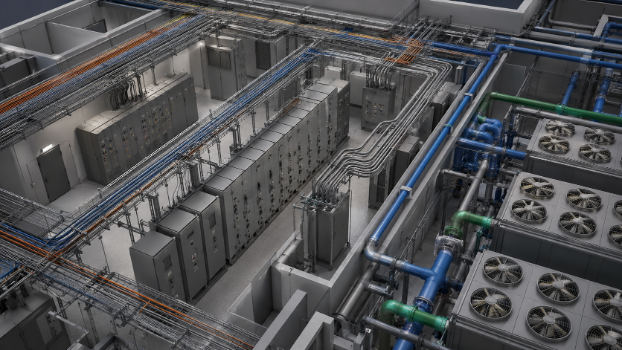
Manual Reviews Cannot Keep Up With Constant Model Changes
Manual checking still matters, but it cannot be the main QA/QC process in a fast workflow. Reviewers can miss late-stage design errors when there is poor visibility into what changed, which issues were closed, and which requirements still need validation.
Quality Control Often Happens Too Late
Many BIM teams treat quality control as a pre-submission activity. That is too late. If model audits happen after procurement, fabrication, or field layout, the cost of correction rises sharply. Quality control has to start while coordination decisions are still flexible.
Understanding BIM Quality Assurance vs. BIM Quality Control
BIM quality assurance and BIM quality control are connected, but they are not the same. QA prevents errors through standards and process. QC detects errors through checking, validation, and issue tracking.
BIM Quality Assurance: Preventing Model Problems Before They Happen
Quality assurance begins with the BIM Execution Plan, Level of Development requirements, naming conventions, data standards, and compliance rules. In a data center, this must include discipline-specific expectations for electrical systems, MEP systems, grounding paths, panel clearances, and equipment access.
BIM Quality Control: Finding and Resolving Model Issues
Quality control checks whether the model actually meets those requirements. This includes clash detection, model validation, compliance checks, issue tracking, and model audits across mechanical systems, structural elements, electrical conduits, and building systems.
Why QA and QC Must Work Together
QC without QA creates endless correction cycles. QA without QC creates false confidence. Strong BIM QA/QC connects requirements, model checking, automated checks, and expert review into one continuous quality management process.
The Core BIM Model Quality Factors That Need Control
A high-quality BIM model is not just accurate-looking geometry. It must be coordinated, complete, data-rich, and buildable.
Geometry Accuracy
Geometry accuracy matters because installation space is limited. In power-dense facilities, cable tray, conduit, busway, switchgear, UPS systems, and cooling infrastructure often compete for the same zones.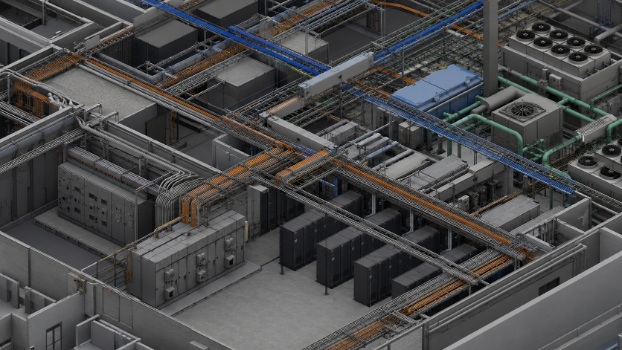
Data Accuracy and Parameter Consistency
Poor parameters can damage schedules, quantities, asset records, and handover documentation. Data accuracy and data integrity are especially important when models support commissioning, operations, monitoring, and future maintenance.
Naming Conventions and Documentation Standards
Inconsistent naming creates confusion across views, files, systems, and clash reports. Clear naming conventions help teams find issues faster and reduce mistakes during coordination reviews.
Model Completeness and Level of Development
A model can be coordinated but still incomplete. LOD requirements must define what is modeled, what is schematic, and what is construction-ready. Without that clarity, teams may rely on model elements that were never intended for field installation.
Clash Detection Is Necessary, But Not Enough
Clash detection is useful, but it is not full BIM quality control. A model can pass clash detection and still fail compliance, access, sequencing, or operational requirements.
Hard Clashes
Hard clashes are physical conflicts, such as conduits intersecting steel or cable trays crossing ductwork. These are easy to identify but only represent one layer of model quality.
Soft Clashes
Soft clashes involve clearances, access, and code-related spacing. In electrical rooms, panel working space, UPS access, battery clearances, and maintenance paths are often more important than simple object intersections.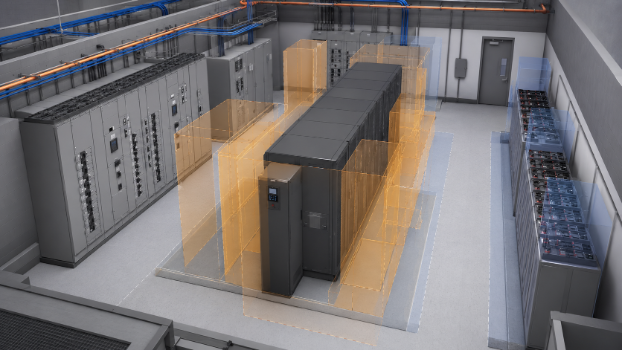
Workflow Clashes
Workflow clashes happen when the model is technically possible but difficult to build. A feeder path may fit geometrically but block installation sequencing or future service access.
False Positives and Poor Clash Rules
Generic clash rules produce noise. Too many false positives weaken review discipline. Effective clash coordination needs filtered rules based on discipline, system priority, construction risk, and real field impact.
Why Electrical and MEP BIM Quality Control Needs More Attention
Electrical and MEP coordination failures carry serious downstream impact in data centers. These systems affect uptime, redundancy, cooling, access, safety, and operational efficiency.
Electrical BIM Requires More Than Basic Clash Detection
Electrical BIM must account for power distribution, redundancy models, switchgear layouts, UPS systems, grounding paths, equipment access, and monitoring points. A route that fits in the model may still violate operational logic.
Feeder Routing and Conduit Coordination
Feeder routing and conduit spacing are high-risk areas. Dense electrical corridors can become unbuildable if conduit banks, tray elevations, and mechanical systems are not reviewed together.
Cable Tray and High-Voltage Routing Risks
High-voltage cable trays require careful coordination with structure, cooling airflow, fire protection, and access zones. Small routing errors can create major field coordination problems.
Panel Clearances and Working Space
Panel clearances are not minor details. Poor working space can create regulatory compliance issues, unsafe maintenance conditions, and costly late-stage redesign.
The Role of Standards in Preventing BIM QC Failure
Fast workflows need stronger standards, not lighter ones. Without shared rules, every team models differently.
BIM Execution Plan as the Quality Baseline
The BEP should define model responsibilities, review cadence, file exchange, QA/QC process, compliance requirements, and issue resolution expectations.
IFC Files and Open Standards
IFC files and open standards help teams exchange model data, but poor exports can damage model integrity. Validation is needed after every major exchange.
BCF and Issue Tracking
BCF supports structured issue tracking by linking problems to location, owner, priority, and status. This prevents unresolved conflicts from disappearing between meetings.
Federated Models and Shared Environments
A federated model exposes discipline conflicts, but it also reveals inconsistent data standards. A common data environment improves visibility and reduces coordination gaps.
Why Visibility and Monitoring Matter in Fast BIM Coordination
Quality fails when teams cannot see what changed, what was checked, and what remains unresolved.
Real-Time Visibility Into Model Changes
Real-time visibility helps teams identify last-minute changes before they affect field coordination. This is critical when power, cooling, and structural systems are changing together.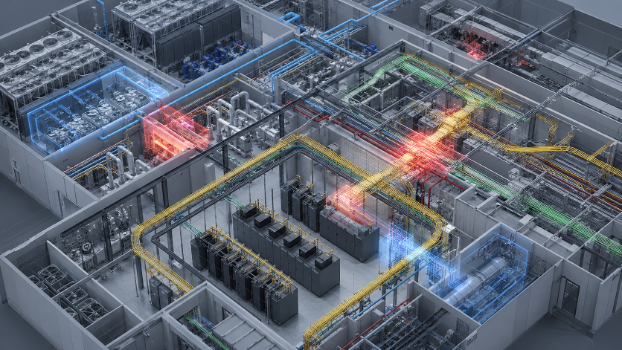
Continuous Monitoring Instead of One-Time Review
Continuous monitoring catches errors earlier than milestone-only reviews. It also supports better model audits and continuous auditing.
Issue Ownership and Resolution Tracking
Every issue needs an owner, priority, deadline, and verification step. Finding a clash is not the same as resolving it.
Automation and AI in Modern BIM QA/QC
Automation and AI help teams scale quality control without slowing coordination.
Automated Model Checking
Automated model checking can validate naming, parameters, clearances, geometry, LOD, and compliance rules quickly and consistently.
AI-Powered QA and Anomaly Detection
AI-powered QA can identify anomaly patterns, missing data, repeated errors, and high-risk model zones before they become site errors.
Predictive Analytics for Construction Risk
Predictive analytics can help teams understand which issues are likely to cause rework, delays, or cost overruns.
Automated Workflows and Cloud-Based Collaboration
Automated workflows work best when connected to cloud-based collaboration, shared model environments, dashboards, and issue tracking.
How Better BIM QA/QC Improves Project Delivery
Better BIM QA/QC improves both technical accuracy and business outcomes.
Reduced Rework and Fewer Site Errors
Early validation reduces site errors, field confusion, and expensive rework.
Faster Coordination and Better Team Alignment
Clear model quality standards help teams make faster, more reliable decisions.
Higher Accuracy Across Design and Construction
Accurate models improve procurement, prefabrication, installation, commissioning, and handover.
Practical BIM QA/QC Framework for Fast Workflows
A practical framework keeps speed and quality aligned.
Step 1: Define Requirements Before Modeling Starts
Set BEP rules, LOD expectations, naming conventions, data standards, and compliance checks early.
Step 2: Validate Models Continuously
Check geometry, data, clearances, and model completeness throughout the workflow.
Step 3: Use Discipline-Specific Clash Rules
Electrical, mechanical, and structural systems need different clash rules and review priorities.
Step 4: Track Every Issue Until Resolution
Issue tracking should continue until the fix is verified, not just assigned.
Step 5: Combine Automation With Expert Review
Automation improves speed, but expert review protects constructibility and operational logic.
Future Trends in BIM Quality Control
BIM quality control is moving from reactive checking to proactive risk prevention.
From Reactive Clash Detection to Proactive Quality Management
The best teams use continuous monitoring, automated checks, and quality assurance before errors compound.
More Integrated BIM and Construction Workflows
Future workflows will connect BIM, field teams, monitoring systems, and construction management tools more tightly.
Smarter Risk Detection With AI
AI will increasingly identify risky patterns across model data, coordination history, and project delivery metrics.
Conclusion: Fast BIM Workflows Need Stronger Quality Systems
Fast BIM workflows need stronger quality systems, not lighter ones. In mission-critical facilities, a missed model issue can affect power distribution, UPS access, cooling interaction, sustainability targets, and operational efficiency. The solution is a connected BIM QA/QC process built on standards, validation, visibility, automation, and expert engineering judgment.