Why Data Center Costs Change Without Warning
Data center budgets do not usually change without reason, but they often change before the reason is visible to non-technical teams. A small shift in IT load, rack power density, uptime expectation, utility feed availability, or cooling capacity can ripple through the entire facility design. What begins as a minor electrical adjustment can quickly affect UPS systems, backup generators, switchgear, transformers, PDUs, RPPs, monitoring, commissioning, energy consumption, and long-term OpEx. In mission-critical environments, cost volatility is rarely random. It is usually the result of hidden infrastructure dependencies becoming real.
Why Data Center Costs Can Shift So Quickly
Data centers are cost-sensitive because every major system is connected. Power, cooling, redundancy, capacity, uptime, and monitoring do not operate in isolation. When one requirement changes, the facility must often be rebalanced around it.
For example, a higher power demand may require larger UPS capacity, more backup power, added cooling infrastructure, stronger electrical distribution, and more space for maintenance access. That is why early CapEx estimates can look stable, then change suddenly once final loads and reliability targets are confirmed.
The Difference Between Visible Costs and Hidden Infrastructure Costs
Visible costs are easy to understand: racks, servers, cabinets, white space, and basic equipment. Hidden infrastructure costs are harder to see because they sit behind the operational promise of uptime.
These include electrical capacity, utility power upgrades, utility feed constraints, remote power panels, power distribution units, sensors, monitoring platforms, and environmental monitoring. A facility can look properly sized on paper while still lacking rack-level capacity, row-level capacity, or room-level capacity for real deployment.
Why Early Budget Estimates Often Change Later
Early budgets often rely on assumptions about IT load, power density, redundancy, and cooling systems. As the design matures, those assumptions become engineering requirements.
If rack loads increase or an owner chooses Tier III or Tier IV reliability, the design may need additional UPS systems, backup generators, switchgear, transformers, PDUs, and RPPs. These are not cosmetic changes. They affect procurement, installation labor, commissioning, space planning, and operational costs.
Power Infrastructure: The Biggest Driver Behind Unexpected Cost Changes
Power infrastructure is usually the largest source of unexpected data center cost movement. The reason is simple: power determines how much IT equipment the facility can support and how much backup, cooling, and distribution infrastructure must exist behind it.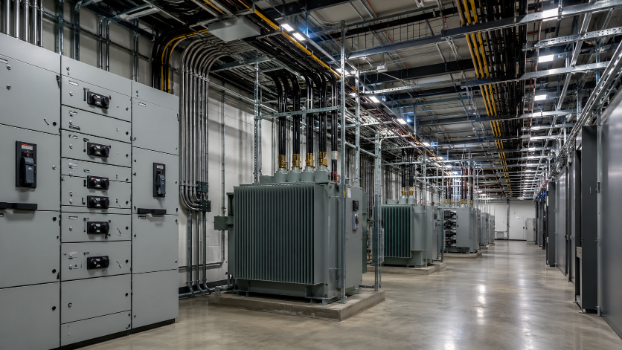
Higher power consumption increases energy costs, but it also changes the physical electrical architecture. More power demand can mean larger service capacity, different voltage levels, more distribution paths, additional protective equipment, and increased coordination across the entire facility.
Utility Power, Utility Feed, and Electrical Capacity
Utility power is often a hard constraint. If the available utility feed cannot support the planned capacity, the project may need service upgrades, medium voltage infrastructure, new transformers, or revised phasing.
Electrical capacity is not only about total megawatts. It is about where power is available, how it is distributed, and whether the system can support future growth without introducing single points of failure.
Single-Phase, Three-Phase, and Medium Voltage Requirements
Single-phase power has limited use in high-density environments. Modern data centers typically depend on three-phase power because it supports larger, more balanced loads.
As capacity increases, medium voltage systems may become necessary to distribute power efficiently across the site. That change can affect switchgear, transformers, protection schemes, installation complexity, and long-term scalability.
Switchgear, Transformers, PDUs, and RPPs
Switchgear controls and protects the electrical system. Transformers adjust voltage levels. PDUs and RPPs distribute power closer to IT racks.
When capacity changes, the entire chain may need to change. A higher rack-level load can require larger PDUs, more remote power panels, revised breaker sizing, additional pathways, and updated monitoring.
Backup Power and Redundancy: Why Reliability Raises Cost
Uptime is expensive because it requires infrastructure that may sit idle until something fails. Backup power, redundant systems, and fault-tolerant design all increase equipment count, space needs, maintenance, and testing requirements.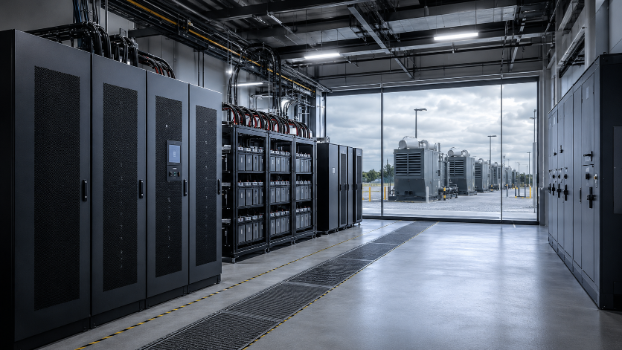
The higher the uptime target, the less tolerance the facility has for weak points. That is where redundancy becomes a major cost driver.
UPS Systems and Uninterruptible Power Supply Design
UPS systems protect IT load during short power interruptions and bridge the gap before generator systems take over. An uninterruptible power supply must be sized around load, runtime, redundancy, and battery backup requirements.
If IT load increases, UPS capacity often increases with it. That may also add battery rooms, lithium-ion batteries, energy storage systems, cooling load, and maintenance complexity.
Backup Generators and Generator Systems
Backup generators support longer outages. They add cost through equipment, fuel systems, emissions controls, testing, paralleling gear, and service access.
Generator systems also affect permitting and site design. For Tier III and Tier IV facilities, backup generators are not optional extras. They are part of the uptime strategy.
Battery Backup and Energy Storage Systems
Battery backup is becoming more sophisticated. Traditional UPS batteries are now being evaluated alongside battery energy storage systems, lithium-ion batteries, and broader energy storage systems.
These systems can improve resilience and energy flexibility, but they also require controls, safety planning, thermal management, and integration with the electrical architecture.
Tier Levels, Uptime, and Fault Tolerance
Tier level directly affects cost because it defines how much failure the facility can survive. A basic design may handle normal operation, but a fault-tolerant data center must continue operating during equipment failure or planned maintenance.
Higher uptime means more redundant components, redundant power paths, and monitoring.
Tier III and Concurrent Maintainability
Tier III design supports concurrent maintainability. That means planned maintenance can occur without shutting down critical load.
To achieve this, the facility needs redundant components and alternate distribution paths. The cost increase is real, but so is the operational value.
Tier IV and Fault-Tolerant Design
Tier IV design goes further by addressing single points of failure. A fault tolerant facility must survive certain failures without interrupting operations.
That requires duplicate systems, deeper monitoring, and more complex control logic. The result is higher CapEx and higher OpEx.
N+1, 2N, and 2N+1 Redundancy Models
N+1 redundancy adds one extra component beyond what is required. A 2N configuration duplicates the required system. A 2N+1 model adds even more resilience.
Each model changes cost differently. More redundancy means more UPS modules, generators, cooling units, power paths, and maintenance.
Capacity Planning: How Load Growth Creates Budget Surprises
Capacity planning is where many surprises begin. A facility may have enough total capacity but not enough power or cooling in the right row, room, or rack.
Poor planning leads to energy waste, stranded capacity, and expensive redesigns.
Rack Loads and Power Density
Rack loads are rising, especially in AI data centers. GPU clusters and high-power workloads increase power density and heat output.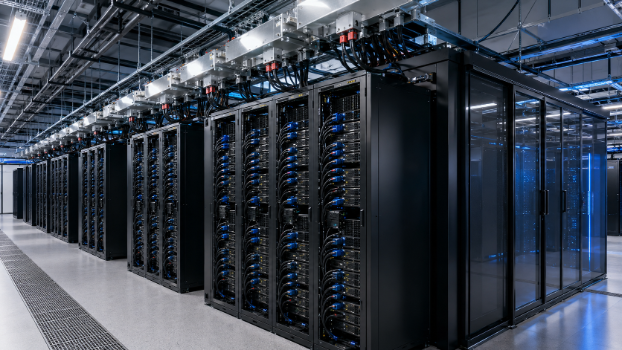
That affects PDUs, RPPs, UPS systems, backup generators, and cooling infrastructure.
IT Load and Power Demand Forecasting
IT load drives power requirements and cooling capacity. If forecasting is too conservative, the facility may need late-stage upgrades.
Accurate power demand planning reduces cost surprises.
Modular Infrastructure and Scalable Design
Modular infrastructure helps avoid overbuilding while preserving growth options. It allows teams to add power, cooling, and backup capacity in stages.
This is especially useful for AI workloads and fast-changing demand profiles.
Cooling Systems and Thermal Management
Cooling costs rise with power density. More power becomes more heat, and that heat must be removed reliably.
Cooling systems affect energy consumption, water usage, uptime, and equipment life.
HVAC, CRAC Units, and CRAH Units
HVAC, CRAC units, CRAH units, and precision air conditioning keep temperature ranges stable. When IT load rises, cooling capacity must follow.
Redundant cooling also adds cost because uptime depends on thermal stability.
Airflow, Hot/Cold Aisle Containment, and Temperature Ranges
Good airflow reduces energy waste. Hot/cold aisle containment helps prevent mixing and hot spots.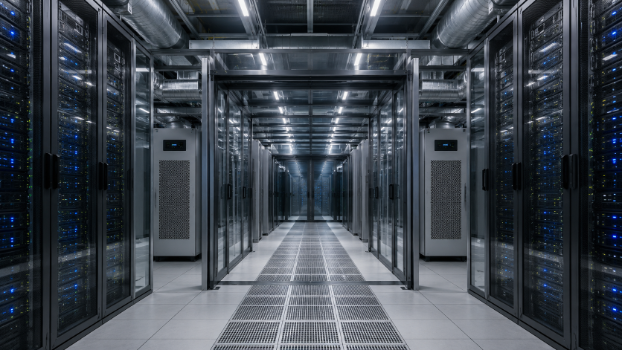
Airflow monitoring and environmental monitoring help teams detect thermal problems before downtime occurs.
Liquid Cooling for AI and High-Density Workloads
Liquid cooling is becoming more important for AI workloads, GPU clusters, and high-power workloads. It can improve thermal management, but it changes design, maintenance, and risk planning.
Monitoring, DCIM, and Real-Time Visibility
Costs often change without warning when teams lack visibility. DCIM tools, sensors, building management systems, and real-time monitoring reveal what is happening across power, cooling, and capacity.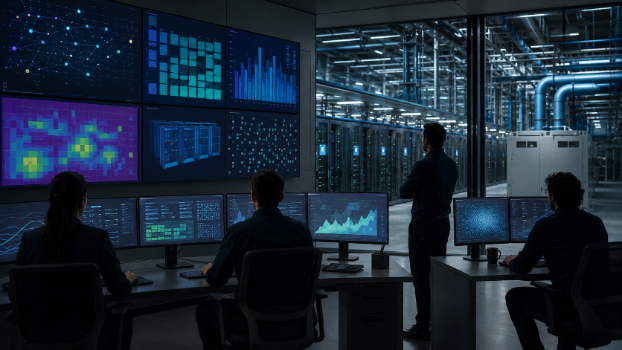
DCIM Tools and Data Center Infrastructure Management
Data center infrastructure management helps track rack-level capacity, power usage effectiveness, cooling efficiency, and asset utilization.
Without DCIM, teams may overbuild in one area while running out of capacity in another.
Real-Time Alerts, Sensors, and Anomaly Detection
Real-time alerts, sensors, and anomaly detection help identify power spikes, airflow issues, and thermal risks.
This reduces unplanned downtime and downtime costs.
BMS and DCIM Dashboards for Operational Control
BMS and DCIM dashboards give operators a single view of performance. Better visibility helps control OpEx and improve energy efficiency.
Energy Efficiency, PUE, and Operating Cost Control
Energy efficiency directly affects operating costs. PUE, or power usage effectiveness, shows how much facility energy supports IT load versus overhead.
Power Usage Effectiveness and Cooling Efficiency
Improving PUE often means improving cooling efficiency, reducing distribution losses, and matching infrastructure to real demand.
Energy Waste and Operational Cost Increases
Energy waste comes from overcooling, poor airflow, inefficient power distribution, and unused capacity. At data center scale, small inefficiencies become major costs.
Sustainability, Renewable Energy, and Environmental Pressure
Sustainability now affects infrastructure decisions. Renewable energy, clean energy, emissions, carbon footprint, ESG targets, and environmental impact all influence cost.
Renewable Energy and Clean Energy Integration
Renewables and on-site generation can support sustainability goals, but they require integration with backup power and electrical controls.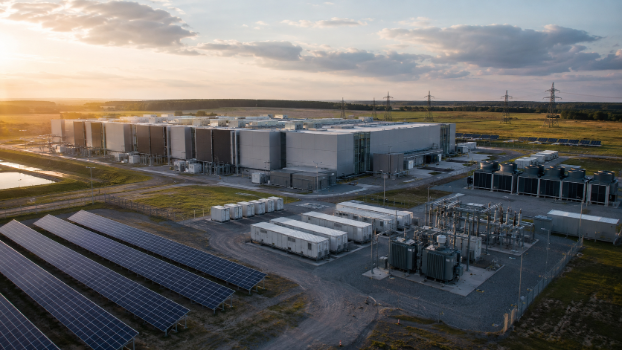
Carbon Footprint, ESG Targets, and Environmental Impact
Carbon footprint reduction may influence cooling systems, energy storage systems, procurement, and operational strategy.
Water Usage and Free Cooling
Water usage is a growing concern. Free cooling can reduce mechanical cooling demand where climate conditions support it.
AI Data Centers and the Future of Cost Volatility
AI is making data center planning less predictable. AI workloads, GPU clusters, and high-power workloads require more power-first design thinking.
GPU Clusters and High-Power Workloads
GPU clusters increase power consumption and cooling infrastructure needs. They can quickly expose weak assumptions in older designs.
Power-First Design for Modern Data Centers
Power-first design starts with electrical capacity, redundancy, and cooling feasibility before space planning. This reduces late-stage surprises.
Fuel Cell Systems and Alternative Backup Models
Fuel cell systems and alternative backup models may support clean energy goals, but adoption depends on reliability, cost, regulation, and integration.
How to Reduce Unexpected Data Center Cost Changes
The best way to control cost volatility is to validate power, cooling, capacity, and redundancy early.
Align Uptime Goals Before Finalizing Infrastructure
Tier III, Tier IV, N+1, 2N, and 2N+1 decisions should be made before major budgeting.
Validate Power and Cooling Capacity Early
Rack-level, row-level, and room-level capacity should be tested against real IT load and power density assumptions.
Use Monitoring Data to Control OpEx
DCIM tools, BMS dashboards, sensors, and real-time alerts help reduce energy waste and surprise maintenance costs.
Conclusion: Cost Changes Are Usually a System Warning
When data center costs change without warning, the warning was usually inside the system first. Power infrastructure, cooling systems, backup power, redundancy, monitoring, energy efficiency, sustainability, and AI workloads are all connected. The teams that understand those connections early are the teams that avoid the most expensive surprises.