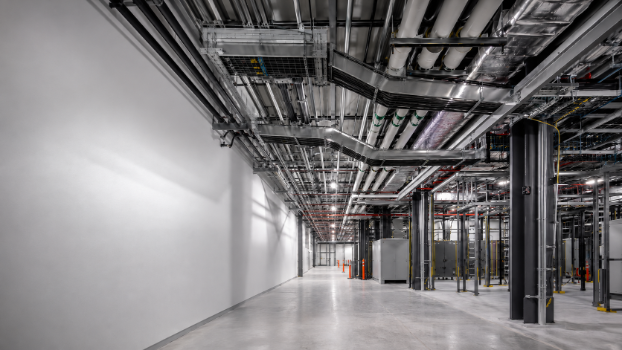
Why Data Center Coordination Gets Out of Control
Data center coordination rarely breaks down because one team misses one drawing note. It usually gets out of control because too many systems are changing at the same time, under schedule pressure, with each trade optimizing its own scope instead of the facility as one connected infrastructure system. In a mission-critical environment, a small routing decision can affect power distribution, cooling performance, fire protection access, structural clearances, maintenance paths, commissioning sequence, and future expansion capacity. That is why coordination in data centers is not just a BIM exercise. It is a technical risk-control process that determines whether the project can actually be built, tested, energized, and operated without expensive disruption.
The Density Problem Is Bigger Than Most Teams Expect
Data centers are among the most infrastructure-heavy building types in construction. The architectural footprint may look simple compared with hospitals, airports, or high-rise towers, but the technical density behind the walls, above the ceiling, and below the slab is extreme. Power, cooling, containment, controls, life safety, security, and network systems all compete for limited space.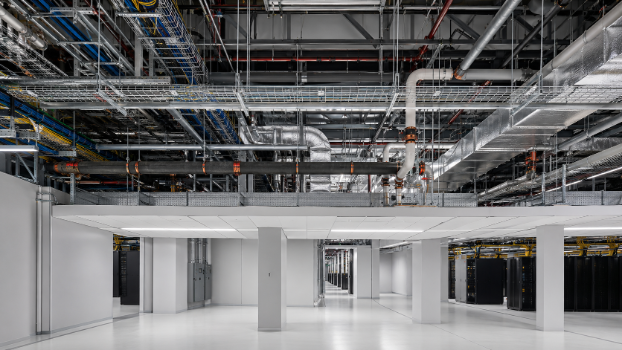
The problem becomes harder because these systems do not carry equal flexibility. A small branch conduit can bend around an obstacle. A bus duct, medium-voltage feeder, chilled water header, or large cable tray route cannot be adjusted casually without affecting voltage drop, service access, thermal performance, or installation sequence. When every system is modeled as if it has the same level of flexibility, coordination starts to produce false confidence.
Critical Infrastructure Has Less Tolerance for Field Improvisation
In many commercial projects, field teams can resolve minor conflicts through layout adjustments. In a data center, that freedom is much smaller. Electrical rooms, UPS galleries, generator yards, switchgear lineups, battery areas, and white space pathways depend on strict clearances and controlled installation logic.
A two-inch change in the wrong location can block an access panel, reduce working clearance, shift a tray outside its support zone, or interfere with a planned prefabricated assembly. The physical clash may look small in the model, but the operational consequence can be expensive. This is where coordination often loses control: teams focus on geometry, while the real issue is buildability and operational intent.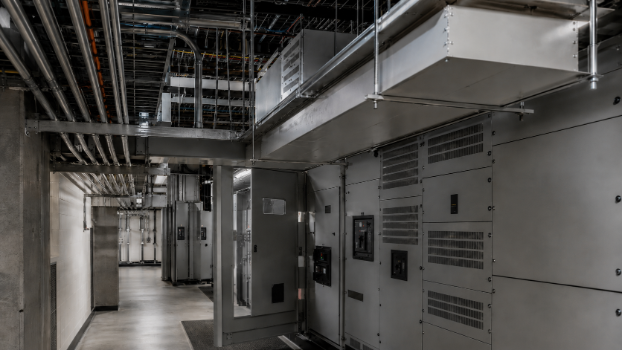
Scope Changes Move Faster Than Coordination Cycles
Data center programs are often driven by fast-moving tenant requirements, equipment availability, utility constraints, and evolving capacity targets. Rack density changes. Electrical loads are adjusted. Cooling strategies shift. Equipment vendors update dimensions. Utility service decisions arrive late. Procurement substitutions become necessary. Each change may be reasonable on its own, but together they create a moving target.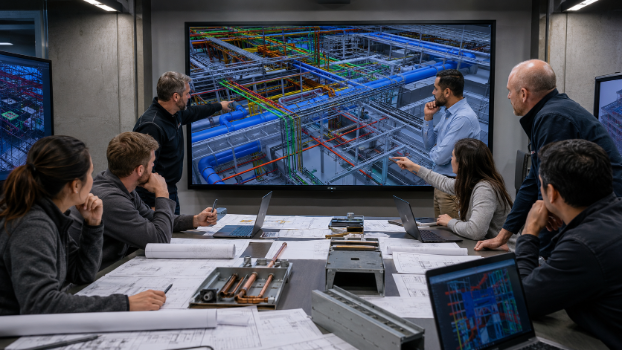
When coordination cycles cannot keep up with design changes, the model becomes a historical record instead of a decision tool. Teams continue working from information that is technically outdated, even if it looks complete.
The Model Can Look Coordinated While the Project Is Not
A clean clash report does not automatically mean a coordinated project. Clash detection only confirms that modeled objects do not overlap according to selected rules. It does not confirm that the installation sequence works, that access is preserved, that clearances meet code, or that future maintenance is practical.
This distinction matters because data center coordination often fails in the gaps between “not clashing” and “actually buildable.” A feeder route may clear a pipe in the model but leave no safe working space. A cable tray may avoid ductwork but create an impossible pull path. A pump skid may fit in plan but leave no proper removal path. These are not software problems. They are engineering coordination problems.
Electrical Systems Usually Drive the Hardest Constraints
In data centers, electrical infrastructure often controls the coordination logic. Medium-voltage distribution, transformers, switchgear, UPS systems, PDUs, RPPs, busways, cable trays, grounding networks, and emergency power systems all demand disciplined routing and predictable access. Unlike many mechanical systems, electrical pathways are heavily shaped by separation requirements, bend radius, pulling tension, heat, redundancy, and serviceability.
When electrical architecture is not prioritized early, other systems occupy space that later becomes essential for power distribution. By the time this is discovered, the available options are usually worse: reroute major feeders, redesign supports, shift equipment, add cost, or accept a compromised installation.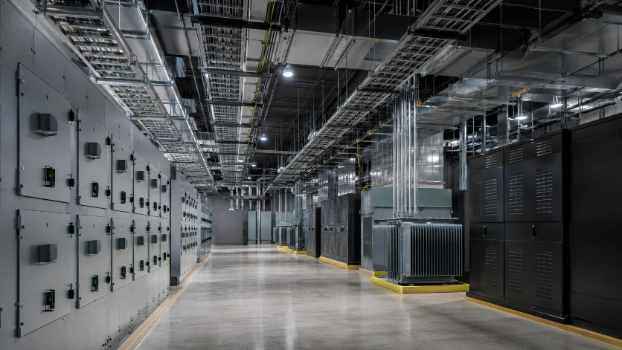
Redundancy Multiplies Coordination Complexity
A data center does not simply need enough infrastructure. It needs resilient infrastructure. Redundant power paths, diverse routing, A/B distribution, backup generation, and failover logic all add layers of coordination. Two systems may look similar in the model, but they often must remain physically and operationally independent.
If teams treat redundant pathways as duplicate geometry rather than separate risk domains, coordination quality drops. The project may accidentally concentrate critical routes in the same congested corridor, share vulnerable support zones, or create maintenance conditions where one side cannot be serviced without affecting the other. True coordination protects the redundancy strategy, not just the physical layout.
Trade Sequencing Is Often Underestimated
Coordination gets out of control when the model is developed without enough attention to how work will actually be installed. Data center projects usually involve prefabricated racks, modular skids, overhead tray systems, large duct sections, heavy electrical equipment, and phased room turnovers. The order of installation matters.
A route that fits after everything is modeled may not be installable after the first three trades have occupied the space. A cable tray may need to go in before ductwork. A bus duct section may need a straight access path. A switchgear lineup may require rigging clearance long before the room looks finished.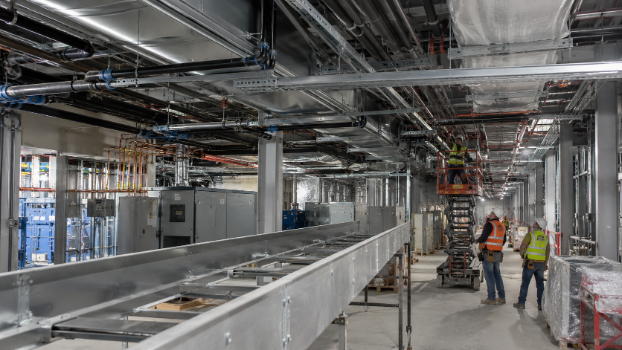
Coordination Must Include Temporary Conditions
Many coordination issues happen because teams only model the final condition. Construction, however, happens through temporary states. Openings are needed for equipment movement. Laydown areas shift. Temporary power and protection systems appear. Commissioning teams need access while construction continues around them.
If these temporary conditions are ignored, the project may reach a point where the final design is theoretically correct but practically difficult to complete. This is especially risky in fast-track data centers, where rooms are turned over in phases and commissioning starts before the entire facility is finished.
Communication Breakdowns Create Technical Drift
Coordination failure is not always caused by lack of skill. Often, it comes from fragmented communication. Engineers, BIM teams, subcontractors, vendors, commissioning agents, and owners may all be working with slightly different assumptions. One team has the latest equipment cut sheet. Another has the older layout. A subcontractor has a field-driven workaround. The model manager has not yet received the change.
This creates technical drift. The project still appears organized, but the source of truth starts to split across emails, markups, spreadsheets, RFIs, and field conversations. Once that happens, coordination becomes reactive. Teams spend more time chasing decisions than preventing conflicts.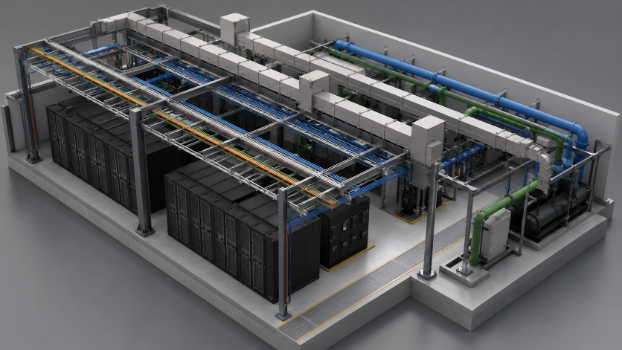
Late Vendor Information Can Reshape Entire Areas
Vendor data is one of the most common causes of late coordination pressure. Switchgear, UPS modules, generators, cooling units, containment systems, and prefabricated assemblies often arrive with final dimensions, clearance requirements, connection points, or maintenance zones that differ from early assumptions.
If the coordination process does not reserve enough flexibility for vendor-driven updates, entire rooms may need to be reworked. The issue is not simply that the vendor changed something. The issue is that the project did not treat vendor uncertainty as a known coordination risk.
Better Coordination Starts With System Prioritization
The best data center teams do not coordinate everything equally. They establish system priority. Major power routes, cooling mains, structural constraints, equipment access zones, code-required clearances, and commissioning paths are locked first. More flexible systems are then routed around them with clear rules.
This approach reduces noise. Instead of endless trade-by-trade negotiation, the project has a hierarchy. Teams understand which elements can move, which elements should not move, and which decisions require engineering review before adjustment.
The Goal Is Decision Clarity, Not Just Clash Reduction
Successful coordination is measured by fewer surprises in the field, faster decisions, cleaner installation, safer commissioning, and better long-term operations. Clash reduction is only one part of that. The real goal is to make technical decisions visible before they become field costs.
Data center coordination gets out of control when teams treat complexity as a modeling problem instead of an infrastructure delivery problem. The projects that stay under control are the ones that connect BIM, engineering judgment, trade sequencing, vendor data, and operational requirements into one disciplined workflow. In a mission-critical facility, coordination is not just about fitting systems into space. It is about protecting uptime before the building is even energized.