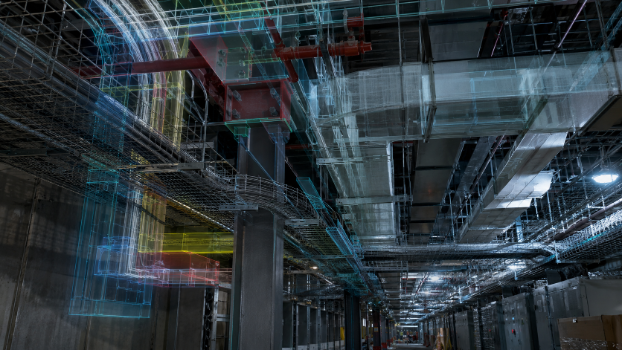
Why Coordination Problems Get Discovered Weeks Too Late
In mission-critical construction, coordination problems rarely appear suddenly. They usually exist for weeks before anyone sees them clearly. A conduit bank is shifted during one design update, a cable tray route is adjusted to avoid steel, a busway clearance is assumed but not validated, and a mechanical rack moves slightly to improve maintainability. Each decision may look reasonable in isolation. The problem is that data center infrastructure does not behave in isolation. Electrical rooms, utility corridors, ceiling spaces, equipment pads, and prefabricated assemblies are tightly connected systems. When coordination is not continuously managed across trades, the real impact of a small model change may not surface until procurement is committed, prefab is released, or field installation is already underway.
The coordination issue is usually created long before it is discovered
Most late coordination problems begin as small mismatches between design intent, model updates, and construction reality. In data centers, this gap is especially dangerous because power architecture is dense, sequenced, and highly dependent on spatial certainty. Medium-voltage rooms, UPS lineups, switchgear sections, transformers, generators, bus ducts, cable trays, and underground duct banks all require predictable access, working clearance, heat dissipation space, structural support, and routing continuity.
A model may show the tray clearing a duct. It may not show whether the tray can still be installed with the required support spacing. A routing change may clear a clash but create a bend-radius problem for feeders. A slab penetration may be coordinated geometrically but misaligned with the actual installation sequence. These are not simple “clash detection” failures. They are constructability failures that remain hidden when coordination focuses only on visible object intersections.
Clash-free does not mean construction-ready
A federated BIM model can pass a clash test and still contain serious field risks. Clash detection identifies physical conflicts between objects. It does not automatically verify installation access, pulling paths, maintenance clearance, grounding continuity, sequencing constraints, vendor requirements, or the practical order of work in the field.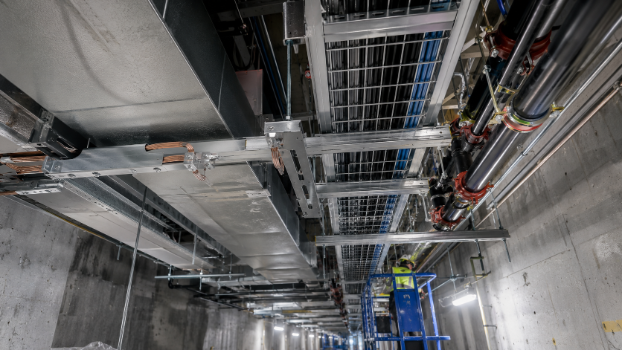
This is why coordination meetings can create a false sense of progress. Teams clear hundreds of clashes, reports look cleaner, and dashboards improve. Yet the most expensive problems may still be sitting inside the model as unresolved coordination logic. In a data center, the difference between a clash-free model and a buildable model is significant. The first confirms objects are not colliding. The second confirms the system can actually be installed, energized, maintained, and expanded without rework.
Coordination breaks down when model ownership is unclear
Late discovery often happens because no one has clear ownership over the downstream impact of changes. One trade updates its model to solve a local problem. Another trade continues working from an older assumption. A BIM coordinator identifies a conflict but does not have enough trade context to evaluate the electrical consequence. A field team sees the issue only after drawings, spool sheets, or prefab packages are already released.
This ownership gap is common in multi-trade environments. Electrical contractors, mechanical contractors, low-voltage teams, fire protection teams, structural teams, and vendors may all be producing updates at different speeds. If responsibilities are not clearly assigned, model changes become passive information instead of managed decisions.
The most dangerous changes are the ones that look minor
A one-foot tray shift may look harmless in a coordination view. In the field, it may affect hanger locations, access panels, bus duct alignment, equipment clearances, or cable pulling strategy. A minor adjustment near an electrical room entrance may create congestion exactly where feeders need to transition cleanly into switchgear. A small routing change above a corridor may force another trade into a zone reserved for future expansion.
Late coordination problems are often not caused by dramatic design revisions. They are caused by small changes that were never fully traced. When those changes are not reviewed against system-level requirements, the model slowly drifts away from what the field can efficiently build.
Data center schedules leave little room for delayed discovery
Data center projects move fast because revenue, capacity, and service commitments depend on speed to market. Long-lead electrical gear, prefabricated racks, containment systems, cable tray packages, and equipment skids are often released before every field condition is fully settled. That makes late coordination discovery especially costly.
Once procurement and prefab begin, a coordination issue is no longer just a modeling problem. It becomes a cost, schedule, and logistics problem. Materials may need to be modified. Spools may need to be remade. Crews may lose production time. Work areas may need to be resequenced. Even worse, a late electrical coordination issue can block multiple trades because power distribution often occupies the same high-value pathways everyone else depends on.
Rework spreads through connected systems
In dense mission-critical environments, rework rarely stays contained. Moving a cable tray can affect supports. Changing supports can affect structure. Adjusting structure can affect ceiling coordination. Shifting equipment access can affect doors, housekeeping pads, conduit stub-ups, and working clearances. One late decision can trigger a chain reaction across drawings, models, materials, labor plans, and inspection readiness.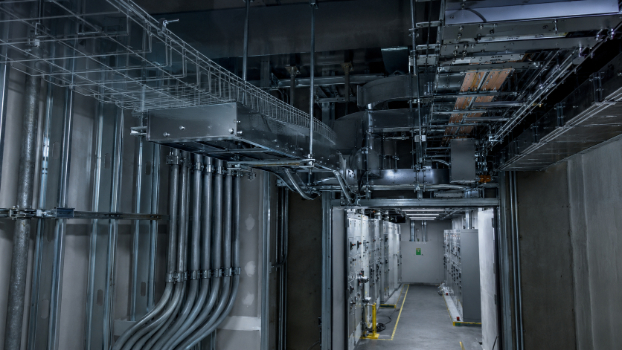
This is why late discovery is so damaging. The issue itself may be small, but the timing makes it expensive. A conflict found during early coordination can be solved with a model update. The same conflict found after prefab release can require redesign, remobilization, material waste, and schedule recovery.
Coordination meetings often review symptoms, not root causes
Many coordination workflows are built around weekly meetings, clash reports, screenshots, and issue logs. These tools are useful, but they can also create delay if they are not tied to real accountability. A problem may be discussed several times without being resolved. A modeler may wait for direction. A subcontractor may assume another trade is moving. A coordinator may close an issue based on geometry without confirming constructability.
The result is a slow-moving coordination loop. Problems are visible enough to be mentioned, but not controlled enough to be solved. By the time the issue becomes urgent, the project has already lost the most valuable window for correction.
Issue tracking must connect decisions to outcomes
Effective coordination requires more than identifying conflicts. It requires knowing who owns the issue, what decision is needed, what systems are affected, what the schedule impact is, and when the resolution must be incorporated into the model. Without that structure, coordination becomes documentation instead of execution.
For electrical infrastructure, this is critical. A decision about cable tray routing, busway clearance, transformer placement, or conduit entry points cannot sit open indefinitely. These items influence procurement, prefab, room layout, commissioning access, and future maintenance. The longer they remain unresolved, the more expensive the final answer becomes.
The real solution is continuous coordination, not late validation
The strongest data center teams do not treat coordination as a weekly checkpoint. They treat it as a continuous control process. Model changes are reviewed in context. Trade impacts are identified early. Design updates are compared against previous versions. Field constraints are brought into the coordination process before installation begins. Most importantly, ownership is clear.
Continuous coordination does not mean more meetings. It means better visibility, faster review cycles, and tighter connection between model changes and construction decisions. Teams need to know what changed, why it changed, who approved it, which trades are affected, and whether the change is safe to build.
Early visibility protects schedule confidence
When coordination problems are discovered early, they are technical issues. When they are discovered late, they become project risks. Early visibility gives teams time to reroute, resequence, adjust supports, update drawings, coordinate prefab, and communicate changes before they hit the field.
For data center projects, this is not just a BIM improvement. It is a schedule protection strategy. The goal is not simply to reduce clashes. The goal is to prevent hidden coordination risk from reaching the field. In an environment where power systems, cooling systems, structural constraints, and commissioning milestones are tightly linked, discovering problems weeks earlier can be the difference between controlled execution and expensive recovery.
Late coordination discovery is rarely a surprise. It is usually the predictable result of disconnected updates, unclear ownership, shallow clash review, and delayed constructability validation. The projects that avoid it are not the ones with perfect models. They are the ones with disciplined coordination systems that expose risk before the field pays for it.