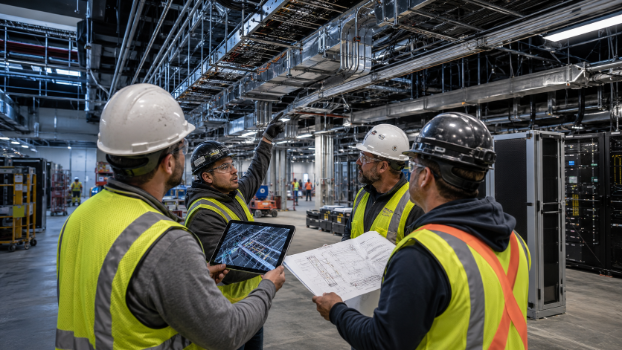
Why “Clash-Free” Models Still Lead to Rework
A clash-free BIM model can create a dangerous sense of certainty. In data center construction, once the coordination report is clean and the federated model shows no hard conflicts, teams often assume the major risk has been removed. But rework still happens. Cable trays still need to move. Conduit racks still get rebuilt. Bus duct alignments still create field problems. The reason is simple: clash detection confirms that systems do not physically intersect, but it does not prove that the installation is buildable, efficient, maintainable, or aligned with real field conditions. In mission-critical environments, the difference between “no clash” and “ready to install” is where many costly problems begin.
Clash Detection Solves Only One Layer of the Problem
Clash detection is valuable, but it is limited by definition. It checks spatial interference between modeled elements. If a duct crosses through a cable tray, the issue is visible. If a pipe runs through a structural beam, the conflict is obvious. These are important problems to catch before work reaches the field.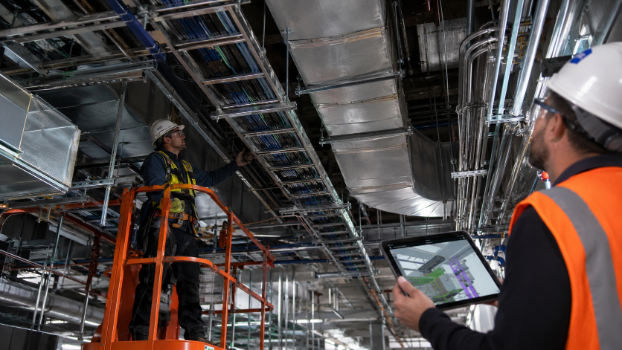
But many rework issues are not caused by direct object collisions. They are caused by incomplete coordination logic. A route can clear another system and still violate working clearance. A conduit bank can fit in the model and still be difficult to pull. A cable tray can avoid a duct and still lack enough room for supports, access, or future maintenance. Clash-free geometry does not automatically account for installation method, trade sequencing, equipment tolerance, or commissioning needs.
A Clean Model Can Still Hide Practical Risk
The model may show systems in their final coordinated position, but the field has to build them step by step. That process introduces realities the model often does not fully represent: lift access, hanger installation, material staging, inspection timing, safety zones, temporary bracing, and crew productivity.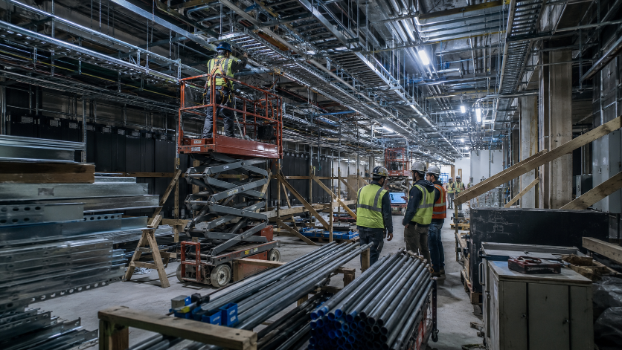
This is why a model can pass coordination and still create rework. The clash report says the systems fit. The foreman sees that the tray cannot be installed because the hangers cannot be reached. The model shows enough physical space. The electrician finds that the pull box is technically accessible, but only after another trade’s work blocks the path. The issue is not always a modeling error. Often, it is a missing constructability review.
Electrical Infrastructure Magnifies the Consequences
Data center electrical systems are dense, rigid, and deeply interconnected. Medium-voltage feeders, busways, switchgear, UPS equipment, PDUs, cable trays, conduit banks, grounding systems, security pathways, and telecom routes all compete for controlled space. Unlike some systems that can tolerate small field adjustments, electrical infrastructure often depends on precise alignment and continuous routing logic.
A few inches of field movement can create a chain reaction. Shifting a cable tray can affect conduit entries. Moving a conduit rack can change support spacing. Adjusting a bus duct can affect equipment connection points. Re-routing feeders can change pull length, bend radius, junction box placement, and installation labor. In a data center, rework rarely stays isolated.
Pullability, Bend Radius, and Access Are Not Optional
Electrical coordination must go beyond visual routing. The route must work for the conductors, the installers, the equipment, and the long-term operations team. Large feeders need realistic pulling paths. Conduits need bend radius control. Cable trays need access for installation and future adds or changes. Switchgear and UPS lineups need clear working space, service clearance, and safe termination zones.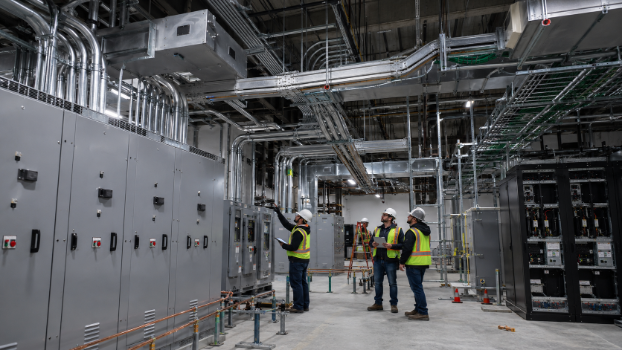
A model can be clash-free while still ignoring these requirements. For example, a conduit run may avoid all physical collisions, but include too many bends for practical pulling. A tray may sit above other systems with enough clearance in 3D, but not enough access for a crew to install cable later. A busway may clear the structure, but become difficult to align with final equipment elevations. These issues do not always appear in clash detection, but they frequently show up as field rework.
Field Conditions Change Faster Than Models
Even when coordination is strong, the model is only as reliable as the information feeding it. Data center projects move quickly. Vendor equipment may change. Structural details may be revised. Wall locations, slab openings, housekeeping pads, and equipment dimensions may shift. Procurement decisions can introduce substitutions that affect physical size, connection points, or clearance requirements.
When those changes are not quickly captured and communicated, the model becomes a dated reference rather than a trusted construction tool. Teams may continue installing from drawings or exports that were correct last week but are no longer correct today. In a fast-track mission-critical project, that lag is enough to create avoidable rework.
Small Deviations Create Large Coordination Drift
One small field deviation may seem manageable. But in dense infrastructure zones, small changes accumulate quickly. A shifted support may force a tray adjustment. That tray adjustment may affect conduit routing. The conduit routing may affect a pull box location. The pull box may then conflict with access panels or another trade’s supports.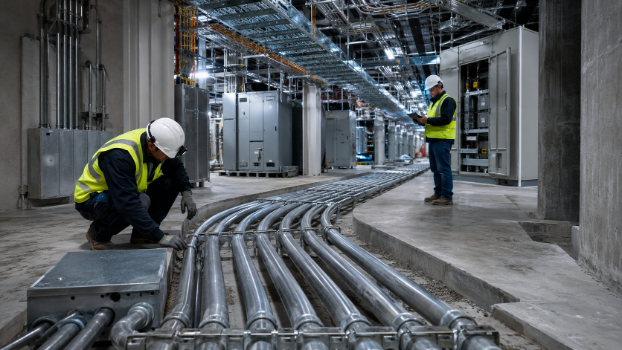
This is how coordination drift develops. The model remains officially clash-free, but the installed reality begins to separate from the coordinated plan. By the time the issue is noticed, crews may have already built work that now needs to be modified. The rework is not caused by one dramatic failure. It is caused by a series of small, unmanaged differences between model intent and field execution.
Trade Sequencing Is Often Under-Modeled
A coordinated model typically shows the finished condition. Construction does not happen that way. Trades install in sequence, often under schedule pressure and with limited access. Structural steel, ductwork, piping, electrical racks, cable tray, and equipment deliveries all compete for time and space.
If sequencing is not considered during coordination, a clash-free model may still create field conflict. A tray might be installable if it goes in before ductwork, but nearly impossible afterward. A conduit bank may need to be installed before equipment is set, but the schedule may not reflect that dependency. A prefabricated rack may look efficient in the model, but fail in the field because the delivery route or lift path was never validated.
Buildability Depends on the Path, Not Just the Final Position
The central question should not be, “Does it fit?” The stronger question is, “Can it be installed cleanly, safely, and in the right sequence?” This shift changes the purpose of BIM coordination.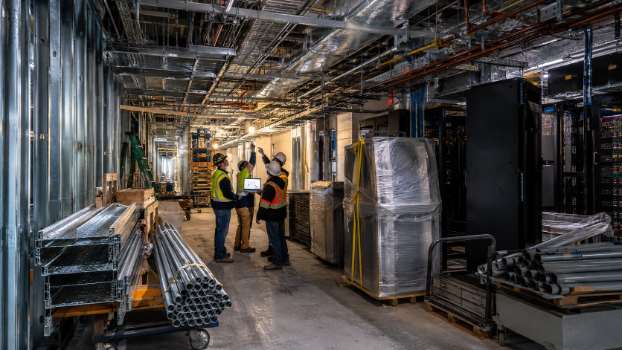
A buildable model considers the route into the space, the order of installation, the support strategy, the labor approach, and the inspection process. It accounts for temporary conditions, not only final conditions. It asks whether field crews can execute the plan without improvising. When this layer is missing, crews become responsible for solving problems that should have been resolved before installation began.
Rework Often Comes From Weak Handoffs
Even a well-coordinated model can fail if the field does not receive clear installation intent. Coordination decisions are often made by BIM teams, engineers, detailers, and trade leads. But if those decisions are not translated into usable field information, the value is lost.
Field crews need to know what changed, why it changed, which zones are sensitive, what tolerances matter, and where they should not make independent adjustments. They need current drawings, clear model views, installation sketches, spool references, and a reliable way to confirm that they are building from the correct version.
Version Control Is Part of Quality Control
Rework often starts with version confusion. A crew installs from an older export. A prefab package reflects a previous route. A field markup never gets incorporated into the model. A design revision is issued, but not clearly connected to the affected installation areas.
In mission-critical construction, version control is not administrative housekeeping. It is quality control. Every approved route, model revision, prefab package, and field drawing must align. If the information chain breaks, the field may execute work that was once correct but is no longer valid.
Clash-Free Should Not Be the Finish Line
The best teams treat clash-free status as a checkpoint, not a victory. It confirms that one category of risk has been reduced. It does not confirm that the model is ready for installation.
A better standard is field-ready coordination. That means every major route has been reviewed for constructability, access, sequencing, support, maintainability, and trade impact. It means electrical systems are reviewed by people who understand installation behavior, not only geometry. It means changes are tracked, decisions are owned, and crews receive information they can actually build from.
For data centers, this distinction matters. The electrical architecture is too dense, the schedule is too compressed, and the cost of rework is too high to rely on clash detection alone. A clash-free model can still lead to rework when it stops at geometry. A field-ready model reduces rework because it connects coordination with the way infrastructure is actually built.