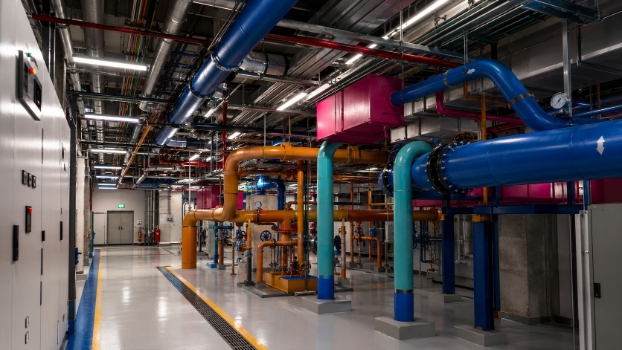
Why BIM Workflows Break Across Too Many Tools
Too many BIM tools do not break a project because the tools are weak. They break the project when information stops moving cleanly between them. In mission-critical environments like data center construction, that gap becomes dangerous fast. A missed model update, an outdated RVT export, a poorly translated IFC file, or an issue tracked outside the common data environment can affect electrical distribution, cooling coordination, backup power planning, and even long-term uptime. A strong BIM workflow is not just about producing a detailed model. It is about protecting data continuity across every decision, revision, and handoff.
Why BIM Workflows Break Across Too Many Tools
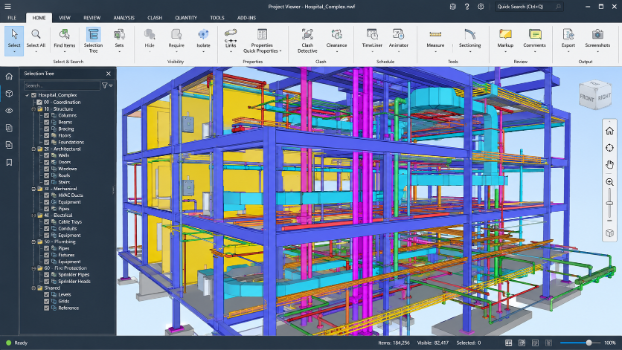
BIM workflows usually fail at the connection points. One team models in Revit, another reviews in a coordination platform, another tracks issues in spreadsheets, and field teams rely on PDFs or screenshots. Each tool may serve a valid purpose, but the workflow breaks when the data relationship between them is unclear.
In data center design, this is especially risky because the BIM model is tied to dense MEP systems, electrical infrastructure, power pathways, cooling systems, and redundancy requirements. When tool integration is poor, project coordination becomes reactive instead of controlled.
Tool Fragmentation Creates Coordination Gaps
Workflow fragmentation happens when specialized tools operate as isolated islands. Electrical BIM teams may focus on power distribution, mechanical teams may focus on HVAC and airflow, while contractors manage issue management elsewhere.
The result is delayed collaboration. Teams see problems after they have already affected other systems. A cable routing change may seem minor in one model but can interfere with cooling airflow zones, access clearance, or backup systems in another.
BIM Data Gets Lost Between Platforms
Every data exchange carries risk. Moving between RVT, IFC, STEP, COBie, DWG, or other file formats can create information loss if model properties, classifications, or object relationships are not preserved.
For BIM interoperability, geometry alone is not enough. Teams need shared data, asset information, electrical loads, equipment metadata, and coordination status to remain usable across platforms.
Teams Lose the Single Source of Truth
When models, markups, and clash reports are spread across disconnected workflows, teams lose confidence in what is current. A common data environment, or CDE, helps by giving stakeholders one controlled place for BIM data, issue records, revisions, and approvals.
Without that single source of truth, model validation becomes slower, accountability becomes unclear, and late field conflicts become more likely.
The Core Role of BIM Interoperability
BIM interoperability is the foundation of a resilient BIM workflow. It allows teams, tools, and file formats to exchange useful project information without breaking coordination logic.
For data center BIM, interoperability supports better decisions around electrical systems, cooling systems, power density, rack density, and long-term operational reliability.
Open BIM vs Closed BIM
Closed BIM workflows often depend on proprietary file formats and one software ecosystem. This can work inside a controlled team, but it becomes limiting when owners, consultants, contractors, and vendors use different tools.
Open BIM supports neutral file formats and broader collaboration. It reduces the risk of locking critical project information inside one platform.
Key BIM File Formats That Affect Workflow Continuity
Revit and RVT remain central to many BIM workflows, but RVT alone cannot serve every stakeholder. IFC, or Industry Foundation Classes, helps support openBIM exchange. COBie supports asset data. DWG and STEP may still appear in engineering and fabrication workflows.
The challenge is not simply exporting files. The challenge is preserving meaning.
Why IFC Matters for Multi-Tool BIM Coordination
IFC matters because data center projects often involve many technical parties. Electrical engineers, BIM coordinators, contractors, commissioning teams, and owners all need usable model information.
A clean IFC exchange can support clash detection, asset tracking, and coordination review outside the original authoring software.
How Disconnected BIM Workflows Affect Data Center Projects
Data centers are dense, fast-moving, and unforgiving. A coordination error that might be manageable in a simpler building can create serious risk in mission-critical infrastructure.
Data center construction depends on precise alignment between power infrastructure, cooling, structural constraints, rack layouts, and maintainability.
Data Centers Have Less Room for Coordination Error
Electrical distribution systems, UPS rooms, PDU layouts, backup power routes, and cooling systems all compete for physical space. Small mistakes can restrict access, reduce serviceability, or force redesign.
In mission-critical projects, reliability is not an abstract goal. It is designed into every pathway, clearance, and redundancy model.
BIM Coordination Becomes Critical in High-Density Environments
MEP coordination is where data center BIM earns its value. Cable trays, conduits, bus ducts, HVAC ducts, chilled water lines, and structural members must be resolved before installation.
Strong BIM coordination allows teams to identify conflicts early and protect both buildability and operational reliability.
The Cost of Late Issue Discovery
Late clash detection leads to rework, downtime risk, change orders, and schedule pressure. Worse, it often hides responsibility because the decision trail is fragmented.
Good issue management ties each conflict to a model location, user, revision, and resolution status.
Electrical BIM and Power Infrastructure Coordination
Electrical BIM is central to data center design because power is the backbone of the facility. The model must reflect not only where systems fit, but how power is distributed, protected, and maintained.
Electrical Distribution Systems Need Clean Spatial Planning
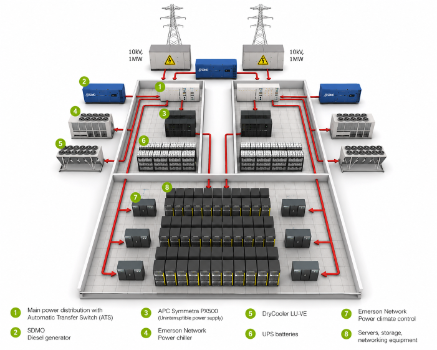
Electrical distribution systems require clear routing for feeders, busways, conduits, and cable trays. Power supply routes must avoid conflicts with cooling, access zones, and structural limitations.
Poor coordination at this level can affect stable power delivery and future maintenance.
UPS, PDU, and Backup Power Coordination
UPS systems, PDUs, generators, and backup systems must be coordinated with space, airflow, fire protection, and service access. These systems support uninterrupted operation, so their placement cannot be treated as a late-stage layout issue.
Load Calculations and High-Capacity Circuits
As GPU racks increase power density and rack density, electrical teams must coordinate high-capacity circuits with cooling demand and physical pathways. Load calculations should inform the BIM model, not sit separately from it.
DC Power Distribution as an Emerging Efficiency Trend
DC power distribution is gaining attention as facilities look for energy efficiency and reduced conversion losses. While not universal, it reflects a broader shift toward energy optimization in sustainable data centers.
Power and Cooling Coordination in BIM
Power and cooling are inseparable in data centers. More power creates more heat generation, which increases thermal loads and cooling complexity.
Cooling Systems and HVAC Coordination
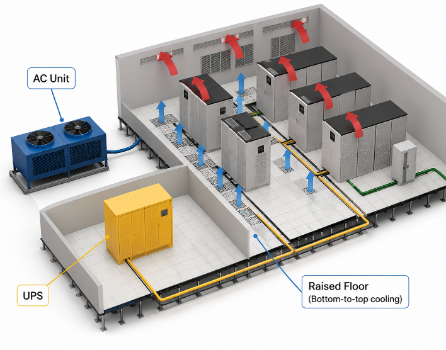
Cooling systems and HVAC routes must be coordinated early with electrical infrastructure. Mechanical routing conflicts can block power pathways, while electrical layouts can restrict airflow.
Airflow Management and Cooling Airflow Zones
Airflow management depends on clean spatial planning. If cooling airflow zones are blocked by poorly coordinated infrastructure, performance suffers.
The BIM model should help protect airflow paths, service access, and equipment clearances.
Liquid Cooling and High-Density Data Center Design
Liquid cooling is becoming more relevant as AI workloads push GPU racks to higher power density. These systems add new coordination demands around piping, leak detection, access, and thermal output.
Hot Aisle Containment and Rack Cooling Index
Hot aisle containment supports predictable airflow separation. Metrics like Rack Cooling Index, or RCI, help teams understand whether cooling reaches racks effectively.
Redundancy, Uptime, and Mission-Critical Reliability
Data center BIM must support reliability, not just construction documentation. Redundancy, uptime, and operational reliability depend on coordinated physical systems.
Understanding N+1 and 2N Redundancy Models
N+1 provides extra capacity beyond the required load. 2N provides a fully redundant system path. Both models affect space planning, UPS sizing, cooling systems, and power distribution.
Tier III and Tier IV Design Expectations
Tier III and Tier IV facilities require higher levels of maintainability and fault tolerance. BIM coordination must reflect these expectations through clear access, separated pathways, and resilient system layouts.
How BIM Helps Reduce Downtime Risk
BIM reduces downtime risk by exposing conflicts before construction. Clash avoidance, model validation, and shared data help teams protect uptime before systems are installed.
Common Data Environment and Real-Time Collaboration
A CDE keeps BIM workflows from becoming scattered. It centralizes models, issues, revisions, and approvals.
Why Cloud Workflows Improve BIM Coordination
Cloud workflows and cloud-native workflows allow real-time collaboration across teams. This reduces outdated exports and improves project coordination.
APIs and Connected BIM Tool Ecosystems
APIs help specialized tools exchange data without manual duplication. Better integration means fewer broken handoffs and stronger data continuity.
Issue Management Inside the Coordination Workflow
Issue management should live inside the coordination workflow. Each issue should connect to the BIM model, not float separately in email or spreadsheets.
BIM Model Validation and Clash Avoidance
Model validation checks whether the BIM model is accurate, usable, and coordinated before construction decisions depend on it.
What Model Validation Should Check
Validation should review geometry, clearances, metadata, file formats, system routing, electrical loads, and coordination status.
Clash Detection Across MEP Systems
Clash detection must cover electrical systems, HVAC, cable routing, cooling, and structural interfaces. In data centers, these conflicts are rarely isolated.
Moving From Clash Detection to Clash Avoidance
The mature goal is clash avoidance. That requires shared data, real-time collaboration, and disciplined BIM interoperability.
Energy Efficiency and Sustainability in Data Center BIM
Sustainability now belongs inside the coordination conversation. Energy consumption, energy use, cooling performance, and carbon footprint all connect back to design decisions.
Power Usage Effectiveness and Key Efficiency Metrics
PUE, or Power Usage Effectiveness, remains a key efficiency metric. WUE, CUE, and ERE add further context around water usage, carbon impact, and energy reuse.
Cooling Efficiency and Thermal Performance
Thermal loads, airflow management, and cooling systems directly affect energy efficiency. BIM helps teams understand these relationships earlier.
Carbon Footprint and Waste Heat Reuse
Sustainable data centers increasingly consider carbon footprint and waste heat reuse. These strategies require space, infrastructure, and coordination.
Energy Storage and Load Balancing
Energy storage and load balancing can support resilience and energy optimization, especially as power demand grows.
Future Trends in BIM Workflows for Data Centers
The future of BIM is not fewer tools. It is better-connected tools.
From Software Files to Connected BIM Data
BIM data is becoming more valuable than static files. Connected data supports stronger decisions across design, construction, and operations.
Specialized Tools Will Increase, So Integration Must Improve
Specialized tools will continue to grow. APIs, openBIM, and cloud workflows will decide whether they create value or fragmentation.
AI, GPU Racks, and Higher Power Density Will Raise Coordination Pressure
AI data centers will push rack density, power density, liquid cooling, and thermal loads higher. BIM workflows must become more precise.
Sustainability Will Become a BIM Coordination Requirement
Sustainable data centers will need BIM workflows that coordinate PUE, WUE, carbon footprint, energy storage, and waste heat reuse from the start.
Conclusion: Better BIM Workflows Need Connected Data, Not More Isolated Tools
BIM workflows break when tools multiply faster than the data connections between them. In data center BIM, that weakness affects electrical distribution, cooling, backup power, redundancy, uptime, and operational reliability. The solution is not forcing every team into one platform. It is building workflows around interoperability, openBIM, common data environments, real-time collaboration, model validation, and connected BIM data. When information stays continuous, coordination becomes proactive, and mission-critical projects become easier to build, operate, and trust.