Why BIM Version Control Breaks Down in Data Center Projects
Data center BIM fails differently from ordinary commercial BIM because the model is tied directly to uptime, redundancy, fabrication accuracy, commissioning readiness, and long-term operations. A missed update in a cable tray route, UPS layout, breaker size, cooling clearance, or busway elevation is not just a documentation issue. It can create spatial conflicts, fabrication errors, rework, RFIs, delayed commissioning, and risk to operational continuity. BIM version control breaks down when teams lose confidence in which model is current, who approved a change, and whether the field is building from the latest coordinated model.
Why BIM Version Control Matters More in Data Center Projects
Data center BIM carries a higher burden because the facility is built around dense MEP coordination. Electrical systems, cooling systems, power distribution, backup power systems, and access zones all compete for limited space. When model updates are not controlled, coordination issues move quickly from the digital model into the field.
Data Centers Are Built Around Constant Change
Rack density, electrical loads, equipment lists, UPS units, generators, cooling strategy, and owner requirements often shift during design and construction. These changes are normal, but without strict BIM version control, they create outdated information, disconnected files, version conflicts, and costly rework.
BIM Is No Longer Just a Design Model
For data centers, the 3D model becomes a project control system. It supports clash detection, shop drawings, prefabrication, field installation, commissioning, COBie data, asset management, and eventually the digital twin used by facility management teams.
What BIM Version Control Means in a Mission-Critical Environment
BIM version control means every model change has context. Teams need to know what changed, who changed it, when it changed, why it changed, and which version is approved for coordination, fabrication, or construction.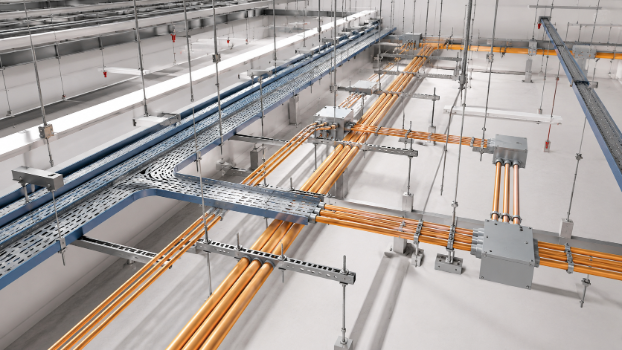
The Difference Between File Saving and Real Version Control
Saving files into folders is not version control. Real version control includes version history, naming conventions, version numbering systems, automated backups, audit logs, change tracking, model comparison, and role-based access.
Why a Common Data Environment Becomes Critical
A common data environment, or CDE, gives teams a single source of truth. Without it, electrical, mechanical, structural, and trade partners may work from separate exports, local files, or old federated models.
How BEP Standards Prevent Early Confusion
The BIM Execution Plan should define model ownership, review cycles, responsibility management, update frequency, file naming, and approval rules before design accelerates.
Where BIM Version Control Breaks Down First
Breakdowns usually start quietly. A team uses an outdated model, a subcontractor updates a routing path without review, or the field moves ahead before coordination catches up.
Teams Work From Different Model Versions
When one team references the latest model and another uses last week’s shared model, BIM coordination becomes unreliable. Clash detection may show solved conflicts while the field is still building from unresolved geometry.
Changes Are Made Without Clear Ownership
A model update without responsibility management creates risk. In data center projects, even a small change to cable routing, breaker sizes, or maintenance access can affect multiple systems.
File Naming and Folder Systems Become Unreliable
Manual folder structures invite file overwrites and version conflicts. A date-stamped file may look current but still lack approved design changes or field revisions.
Model Reviews Lag Behind Field Decisions
Fast field decisions are common. But when field routing, hanger locations, or last-minute layout changes are not pushed back into the coordinated model, the model stops reflecting reality.
The Electrical Systems That Make Version Control Harder
Electrical BIM is especially sensitive because power infrastructure is dense, redundant, and deeply connected to uptime.
Power Distribution Changes Affect the Whole Model
Switchgear, PDU/RPP layouts, UPS/battery systems, bus ducts, busway, cable trays, cable ladders, conduits, and backup generators all require precise coordination. A small route change can affect structural clearances, cooling airflow, and service access.
Load Calculations Must Stay Connected to Model Updates
Panel schedules, cable schedules, load calculations, fault currents, breaker sizes, equipment lists, and power density assumptions must match the current model. If they drift, the project may appear coordinated while the engineering data is already outdated.
Cable Routing Creates Hidden Coordination Risk
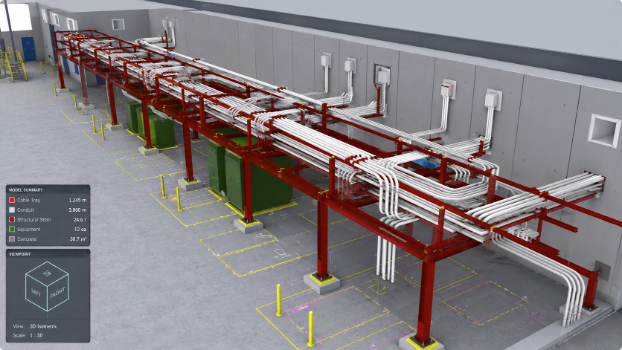
Cable routing often crosses the busiest zones in the building. Conduits, cable trays, and bus ducts can create spatial conflicts with HVAC, chilled water pipes, access zones, and prefabricated MEP racks.
Fault Current and Backup Power Details Need Strict Revision Control
Backup power systems, UPS units, generator start sequences, and maintenance bypass paths must be traceable. These systems support uninterrupted operations and cannot rely on unclear revisions.
Redundancy and Uptime Make Small BIM Errors Expensive
Data centers are judged by availability. BIM errors matter because downtime, not drawing cleanup, is the real business risk.
Redundancy Models Add More Paths to Coordinate
N+1, 2N, and 2N+1 redundancy models duplicate or parallel critical systems. More pathways mean more coordination points, more service clearances, and more version-control pressure.
Tier Requirements Increase Documentation Pressure
Tier III and Tier IV expectations, often aligned with Uptime Institute thinking, demand maintainability and operational continuity. Poor model control weakens confidence in those outcomes.
Failure Modes Must Be Modeled Before Construction
Failure modes, load banks, IST planning, generator start, UPS transfer behavior, and fault-tolerant power chains must be understood before commissioning begins.
Cooling and Airflow Conflicts Are Often Version-Control Problems
Cooling coordination depends on accurate electrical and mechanical updates. A changed cable tray elevation can affect airflow management, hot/cold aisle containment, or CRAH access.
Electrical Changes Can Disrupt Cooling Performance
Bus ducts, conduits, and cable trays can interfere with CRAC units, CRAH units, chilled water mains, and airflow paths. If updates are missed, cooling efficiency suffers.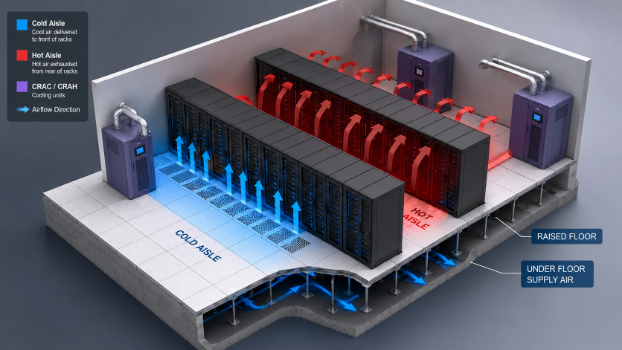
Hot Aisle and Cold Aisle Planning Needs Current Models
Hot aisle, cold aisle, and containment layouts depend on current rack, equipment, and duct coordination.
Thermal Hotspots Can Come From Missed Revisions
Thermal hotspots often begin as coordination misses. Outdated information can block airflow, reduce heat dissipation, or invalidate CFD simulations.
Liquid Cooling Adds New Coordination Complexity
AI-heavy facilities increase power density and heat loads. Liquid cooling, hydronic flushing, and chilled water routing add another layer of version-control complexity.
Clash Detection Fails When Version Control Is Weak
Clash detection is only as reliable as the models being checked.
A Federated Model Is Only Useful If It Is Current
A federated model should reflect approved updates from every discipline. Otherwise, it becomes a polished picture of old decisions.
Clash Reports Become Outdated Quickly
If teams continue designing after a clash report is issued, that report loses value unless it is tied to version history and review cycles.
Design Conflicts Become Field Conflicts
Unresolved spatial conflicts turn into rework, delays, RFIs, and cost overruns.
Fabrication Breakdowns Begin With Model Breakdowns
Fabrication-ready BIM requires locked, approved, coordinated information.
Fabrication-Ready Models Need Approved Version History
Shop drawings, spool drawings, cut lists, and prefab packages should only come from approved model versions.
Spool Drawings and Cut Lists Can Fail From One Missed Update
A missed hanger spacing change, spool break, or clearance update can make prefabricated material unusable.
Prefabricated Electrical Skids Need Locked Coordination
Prefabricated electrical skids, MEP racks, and modular data center pods require stable model control before manufacturing.
BIM-to-FAB-to-FIELD Must Stay Connected
The BIM-to-FAB-to-FIELD workflow fails when field installation teams work from disconnected files.
Construction Sequencing Creates Another Version-Control Layer
4D BIM scheduling connects model changes to installation timing.
4D BIM Helps Link Model Changes to Schedule Impact
A routing change is not just a geometry change. It can affect construction sequencing, access, labor planning, and commissioning windows.
Last-Minute Layout Changes Create Downstream Risk
Late changes can ripple through shop drawings, cooling coordination, and field installation.
Installation Sequencing Requires Real-Time Coordination
Real-time updates help teams install the right systems in the right order.
Commissioning and Handover Expose Version-Control Gaps
Commissioning reveals whether the model reflects the installed facility.
Commissioning Depends on Accurate Model Data
Commissioning checklists, test scripts, equipment lists, and system readiness reviews need reliable as-built documentation.
Integrated Systems Testing Requires Traceable Revisions
IST depends on correct power paths, UPS behavior, backup generators, EPMS/BMS data, and cooling response.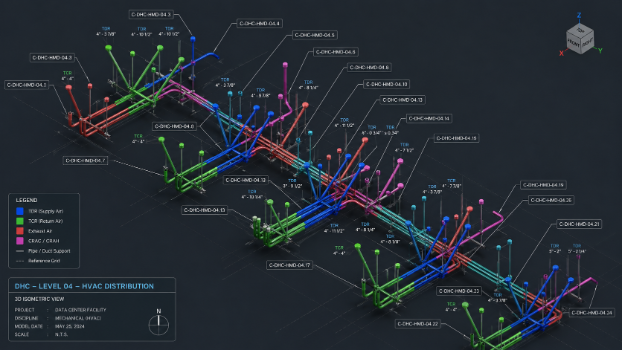
Handover Fails When As-Built Models Are Incomplete
Incomplete as-builts weaken facility management, service clearances, and maintenance access.
Facility Operations Need More Than a Final BIM Model
The model must continue supporting day-two operations.
Digital Twins Extend Version Control Into Operations
A digital twin helps track capacity planning, moves/adds/changes, energy usage, and asset management.
EPMS and BMS Data Can Strengthen BIM Accuracy
EPMS/BMS integration can connect operational performance to model data.
Day-Two Operations Need Controlled Change Management
Every future rack, power, or cooling change should remain traceable.
Sustainability and Energy Performance Depend on Model Accuracy
Energy efficiency depends on reliable model data.
PUE and Cooling Efficiency Depend on Coordinated Systems
Power Usage Effectiveness, cooling efficiency, and operational efficiency all depend on coordinated electrical and mechanical systems.
Energy Planning Needs Reliable Load and Cooling Data
Energy optimization requires accurate electrical loads, heat loads, airflow optimization, and thermal modeling.
Sustainable Operations Require Lifecycle Visibility
Material waste, energy consumption, carbon footprint, and environmental sustainability improve when the model remains accurate.
Renewable Energy and LEED Goals Add More Data Requirements
Renewable energy, LEED certification, and sustainable energy operations require disciplined documentation.
How to Prevent BIM Version Control Breakdowns
The fix is process, not just software.
Build a Version-Control Workflow Before Modeling Starts
Define naming conventions, review cycles, permissions, and approvals in the BEP.
Keep One Approved Source of Truth
Use a governed CDE instead of scattered files.
Use Audit Logs and Model Comparison for Accountability
Every high-risk change should be traceable.
Connect BIM Coordination With Fabrication and Field Installation
Version control must reach shop drawings, spools, prefab, and field routing.
Review High-Risk Systems More Frequently
Power distribution, UPS, cooling, redundancy, access, and commissioning data deserve tighter review.
Future Trends in BIM Version Control for Data Centers
Version control will become more operational and data-driven.
Real-Time Collaboration Will Become the Baseline
Teams will expect live visibility into model updates.
Digital Twins Will Make Version Control Operational
The model will support the facility beyond construction.
AI, Liquid Cooling, and Higher Power Density Will Increase Complexity
Higher density will demand better coordination discipline.
Sustainability Metrics Will Depend on Better Model Data
PUE, carbon footprint, and energy consumption will rely on current data.
Conclusion: BIM Version Control Is a Data Center Risk Control System
BIM version control is not an administrative task. In data center projects, it protects uptime, redundancy, power distribution, cooling performance, fabrication accuracy, commissioning readiness, and long-term operations. The real failure is not that a model changed. The failure is when teams cannot prove which change is current, approved, coordinated, and safe to build.