
Why BIM Teams Still Don’t Know Who Changed What
In theory, BIM should eliminate ambiguity. Every object is modeled, every system is coordinated, and every decision is documented. In practice, especially within data centers and mission-critical infrastructure, teams still find themselves asking a fundamental question at the worst possible moment: who changed what. The issue is not a lack of tools, but a lack of traceability embedded into how BIM coordination is executed. As electrical systems, power infrastructure, and cooling systems become more interdependent, even a small undocumented change can cascade into risks for uptime, redundancy, and operational efficiency.
Understanding the Core Problem in BIM Environments
BIM has become the backbone of modern data center design and construction. Building Information Modeling allows teams to develop highly detailed representations of systems, from cable trays to cooling systems. However, as these models scale across disciplines, coordination becomes less about geometry and more about accountability.
Why “Who Changed What” Still Fails
The failure point lies in fragmented version control and weak audit trail practices. Many teams rely on file-based workflows instead of a structured common data environment. Changes to electrical design or power distribution often occur in parallel, without synchronized updates. This creates blind spots where modifications are made but not tracked, especially during fast-paced coordination cycles.
BIM in Data Centers and Mission-Critical Infrastructure
In data centers, BIM is not just a design tool. It is a coordination layer that directly impacts uptime and operational continuity. Mission-critical facilities demand near-perfect alignment between digital models and physical infrastructure.
BIM Coordination in High-Stakes Environments
BIM coordination must align electrical systems, cooling systems, and structural elements simultaneously. Clash detection helps identify spatial conflicts, but it does not explain intent or ownership. When multiple teams modify the same system, the absence of clear version control turns coordination into guesswork.
The Role of Common Data Environment
A properly implemented common data environment centralizes data, ensuring that all stakeholders work from a single source of truth. Without it, teams operate in silos, increasing the likelihood of misaligned updates and undocumented changes across infrastructure systems.
Electrical Systems and Power Infrastructure Complexity
Electrical design in data centers is inherently complex. Power infrastructure must support continuous operation, with no tolerance for failure. BIM models must reflect this complexity accurately.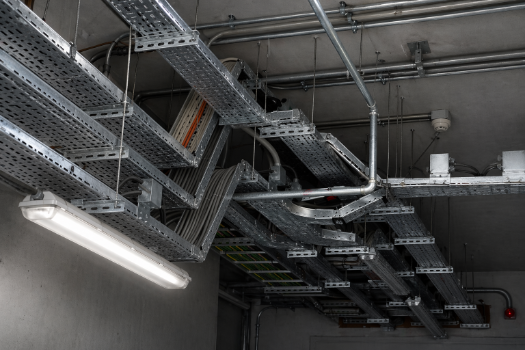
Power Distribution and Load Management
Power distribution networks involve intricate load distribution and load balancing strategies. Components like switchgear and cable trays must be precisely coordinated within BIM models. Any undocumented change in routing or load allocation can disrupt system balance.
Power Infrastructure and Mission-Critical Requirements
Mission-critical infrastructure requires redundancy and resilience. Poor coordination in BIM can lead to inconsistencies between design intent and implementation, compromising reliability. Electrical systems are not isolated. They interact with every other system in the facility.
Redundancy, Uptime, and Backup Systems
Redundancy is the foundation of uptime in data centers. Every system is designed with backup layers to ensure continuous operation.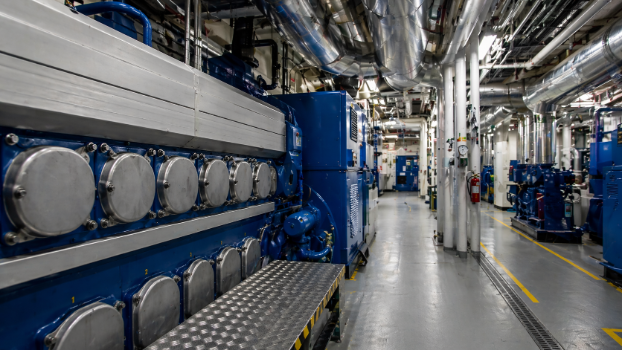
Redundancy Models and A/B Power Paths
A/B power paths are standard in mission-critical facilities. These redundancy systems ensure that if one path fails, the other maintains operation. However, BIM models often fail to reflect real-time changes in these paths. Without accurate tracking, teams cannot verify whether redundancy assumptions still hold.
Backup Systems: UPS and Generators
UPS systems and backup generators are critical components of backup systems. Their integration into BIM workflows must be precise. Even minor changes in configuration or load allocation must be tracked. Without proper version control, these changes remain invisible until they create operational risk.
Cooling Systems and Energy Interaction
Cooling systems are deeply tied to power consumption. In modern data centers, the interaction between cooling and electrical systems is a key driver of efficiency.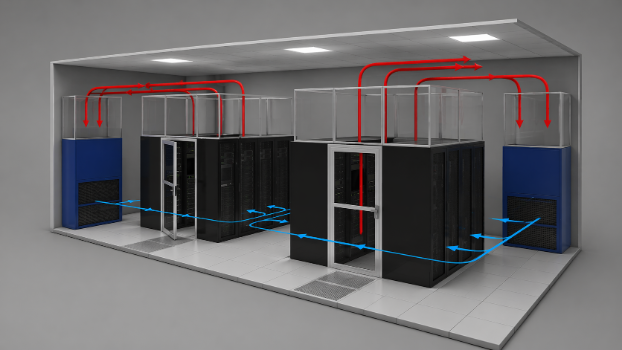
Airflow and Thermal Risk Management
Airflow management is essential to prevent thermal runaway. BIM helps visualize cooling systems, but without accurate updates, these models quickly lose relevance. A small change in equipment placement can disrupt airflow patterns, increasing thermal risk.
Cooling and Power Interdependency
Cooling systems rely on power infrastructure, and their performance directly impacts energy consumption. Misalignment between cooling design and power management leads to inefficiencies that compound over time.
Monitoring, Efficiency, and Operational Visibility
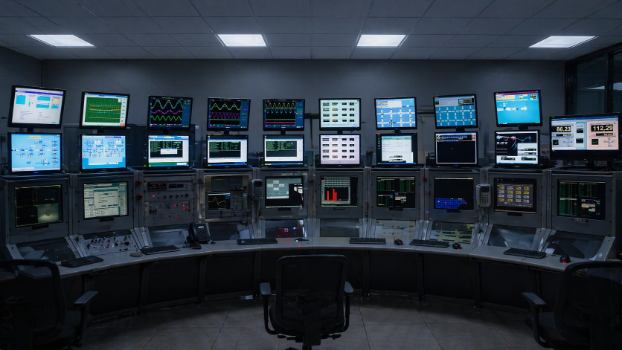
Modern data centers rely on monitoring systems to maintain performance. BIM data should support these systems, but often it does not.
Energy Consumption and Efficiency Metrics
Tracking energy consumption and operational efficiency requires accurate, up-to-date models. When BIM coordination lacks traceability, these metrics become unreliable. Teams cannot confidently identify inefficiencies or optimize performance.
Power Management and System Optimization
Power management strategies depend on accurate system data. Outdated BIM models lead to incorrect assumptions about load distribution and system capacity, undermining optimization efforts.
Sustainability and Future-Proof Design
Sustainability is no longer optional. Data centers are under pressure to reduce energy consumption and improve efficiency.
Sustainable Operations and Infrastructure Planning
BIM plays a critical role in sustainable operations. It enables better planning of infrastructure systems, reducing waste and improving efficiency. However, sustainability efforts depend on accurate data. Without traceability, sustainability metrics lose credibility.
Solving the Visibility Problem in BIM
The core issue is not technological. It is procedural. BIM tools are capable, but workflows are not designed for accountability.
Version Control and Audit Trail Systems
Effective version control and robust audit trail systems are essential. Every change to a model must be logged, attributed, and accessible. This creates a transparent history of modifications across all systems.
Achieving True Change Transparency
True transparency requires integrating version control into BIM coordination workflows. Teams must be able to trace changes across electrical systems, cooling systems, and power infrastructure instantly. This reduces risk and improves decision-making.
Future Trends in BIM for Data Centers
BIM is evolving alongside the complexity of data centers. The next phase focuses on intelligence and integration.
Toward Intelligent Coordination Systems
AI-driven BIM coordination and advanced clash detection are emerging. These systems can predict conflicts and identify inconsistencies before they impact operations. They also enhance traceability by automatically tracking changes.
The Shift to Fully Integrated Systems
The future lies in fully integrated systems where BIM connects with monitoring and operational platforms. This creates a dynamic model that reflects real-time conditions, not just design intent.
Conclusion
The inability to answer who changed what is not a minor inconvenience. It is a systemic risk in environments where uptime, redundancy, and efficiency are critical. BIM must evolve beyond modeling to become a system of accountability. Only then can it truly support the demands of modern data centers and mission-critical infrastructure.