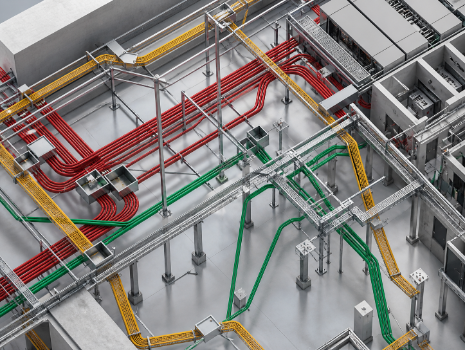
Why BIM Problems Are Always Discovered Too Late
BIM problems are usually discovered too late because the model is treated as a coordination milestone instead of a live technical control system. In data center projects, that gap is expensive. A conduit route that looks acceptable in isolation can block cable trays, restrict maintenance access, conflict with chilled water piping, or break a redundancy strategy. By the time the issue reaches installation, it is no longer a simple clash. It becomes rework, schedule delay, cost exposure, and sometimes a risk to mission-critical performance.
Why BIM Problems Are Discovered Too Late
BIM failures rarely come from a single missed object. They come from disconnected workflows, late model updates, weak issue tracking, and poor visibility between design coordination and field execution. The model may be technically impressive, but if it does not reflect real construction sequencing, fabrication tolerances, power distribution constraints, and cooling interaction, problems stay hidden until the site exposes them.
The Difference Between Having a BIM Model and Having BIM Coordination
A BIM model is a digital asset. BIM coordination is a disciplined process. A model can contain electrical distribution, MEP systems, plumbing, ducts, racks, equipment rooms, and cable trays, but that does not mean those systems are constructible together. True BIM coordination requires a federated model, clear ownership, coordination meetings, and continuous validation across all disciplines.
Why Visual Coordination Alone Is Not Enough
Visual review catches obvious clashes, but many serious issues are not visually obvious. A cable ladder may fit spatially but fail clearance requirements. A UPS room may look correct but lack maintenance access. A chilled water route may pass clash detection but block future expansion. Without QA, model audits, compliance validation, and traceable model revisions, visual coordination creates false confidence.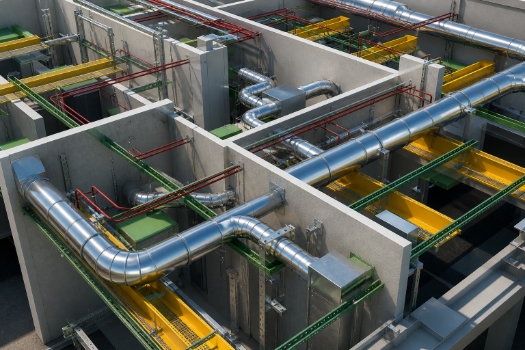
The Core Reasons BIM Issues Move Too Far Downstream
BIM issues move downstream when teams separate design intent from construction reality. The model may be updated, but the issue log, fabrication package, installation plan, and field team may not receive the same information at the same time.
Poor Issue Ownership and Weak Tracking
Many coordination issues are identified early but never properly closed. Someone flags a clash, another person comments, and the meeting moves on. But unless the issue is assigned, corrected, validated, and tracked through closure, it remains a risk. Automated issue tracking helps, but only when responsibility is clear.
Outdated Model Updates and Fragmented Data
Data center projects change quickly. Rack layouts shift, electrical conduits are resized, generators move, and cooling systems evolve. If one trade coordinates against an outdated model while another works from a newer version, the common data environment becomes unreliable. Fragmented data is one of the quietest causes of late-stage errors.
Late-Stage Design Changes
Late-stage design changes are especially dangerous in mission-critical facilities. A change in redundancy level, UPS system capacity, or liquid cooling strategy can alter power paths, conduit layout, equipment spacing, and maintenance access. What looks like a small design change can trigger field changes, change orders, and schedule delays.
Lack of Real-Time Visibility Between Office and Field
The office sees the model. The field sees the constraints. Problems appear late when those two views do not connect. Real-time visibility into installation progress, production status, and field execution helps teams detect execution risk before it becomes rework.
Clash Detection: What It Solves and What It Does Not
Clash detection is essential, but it is not a complete coordination strategy. It identifies conflicts. It does not automatically judge constructability, sequencing, accessibility, or operational risk.
Hard Clashes, Soft Clashes, and Workflow Clashes
Hard clashes are physical intersections. Soft clashes involve clearance requirements, access panels, or maintenance zones. Workflow clashes happen when installation sequencing breaks down, even if the model geometry appears correct. In data centers, workflow clashes can be more damaging than visible intersections.
Why Clashes Still Reach the Field
Clashes reach the field because detection is not the same as resolution. If a conduit conflict is found but not validated after correction, the issue can return in a later model update. If cable trays are moved without checking cooling, power, and maintenance access, one solved problem creates three new ones.
The Role of a Federated Model
A federated model brings architecture, structure, electrical, mechanical, plumbing, and MEPF systems into one coordination environment. It exposes system interaction, but it still requires disciplined model coordination, accurate data, and issue management to become useful.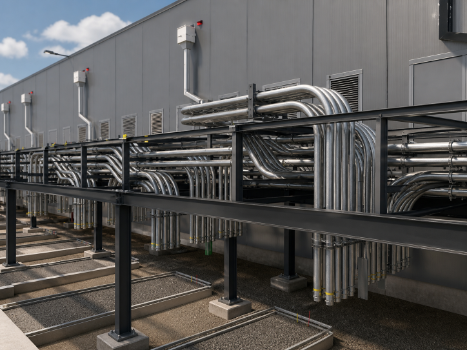
Why Data Center BIM Problems Are Harder to Catch Early
Data center projects compress high-density infrastructure into limited space. Power, cooling, redundancy, routing, and maintenance access all compete for the same physical zones.
Dense MEP and MEPF System Coordination
Dense MEP systems create coordination pressure. Electrical conduits, cable trays, cable ladders, ducts, plumbing, fire protection, and cooling systems often pass through the same corridors. If routing is not coordinated early, the site becomes the place where conflicts are finally discovered.
Electrical Distribution and Conduit Layout Risks
Electrical distribution is one of the highest-risk BIM areas. Medium-voltage paths, switchgear, conduit banks, UPS feeds, and cable tray routes need space, separation, access, and installation logic. A poor conduit layout can delay multiple trades and reduce schedule certainty.
Power Infrastructure, UPS Systems, and Generators
UPS systems, generators, and redundant systems are not standalone components. They shape room layouts, electrical routing, ventilation, access clearances, and emergency power strategy. Late changes to backup systems often ripple through the entire model.
Cooling Systems and Liquid Cooling Coordination
Cooling interaction is becoming more complex as data centers adopt higher-density racks, chilled water systems, and liquid cooling. Cooling systems must be coordinated with power infrastructure because routing, clearance, airflow, and service access are all connected.
Rack Layout, Equipment Rooms, and Access Clearances
A rack layout is not just an IT decision. It affects power distribution, cooling delivery, equipment rooms, access panels, and long-term maintenance. BIM problems become operational problems when maintenance access is ignored during coordination.
How BIM Problems Turn Into Cost, Schedule, and Productivity Losses
Late BIM issues create direct business impact. They reduce productivity, damage profitability, and weaken ROI.
Rework and Field Changes
Rework happens when unresolved coordination issues become field changes. Crews reroute conduit, shift hangers, cut around access conflicts, or wait for clarification. Each fix adds labor, material waste, and cost.
Schedule Delays and Broken Sequencing
Construction sequencing depends on reliable coordination. If one system blocks another, installation sequencing breaks. A delayed electrical room or cooling route can affect project delivery across multiple downstream trades.
Cost Overruns and Lower ROI
Cost overruns come from accumulated friction: RFIs, change orders, remobilization, lost productivity, and missed handover dates. Strong BIM coordination supports cost control because it prevents expensive decisions from being made in the field.
Fabrication-Driven BIM: Catching Problems Before Installation
Fabrication-driven BIM shifts the goal from “coordinated enough” to “fabrication ready.”
From Coordinated Model to Fabrication-Ready Model
A coordinated model may pass spatial checks. A fabrication-ready model must account for fabrication tolerances, installation access, hanger placement, spooling, and shop production requirements.
Spooling, Hangers, and Shop Production
Spooling and hanger layouts expose details that generic coordination often misses. If hanger placement conflicts with cable trays or chilled water lines, the issue must be solved before fabrication, not during installation.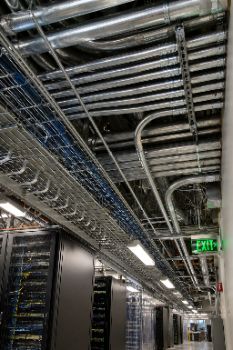
Why Fabrication Gaps Reveal BIM Problems Late
Many BIM problems appear late because the model was never tested against how the work would actually be built. Fabrication-driven BIM connects design, shop production, and field execution earlier.
Quality Assurance, Compliance, and Model Validation
QA turns BIM from a visual model into a reliable control process.
Model Audits and Automated Checks
Model audits and automated checks catch missing data, clearance problems, duplicate elements, and inconsistent routing. They reduce coordination errors before they become field issues.
Compliance Validation for Mission-Critical Facilities
Mission-critical facilities demand stricter compliance validation. UPS access, generator clearances, cooling redundancy, electrical separation, and maintenance zones must be verified before construction.
Issue Closure and Verification
An issue is not closed when someone acknowledges it. It is closed when the model is updated, checked, validated, and confirmed against downstream coordination.
Real-Time Data and Operational Monitoring
Modern BIM needs real-time data, not static snapshots.
Connecting BIM Data With Project Execution
When BIM connects with field execution, teams can compare model intent with actual installation progress. That connection improves visibility and reduces late surprises.
Productivity Benchmarking and Early Risk Detection
Productivity benchmarking helps identify slowdowns before they become schedule delays. It also shows where coordination problems are affecting field performance.
Real-Time Visibility for Better Decision-Making
Real-time visibility gives project managers better control over issue tracking, production status, cost control, and schedule certainty.
Handover, Lifecycle, and Long-Term Maintenance
BIM problems do not end at construction. They carry into operations.
As-Built Drawings and Handover Management
Poor as-built drawings weaken handover management. If model updates are incomplete, operators inherit uncertainty.
Maintenance Access and Operational Reliability
Maintenance access must be coordinated before installation. In data centers, reliability depends on safe access to equipment rooms, racks, UPS systems, cooling systems, and power infrastructure.
Planning for Future Expansion
Future expansion depends on accurate lifecycle data. A model that ignores downstream coordination limits upgrades, capacity planning, and sustainability improvements.
Future Trends: Predictive and Automated BIM Coordination
The industry is moving toward predictive coordination, automated checks, and live project intelligence.
Predictive Analytics for Clash and Risk Detection
Predictive analytics can identify high-risk zones based on spatial density, past issues, sequencing pressure, and system criticality.
AI-Assisted Issue Prioritization
Not every clash has equal impact. AI-assisted issue management can prioritize conflicts tied to cost, schedule, power, cooling, redundancy, and maintenance access.
From Reactive BIM to Proactive Coordination
The future is proactive BIM coordination: continuous validation, real-time monitoring, fabrication-ready models, and connected field data.
Conclusion: BIM Problems Are Discovered Too Late When Workflows Stay Disconnected
BIM problems are discovered too late when coordination is treated as a checkpoint instead of a connected workflow. In data center projects, the risk is amplified by dense MEP systems, electrical distribution, UPS systems, generators, cooling systems, redundancy models, and maintenance requirements. The solution is not simply better clash detection. It is stronger issue tracking, real-time visibility, fabrication-driven BIM, automated validation, and disciplined handover management that connects design, construction, and operations.