
Why BIM Models Break Down During Fast-Track Data Center Projects
BIM was supposed to bring order to complexity. In data center construction, it often does the opposite when pushed beyond its limits. The issue is not the tool itself, but how it is used in environments where electrical redundancy, cooling density, and fast-track schedules collide. In these projects, coordination is not just about avoiding clashes. It is about aligning dozens of subcontractor scopes, each with its own priorities, into a single constructible system. When that alignment breaks down, even the most detailed BIM models start to struggle.
Understanding BIM Complexity in Large-Scale Data Center Projects
The Nature of Mission-Critical Infrastructure
Data centers are fundamentally different from commercial buildings. Every system is designed around uptime. That means layered redundancy across power distribution, backup systems, and cooling. You are dealing with UPS systems, dual utility feeds, switchgear, and parallel feeder routing that must remain isolated yet coexist in the same physical space. This creates extreme model density. Every routing decision has consequences, not just spatially but operationally.
Why BIM Models Struggle at Scale
At scale, model performance becomes a real constraint. Large federated models slow down, updates lag, and coordination cycles stretch. Combine that with fast-track construction schedules, and the margin for error disappears. Teams move forward with incomplete coordination, leading to RFIs, change orders, and ultimately rework. The model may look coordinated, but it is not aligned with how the system will actually be built.
Federated Models, Subcontractor Scopes, and Coordination Breakdowns
What is a Federated Model in Practice
In theory, federated models allow each trade to develop its scope independently. Electrical, mechanical, and fire protection teams all contribute their models into a shared environment. In practice, interoperability challenges and inconsistent modeling standards introduce friction. Data exchange is not seamless, and small discrepancies compound over time.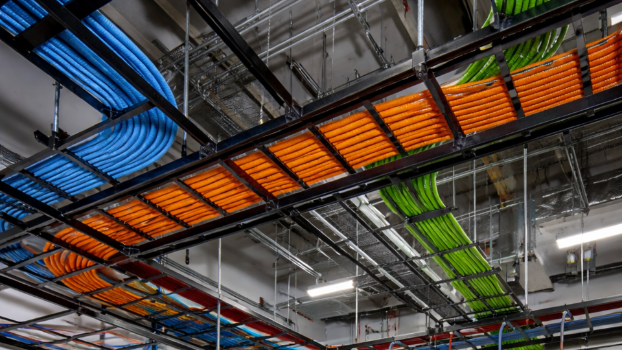
Subcontractor Coordination and Scope Overlaps
The real failure point is subcontractor coordination. Each team owns a slice of the model, but scope boundaries are rarely clean. Electrical conduits overlap with chilled water loops. Cable routing competes with airflow management zones. Without clear model ownership, conflicts fall into gaps between scopes. These are not just clashes. They are responsibility issues.
The Role of BIM Execution Plan and Governance
A strong BIM Execution Plan should define LOD requirements, coordination workflows, and accountability. But in many projects, the BEP is treated as a formality. When Level of Development is inconsistent across trades, the model loses reliability. Coordination meetings become reactive instead of proactive, and decisions are made based on incomplete data.
Clash Detection vs True Coordination
Limits of Clash Detection
Clash detection is often mistaken for coordination. It identifies geometric conflicts, but it does not resolve system priorities. A clash-free model can still be unbuildable. It does not account for installation sequence, access requirements, or fabrication tolerances.
From Clash-Free to Constructability
True coordination requires constructability thinking. Routing hierarchy becomes critical. High-priority systems like busways or chilled water must define the spatial framework, not react to it. Without this hierarchy, systems are forced into inefficient paths, increasing complexity and risk. Constructability also depends on continuous iteration, not one-time clash resolution.
Electrical Systems and Power Distribution Complexity
High-Density Electrical BIM Challenges
Electrical BIM in data centers is uniquely complex. Power distribution involves feeders, bus ducts, cable trays, and conduit routing all competing for limited space. Load calculations and redundancy requirements multiply routing paths. A single system can exist in parallel configurations, doubling or tripling its footprint in the model.
Redundancy and Uptime Requirements
Redundancy drives everything. Dual systems must remain physically separated to prevent single points of failure. This separation is difficult to maintain in dense environments. If not coordinated early, it leads to compromised routing or last-minute redesigns, both of which impact uptime reliability.
Cooling Systems and Thermal Coordination
Cooling Integration in BIM Models
Cooling integration adds another layer of complexity. CRAH and CRAC units, chilled water loops, and cooling layouts must align with rack density and electrical infrastructure. These systems are not independent. Their interaction defines overall performance.
Airflow and Thermal Management Constraints
Airflow management requires strict control of containment layouts and thermal zones. Even minor deviations in routing can disrupt airflow patterns. Maintenance access further complicates layouts. Systems must not only fit but remain serviceable.
Efficiency Metrics and Performance
Energy efficiency is measured through metrics like Power Usage Effectiveness. Poor coordination increases energy loss. Inefficient airflow or misaligned cooling systems drive up operational costs. BIM should optimize these interactions, but often fails due to fragmented coordination.
Fabrication, Prefabrication, and Constructability Gaps
Why Design Models Fail in the Field
Design-level BIM often stops short of fabrication-ready detail. Without precise tolerances, models cannot translate directly into field execution. This gap leads to improvisation on site.
Prefabrication and MEP Production Workflows
Prefabricated MEP systems rely on accurate spooling and hanger layouts. These require exact coordination. If the model is even slightly off, prefabrication loses its advantage and becomes a liability.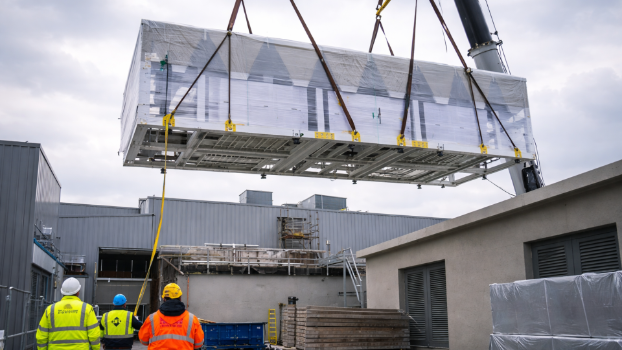
Shop Deliverables and Field Execution
Shop deliverables depend on reliable models. When models are inconsistent, fabrication teams must reinterpret designs, introducing risk. This disconnect drives delays and increases cost.
Scheduling, Phasing, and Cost Integration
Time-Based Coordination with 4D BIM
4D sequencing should align installation timelines with model coordination. In reality, sequencing is often disconnected from design updates. This leads to conflicts during installation phases.
Cost Visibility with 5D BIM
5D cost analysis depends on accurate quantities and coordination. When models change frequently due to coordination issues, cost projections become unstable. Budget control suffers.
Phased Infrastructure and Future Expansion
Data centers are built for expansion. Phased infrastructure modeling must anticipate future systems. Without this foresight, current installations create barriers for future growth.
Data Management, Version Control, and Collaboration
Common Data Environment and Data Flow
A Common Data Environment is essential for managing shared data. It ensures that all teams work from the same information. Without it, coordination breaks down quickly.
Version Control and Model Integrity
Version control is often overlooked. Teams work on outdated models, leading to conflicts that should not exist. Maintaining model integrity is as important as creating the model itself.
From BIM to Digital Twin and Lifecycle Value
Digital Twin Integration
Digital twin integration extends BIM into operations. It requires accurate, data-rich models. If coordination issues persist during construction, the digital twin loses value.
Data Standards and Asset Information
Standards like COBie ensure that asset data and metadata are structured for long-term use. Without consistent data, facility management becomes inefficient.
Commissioning and As-Built Models
Commissioning depends on accurate as-built models. These models should reflect reality, not design intent. Discrepancies create operational risks.
Monitoring, Performance, and Operational Intelligence
Real-Time Monitoring and System Performance
Monitoring systems rely on accurate BIM data. They provide insights into system performance and enable proactive maintenance. Poor data quality limits their effectiveness.
Future of BIM in Data Center Construction
Moving Toward Integrated Coordination Systems
The industry is moving beyond static federated models. Integrated systems aim to provide real-time coordination and better alignment across trades.
AI, Automation, and Smart BIM Workflows
AI-driven tools are beginning to optimize routing, detect conflicts earlier, and improve decision-making. These advancements may address many of the current limitations.
Conclusion
BIM struggles in large-scale data center projects not because of its capabilities, but because of how it is implemented. Federated models, unclear subcontractor scopes, and weak coordination frameworks create systemic issues. When BIM evolves from a visualization tool into a fully governed, fabrication-ready coordination system, it delivers on its promise. Until then, complexity will continue to outpace coordination.