Why BIM Modeling Is Critical for Data Center Construction
Data center construction is defined by one uncompromising requirement, uptime. Every design decision, from power distribution to airflow management, must support continuous operation under load. In this environment, traditional design workflows fall short because they cannot reliably manage the density of MEP systems, redundancy requirements, and sequencing complexity. Building Information Modeling has emerged as a critical layer of intelligence that allows teams to coordinate infrastructure, validate performance, and reduce risk before a single cable tray or bus duct is installed. It is not just a visualization tool. It is a control system for how modern data centers are designed, built, and operated.
Understanding Why BIM Is Critical in Data Center Construction
The Shift to Mission-Critical Infrastructure
Data centers are mission-critical facilities where even brief downtime can translate into significant financial and operational loss. As rack densities increase and power density rises, the margin for error shrinks. BIM enables teams to simulate infrastructure behavior and anticipate conflicts, ensuring that redundancy models such as dual power feeds and redundant power supply systems are implemented without compromise.
The Role of BIM in Digital Transformation
BIM sits at the center of digital transformation in construction. By creating a federated model that integrates architectural, structural, and MEP systems, teams gain a unified view of the facility. This model becomes the foundation for decision-making, enabling coordination, validation, and scalability in increasingly complex data center environments.
BIM as the Foundation for Coordination and Clash Prevention
MEP Coordination in High-Density Environments
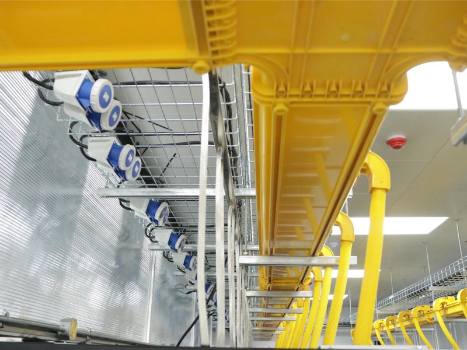
Data centers pack electrical, mechanical, and cooling systems into constrained space. Cable trays, chilled water lines, and airflow pathways must coexist without interfering with maintenance access. BIM-driven MEP coordination ensures that every component fits within the available space while maintaining serviceability and operational efficiency.
Clash Detection and Rework Reduction
Clash detection is one of BIM’s most immediate value drivers. By identifying conflicts between systems such as busways and cooling layouts early, teams can resolve issues before construction begins. This reduces rework, prevents delays, and supports more predictable construction sequencing, especially in fast-track projects.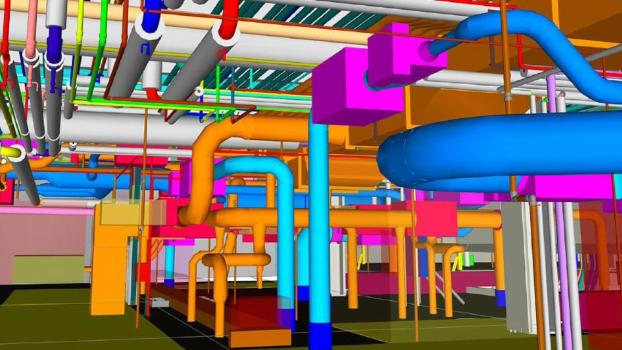
Common Data Environment and Federated Models
A Common Data Environment allows all stakeholders to work from a single source of truth. The federated model integrates inputs from multiple disciplines, governed by a BIM Execution Plan. This structure ensures alignment, minimizes miscommunication, and supports rule-based checking across the project lifecycle.
Power Infrastructure Planning with BIM
Designing Reliable Power Distribution Systems
Power infrastructure is the backbone of any data center. BIM enables detailed modeling of power distribution systems, including switchgear, feeders, and bus duct networks. By simulating electrical loads and load forecasting scenarios, engineers can optimize system layouts and ensure balanced distribution across the facility.
Redundancy Models and Backup Systems
Reliability depends on redundancy. BIM allows precise planning of UPS systems, generators, and dual power feeds, ensuring that backup systems are fully coordinated with primary infrastructure. Generator yard layouts and utility service entry points can be validated within the model, reducing risk during commissioning.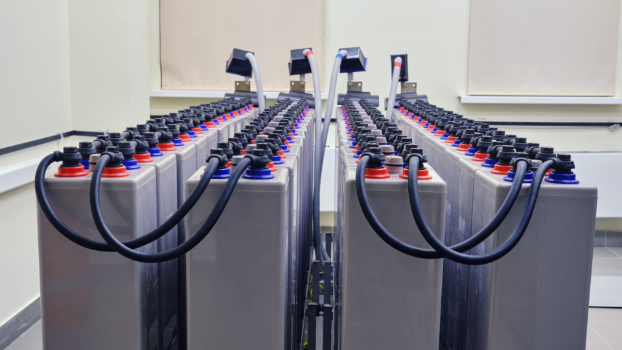
Compliance and Validation in Electrical Systems
Regulatory compliance with NEC and AHJ requirements is non-negotiable. BIM supports validation by embedding compliance checks into the design process. This ensures that systems are not only functional but also meet safety and code standards, streamlining the path to commissioning.
Cooling Systems and Thermal Performance Optimization
Designing Efficient Cooling Systems
Cooling systems must align with power infrastructure to maintain stable operations. BIM enables the integration of chilled water systems, CRAH/CRAC units, and containment layouts within a unified model. This allows engineers to optimize airflow management and ensure that cooling capacity matches equipment demand.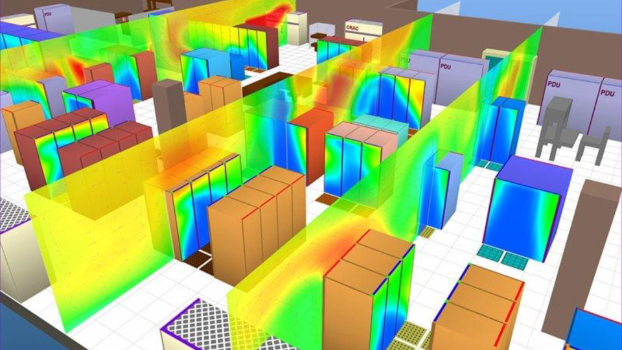
Managing Heat and Thermal Behaviour
Thermal behavior is directly influenced by rack densities and equipment layout. BIM simulations help visualize heat dissipation patterns and identify hotspots before deployment. This proactive approach protects uptime and ensures that cooling systems operate efficiently under varying load conditions.
Energy Efficiency and Performance Metrics
Energy efficiency is measured through metrics such as Power Usage Effectiveness. BIM supports energy optimization by modeling energy consumption across systems and identifying opportunities to reduce waste. This not only lowers operational costs but also aligns with sustainability metrics.
Construction Sequencing, Cost Control, and Delivery Efficiency
4D BIM for Construction Sequencing
4D BIM introduces time as a dimension, allowing teams to visualize construction sequencing. This is particularly valuable in data centers where installations must be carefully phased to avoid disruptions. Sequencing models help coordinate trades and reduce downtime risks during construction.
5D BIM for Cost Control
Cost control is enhanced through 5D BIM, which links quantities to financial data. This enables accurate forecasting and reduces uncertainty in budgeting. By minimizing change orders and RFIs, BIM contributes to more efficient project delivery.
Prefabrication and Modular Construction
Prefabrication and modular construction are increasingly common in data centers. BIM supports these approaches by enabling precise fabrication of components such as cable assemblies and mechanical modules. This improves installation speed and reduces on-site complexity.
Commissioning, Validation, and Risk Reduction
Commissioning Planning with BIM
Commissioning is where design meets reality. BIM allows teams to validate system performance before installation, ensuring that power and cooling systems function as intended. This reduces delays and accelerates the transition to operational status.
Rule-Based Checking and Quality Assurance
Rule-based checking ensures that design standards are consistently applied. By automating validation processes, BIM improves quality assurance and reduces the likelihood of errors that could impact uptime.
Lifecycle Management and Operational Intelligence
Digital Twin and Facility Management Integration
A digital twin extends BIM into operations, providing a live representation of the facility. This supports monitoring, predictive maintenance, and real-time decision-making, enhancing overall performance.
Lifecycle Management and Data Handover
Structured data handover using COBie ensures that facility management teams have access to accurate asset information. This supports lifecycle management and enables more efficient maintenance planning.
Sustainability and Energy Optimization in Data Centers
Reducing Environmental Impact
Sustainability is becoming a core requirement. BIM supports sustainable design by enabling analysis of carbon targets and CO2 emissions. This helps organizations meet regulatory and environmental goals.
Energy Optimization and Performance Modeling
Energy optimization strategies can be tested within the BIM environment. By analyzing thermal behavior and system performance, engineers can improve efficiency and reduce environmental impact.
Future Trends in BIM for Data Center Construction
Integration with Advanced Technologies
The integration of BIM with advanced technologies such as AI is enhancing predictive capabilities. This allows for more accurate modeling and improved decision-making.
Scaling for Hyperscale and Edge Data Centers
As demand grows, BIM supports rapid scaling for hyperscale and edge data centers. Its ability to manage complexity makes it essential for modern infrastructure development.
From BIM to Fully Connected Ecosystems
BIM is evolving into a central platform that connects design, construction, and operations. This creates a continuous feedback loop that drives efficiency and innovation.
Conclusion: BIM as the Backbone of Modern Data Center Construction
BIM has become indispensable in data center construction because it addresses the core challenges of coordination, reliability, and efficiency. By integrating power infrastructure, cooling systems, and operational data into a single model, it enables teams to deliver facilities that meet the highest standards of uptime and performance. In a landscape where failure is not an option, BIM provides the clarity and control needed to build with confidence.