The Risk of Skipping Model Validation in Data Center Projects
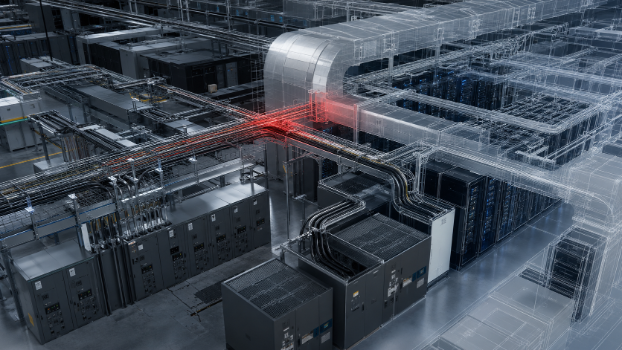
In a data center project, the model is not just a coordination reference. It is a technical risk map for power continuity, thermal stability, maintainability, sequencing, and commissioning readiness. When model validation is skipped or treated as a quick visual review, small conflicts can move quietly from the screen into the field, where they become access problems, late redesigns, delayed energization, or hidden reliability risks. For mission-critical facilities, that is not a documentation issue. It is a direct threat to uptime, cost control, and operational confidence.
Why Model Validation Matters in Data Center Projects
Data Centers Depend on Precision, Not Assumptions
Data centers are built around controlled failure. Every major system, from utility service to UPS modules, generators, switchgear, PDUs, busway, cable trays, cooling units, containment, and monitoring infrastructure, must work as part of a deliberate redundancy strategy. A model that looks complete but has not been technically validated can hide serious gaps between design intent and installable reality.
Validation checks whether the model actually supports the facility’s performance requirements. It confirms clearances, routing logic, maintenance access, load paths, equipment relationships, and cross-discipline coordination. Without that step, teams may believe the project is coordinated when it is only visually assembled.
The Model Becomes the Basis for Field Decisions
On fast-moving data center builds, field teams rely heavily on BIM outputs, shop drawings, prefab layouts, spool drawings, and coordinated routes. If the model contains unvalidated assumptions, those assumptions become installation instructions. A cable tray elevation that conflicts with cooling ductwork, a bus duct route that blocks service clearance, or a UPS room layout that limits replacement access may not appear urgent until the field reaches that zone.
At that point, correction is no longer simple. It affects procurement, labor sequencing, inspection, commissioning, and sometimes live downstream dependencies.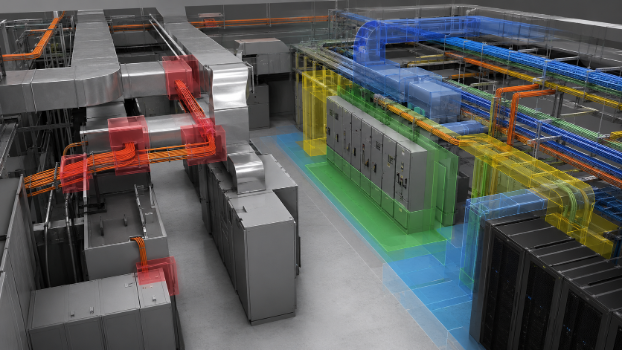
The Hidden Risks of Skipping BIM Validation
Field Rework and Schedule Compression
The most visible risk is rework. In data center construction, rework rarely stays isolated. Moving one electrical route can affect supports, penetration locations, firestopping, grounding paths, cooling access, and ceiling coordination. A small model issue can create a chain reaction across multiple trades.
Schedule impact is often worse than the physical correction. Data center projects are usually driven by aggressive delivery milestones, and electrical rooms, white space, and generator yards are tightly sequenced. When validation failures are discovered late, teams lose the controlled environment needed to solve them cleanly.
Power Path Errors That Undermine Reliability
Electrical architecture in a data center is not just about connecting equipment. It is about preserving defined power paths under normal operation, maintenance, and failure conditions. Skipping validation can allow unclear or incorrect relationships between utility feeds, switchgear lineups, UPS systems, STS units, PDUs, RPPs, generators, and downstream critical loads.
The danger is that the model may still appear coordinated while failing to reflect the intended redundancy model. A route may be physically possible but operationally wrong. A shared pathway may violate separation expectations. A maintenance bypass arrangement may be modeled without enough working clearance. These issues directly affect uptime protection.
Poor Maintainability After Handover
A data center is not finished when construction ends. It must be operated, serviced, expanded, and repaired without disrupting critical workloads. Validation helps confirm that operators can access filters, panels, breakers, batteries, valves, sensors, and monitoring devices safely and efficiently.
When maintainability is not checked in the model, the facility can inherit long-term friction. Equipment may meet installation requirements but fail operational expectations. That creates recurring maintenance delays, higher labor effort, and greater risk during live work.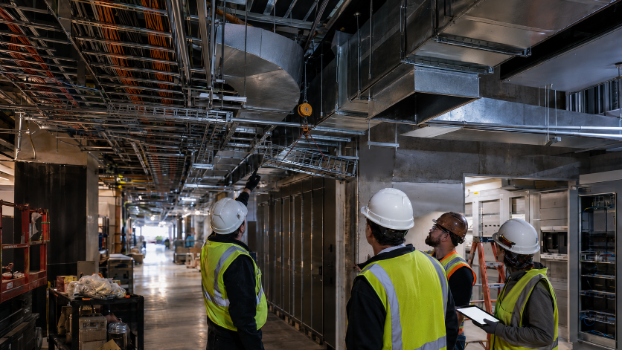
Core Systems That Must Be Validated
Power Infrastructure and Distribution
Power distribution requires deep validation because it touches almost every part of the facility. Medium-voltage gear, transformers, switchboards, switchgear, bus duct, cable tray, conduit banks, feeder routes, and grounding systems must be checked for physical fit, separation, bend radius, access, structural support, and installation sequence.
In dense electrical corridors, the question is not only whether systems clash. The stronger question is whether they can be installed, inspected, maintained, and modified under real project conditions.
UPS Systems, Generators, and Battery Rooms
UPS systems and generators carry some of the highest reliability responsibility in the project. Their models must be validated for equipment spacing, ventilation, exhaust paths, fuel systems, battery access, replacement paths, and safe working clearances. Battery energy storage and lithium-ion UPS trends add more complexity because thermal management, fire protection, and monitoring integration become even more important.
A generator yard may look organized in plan view, but validation must confirm fuel routing, exhaust discharge, service access, electrical pathways, and acoustic or environmental constraints. These are practical details with major operational consequences.
Cable Tray, Bus Duct, and Pathway Coordination
Cable tray and bus duct coordination is one of the most common areas where skipped validation creates expensive field problems. These systems often run through crowded overhead zones where structural steel, ductwork, piping, containment, lighting, and controls compete for space.
A validated model checks routing hierarchy, access zones, support locations, elevation changes, and future capacity. It also confirms that critical power pathways are not forced into compromises that make future expansion or emergency work harder.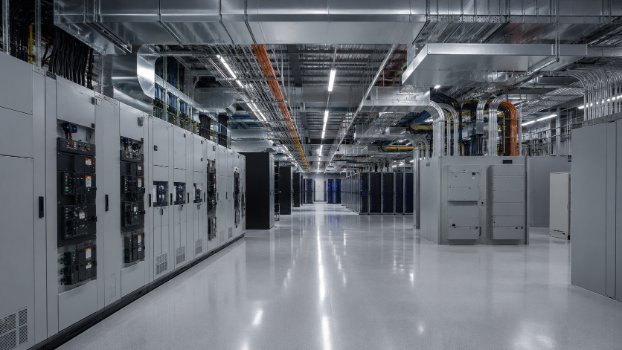
Redundancy Models and Uptime Protection
N+1, 2N, and 2N+1 Must Be Reflected in the Model
Redundancy is only valuable if the physical infrastructure supports it. N+1, 2N, and 2N+1 strategies depend on separation, independent pathways, maintainable equipment, and clear operational logic. A model that does not validate these relationships may weaken the very resilience the design is meant to provide.
For example, redundant power paths should not quietly converge through the same vulnerable space without review. Mechanical and electrical dependencies should be visible. Maintenance scenarios should be considered before the field locks systems into place.
Tier Expectations Require More Than Design Labels
Tier classifications and uptime expectations are not satisfied by naming a topology. They depend on how the facility is actually arranged and delivered. Model validation helps expose whether the design intent survives coordination, prefabrication, installation, and commissioning preparation.
This is where technical review must go beyond clash detection. The model should support concurrent maintainability, fault tolerance where required, and clear operational separation.
Cooling and Thermal Coordination
Electrical Systems and Cooling Systems Interact Constantly
Power and cooling are inseparable in a data center. UPS rooms, switchgear rooms, battery spaces, electrical corridors, and white space all create heat and airflow requirements. If cooling coordination is not validated alongside electrical routing, teams can miss access conflicts, airflow restrictions, sensor placement issues, or service constraints.
CRAC and CRAH units, ductwork, chilled water piping, containment systems, and rack layouts must be reviewed as part of the same operational environment. A clean electrical route is not successful if it blocks airflow or complicates cooling maintenance.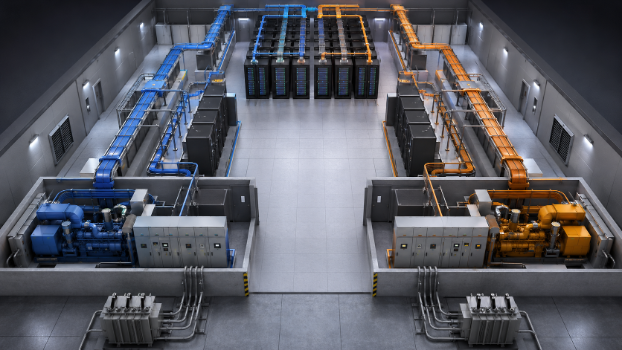
Rack Density Makes Small Errors More Expensive
As rack density increases, the tolerance for coordination mistakes decreases. Higher power density means more heat, more monitoring, more cable management, and tighter environmental control. Model validation helps ensure that design assumptions around airflow, containment, equipment spacing, and power delivery remain realistic as the facility becomes more compact and complex.
Commissioning, Monitoring, and Controls
Commissioning Depends on a Trustworthy Model
Commissioning teams need the model to reflect real system relationships. Electrical testing, UPS testing, generator testing, load bank planning, sequence-of-operations checks, and failure scenario testing all become harder when model conditions are unreliable.
A validated model gives commissioning teams a clearer path to verify performance. It also helps identify issues earlier, before the project reaches the most time-sensitive testing phases.
BMS, SCADA, and Power Monitoring Need Coordination Too
Monitoring systems are often treated as secondary in coordination, but they are central to operations. BMS, SCADA, EPMS, sensors, meters, alarms, and controls infrastructure must be placed and connected in a way that supports visibility and response.
Skipping validation can create blind spots. A facility may have strong equipment, but weak operational awareness because monitoring points, pathways, or integration requirements were not fully coordinated.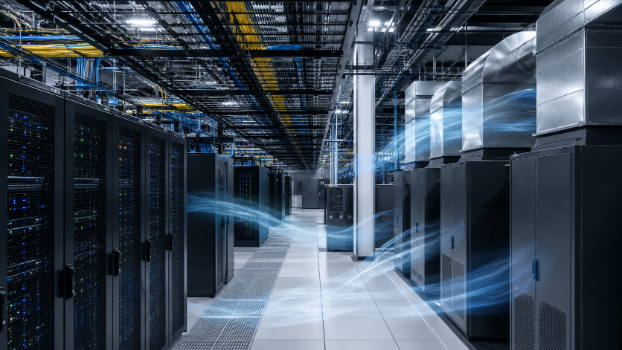
Efficiency, Sustainability, and Future-Ready Infrastructure
PUE, WUE, and Energy Optimization Start with Good Coordination
Sustainability targets depend on real performance, not just efficient equipment. Poorly coordinated systems can increase fan energy, reduce cooling effectiveness, complicate controls, or limit optimization. Model validation supports better PUE and WUE outcomes by helping teams align layout, airflow, power distribution, and monitoring strategy before construction decisions become fixed.
Digital Twins and Future Upgrades Require Accurate Foundations
Future-ready data centers are moving toward digital twins, renewable integration, battery storage, advanced controls, and more detailed asset intelligence. These trends require accurate, validated models. If the construction model begins with unresolved errors, the operational digital twin inherits bad information.
That weakens lifecycle value. Owners cannot confidently plan upgrades, capacity changes, maintenance windows, or energy improvements if the underlying model is not trustworthy.
What a Strong Validation Process Should Include
Rule-Based Checks and Multi-Discipline Review
Strong validation combines automated checking with experienced technical review. Rule-based checks can catch clearance issues, naming inconsistencies, duplicate elements, pathway conflicts, and spatial violations. But senior engineers still need to review system logic, redundancy, maintainability, commissioning readiness, and trade sequencing.
The best process brings electrical, mechanical, structural, controls, commissioning, and operations perspectives into the model before problems reach the field.
Validation Should Continue Through Project Changes
Data center models change constantly. Equipment shifts, routes adjust, prefab decisions evolve, and site conditions force revisions. Validation should not be a one-time gate. It should continue through design updates, coordination cycles, construction changes, and handover preparation.
Skipping model validation saves time only on paper. In practice, it transfers risk into the most expensive stages of the project. For data centers, where uptime, speed, and precision define success, a validated model is not optional. It is one of the strongest safeguards against hidden technical debt, field disruption, and long-term operational weakness.