
The Risk of Skipping Model Validation in Data Center Projects
Skipping model validation in data center projects is rarely a single mistake. It is usually the quiet beginning of a chain reaction. A clearance missed in the BIM model becomes a field routing conflict. An unverified UPS path becomes a commissioning delay. A shared breaker, control dependency, or cooling constraint becomes a hidden single point of failure. In mission-critical facilities, the model is not just a design reference. It is the technical map for power distribution, redundancy, maintainability, testing, and long-term uptime. When that map is not validated, risk moves from the screen to the site.
The Real Risk of Skipping Model Validation in Data Center Projects
Model validation protects the project from assumptions. It checks whether the BIM model reflects the owner requirements, design intent, field conditions, access needs, and operational logic required for a data center to function reliably. Without validation, teams may believe the model is coordinated when it only looks complete.
The real risk is not only rework. It is downtime exposure, commissioning failure, compliance gaps, delayed turnover, and reduced confidence in operational resilience.
Why Model Validation Matters in Mission-Critical Environments
Data centers depend on tightly connected power systems, cooling systems, controls, alarms, sensors, and redundancy logic. A normal commercial building can often tolerate some field adjustment. A data center cannot always absorb that flexibility without affecting uptime, availability, or maintainability.
Every UPS system, backup generator, switchgear lineup, PDU, breaker, and cooling unit must fit within a larger fault-tolerant architecture.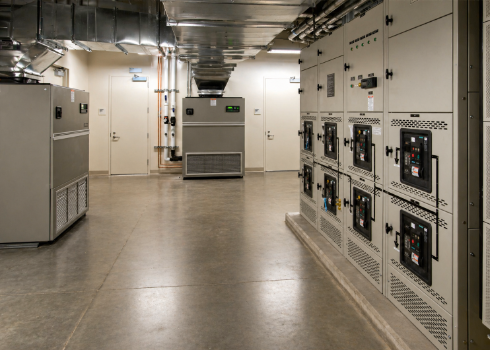
How Small Model Errors Become Expensive Field Problems
A two-inch clearance issue around a busway, conduit bank, or CRAC unit may seem minor in design review. In the field, it can block installation, violate maintenance access, delay testing, or force rerouting across other trades.
These errors multiply in dense environments where electrical routing, cooling loads, airflow, and controls all compete for space.
Understanding Model Validation, BIM Validation, and Design Validation
Model validation confirms that the digital model is accurate, coordinated, and usable. BIM validation checks model quality, data structure, clash status, and constructability. Design validation verifies that the technical solution meets the required performance, redundancy, and compliance criteria.
Together, they turn the model from a visual coordination file into a reliable construction and commissioning tool.
Model Validation vs. Clash Detection
Clash detection identifies physical conflicts. Model validation goes deeper. It asks whether systems are accessible, properly routed, correctly labeled, logically redundant, and aligned with acceptance criteria.
A clash-free model can still hide a single point of failure, poor maintenance access, or incomplete control logic.
Rule-Based Model Checking and Project Standards
Rule-based model checking helps verify clearances, naming standards, level of detail, electrical separation, equipment access, and documentation. This is especially valuable in repeatable data center programs where consistency matters across multiple buildings or campuses.
It also reduces subjective review and improves compliance with the BIM execution plan.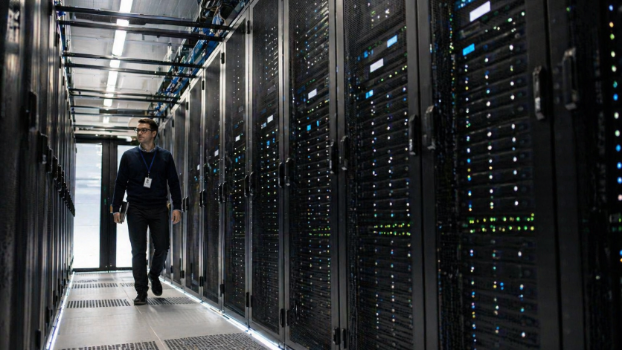
Federated Models and the Need for a Single Source of Truth
A federated model brings architectural, structural, mechanical, electrical, telecom, fire protection, and controls models into one coordinated environment. Without a single source of truth, teams may work from outdated versions and miss design changes.
For data centers, that version control problem can directly affect power distribution systems and cooling coordination.
BIM Execution and Documentation Requirements
A strong BIM execution plan defines model ownership, update frequency, level of detail, coordination workflows, and documentation standards. Without it, validation becomes inconsistent and accountability becomes unclear.
Good documentation also supports commissioning, handover, and future operations.
Level of Detail and Model Accuracy
Level of detail matters because generic blocks do not expose real-world constraints. UPS systems, switchgear, PDUs, substations, and chillers require accurate dimensions, clearance zones, cable routing, and service access.
Incomplete detail creates false confidence.
As-Built Models and Operational Handover
The as-built model should reflect what was actually installed, not what was originally intended. Accurate as-built documentation helps operators troubleshoot alarms, plan maintenance, expand capacity, and verify system paths years after construction.
Power Infrastructure Risks Hidden in Unvalidated Models
Electrical architecture is one of the highest-risk areas for skipped validation. Power systems must support uptime, redundancy, safety, and future maintainability.
If the model does not correctly represent routing, equipment access, protective zones, and redundant power distribution, problems often appear during commissioning or live operations.
UPS Systems, Backup Generators, and Redundant Power Paths
UPS systems and backup generators are only reliable if their physical installation and electrical paths support the intended failover sequence. Model validation confirms space, access, cable routes, dual power sources, and separation between redundant systems.
A redundant system that shares a hidden dependency is not truly redundant.
Switchgear, PDUs, Breakers, and Substations
Switchgear, PDUs, breakers, and substations must be modeled with enough accuracy to support installation, testing, and maintenance. Incorrect clearances or routing conflicts can delay energization and complicate planned maintenance.
Electrical Load Testing and Protective Device Settings
Electrical load testing verifies whether systems perform under realistic demand. Protective device settings must also be coordinated to reduce short-circuit and arc flash risk.
If the model misses the actual system relationship, testing can reveal failures late and expensively.
Redundancy, Fault Tolerance, and Uptime Protection
Redundancy is not just extra equipment. It is a carefully designed architecture that supports availability during failure, maintenance, or unplanned outages.
Model validation helps confirm that redundancy exists physically, electrically, mechanically, and logically.
N+1 and 2N+1 Redundancy Models
N+1 redundancy adds one extra component beyond the required load. 2N+1 redundancy provides a more robust duplicated system with additional backup capacity. Both require validation to confirm independence, capacity, and proper routing.
Multiple Distribution Paths and Single Points of Failure
Multiple distribution paths reduce downtime risk only when they are truly separated. A shared breaker, control panel, cable route, or room can create a single point of failure that is invisible without careful validation.
Concurrent Maintainability and Planned Maintenance
Concurrent maintainability means systems can be serviced without shutting down critical load. Validation must confirm access, isolation, safe work zones, and redundant capacity during planned maintenance.
Cooling System Validation and Thermal Performance
Cooling and power cannot be separated in data centers. Higher rack power density increases cooling loads, airflow sensitivity, and temperature risk.
Skipping validation can cause thermal imbalance even when the electrical design appears sound.
Chillers, HVAC, CRAC Units, and CRAH Units
Chillers, HVAC systems, CRAC units, and CRAH units need accurate modeling for service access, ducting, piping, airflow, and redundancy. Small layout errors can reduce cooling efficiency or delay commissioning.
Hot Aisle, Cold Aisle, and Rack Power Density
Hot aisle and cold aisle strategies depend on clean airflow paths. If racks, cable trays, containment, or cooling equipment are poorly coordinated, temperature control becomes harder and power consumption rises.
Cooling Redundancy Testing and Cooling Efficiency
Cooling redundancy testing verifies how the facility responds when equipment fails. It also supports energy efficiency by proving that systems can maintain temperature without unnecessary overcooling.
Controls, Monitoring, Alarms, and Failure Response
Controls turn infrastructure into an operating system. Sensors, dashboards, alarms, and fault reporting give operators visibility into performance and failure conditions.
If these systems are not validated, the facility may not respond as intended.
Control Logic and Redundancy Logic
Control logic governs sequences. Redundancy logic governs failover. Both must be checked against real equipment relationships, not just design diagrams.
Alarm Mapping, Sensors, and Dashboards
Alarm mapping ensures the right fault reaches the right dashboard with the right meaning. Poor mapping can delay response during a critical event.
Failure Simulation and Simulated Operational Stress
Failure simulation, load banks, and simulated operational stress reveal whether power, cooling, controls, and alarms behave correctly together.
Data Center Commissioning as the Final Validation Layer
Data center commissioning proves that design intent, installation, and operational behavior align. It is the final validation layer before the facility carries critical load.
Factory Acceptance Testing and Pre-Functional Testing
Factory acceptance testing verifies equipment before shipment. Pre-functional testing checks installation readiness before deeper system testing begins.
Functional Performance Testing
Functional performance testing confirms that individual systems perform correctly, including UPS transfer, generator startup, breaker operation, cooling response, and alarm behavior.
Integrated Systems Testing
Integrated systems testing proves that power, cooling, controls, and monitoring work together during realistic failure scenarios.
Test Matrix, Acceptance Criteria, and Field Verification
A test matrix organizes what must be proven. Acceptance criteria define pass or fail. Field verification confirms the model matches the installed condition.
Compliance, Safety, and Risk Reduction
Validation supports compliance, safety, and operational confidence. It reduces arc flash exposure, short-circuit risk, access issues, and documentation gaps.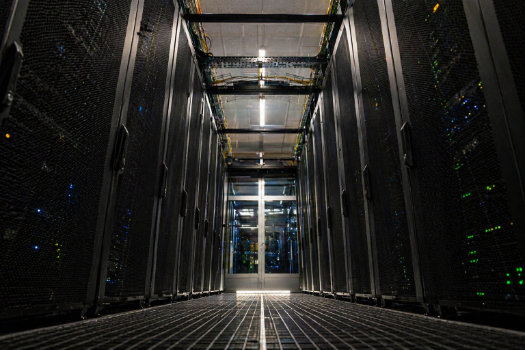
Reducing Rework and Late-Stage Redesign
Early validation is cheaper than field correction. It prevents avoidable clashes, routing changes, clearance conflicts, and schedule delays.
Avoiding Unplanned Outages and Operational Failures
Many outages begin as design or coordination assumptions. Validation helps expose those assumptions before they become operational failures.
Efficiency, Sustainability, and Long-Term Performance
Validated systems operate more predictably. That improves operational efficiency, energy efficiency, and sustainable performance over the lifecycle.
Energy Efficiency and Power Consumption
Accurate power modeling supports better capacity planning, reduced losses, and improved power consumption control.
Cooling Efficiency and Energy Savings
Validated airflow and cooling loads reduce overcooling, improve cooling efficiency, and support measurable energy savings.
Sustainable Performance Over the Facility Lifecycle
Sustainability depends on reliable systems, accurate documentation, and efficient operation over time.
Future Trends in Data Center Model Validation
Validation is moving from manual review to connected, automated, rule-based workflows.
More Automated Rule-Based Validation
Automated checks will increasingly validate clearances, access, naming, redundancy paths, and documentation.
Stronger Links Between BIM, Commissioning, and Operations
The future model will connect BIM data, commissioning results, asset records, and operational dashboards.
Growing Focus on Resilience and Sustainable Performance
As data centers scale, resilience and sustainable performance will become inseparable.
Conclusion: Model Validation Protects More Than the Model
Skipping model validation puts construction accuracy, commissioning success, uptime, safety, and long-term efficiency at risk. In data center projects, validation is not a paperwork exercise. It is how teams prove that critical infrastructure can be built, tested, maintained, and trusted.