
The Gap Between BIM Coordination and Real Installation
In data center construction, BIM coordination often creates the impression that the project is already under control. The model is clean, clashes are resolved, pathways are approved, and trade partners appear aligned. But the real test begins when coordinated geometry meets steel, concrete, equipment clearances, access constraints, procurement substitutions, field sequencing, and the pressure of installation schedules. The gap between BIM coordination and real installation is not a failure of modeling itself. It is usually a failure to translate coordinated intent into buildable, field-ready execution.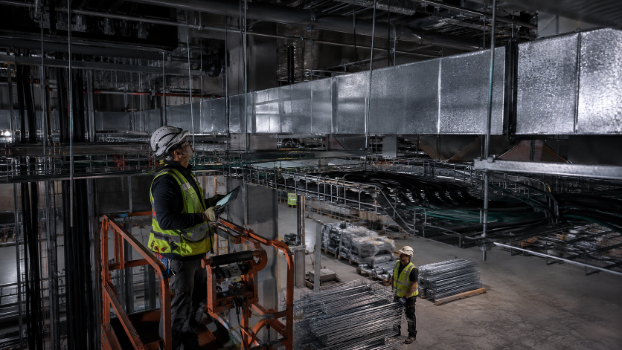
Coordination Is Not the Same as Constructability
BIM coordination is designed to reduce spatial conflict. It helps teams identify where systems overlap, where access zones are compromised, and where major routing conflicts could affect delivery. In mission-critical environments, this is especially valuable because electrical rooms, utility corridors, overhead pathways, and mechanical galleries are dense by design.
However, a clash-free model does not automatically mean a buildable installation. Coordination often focuses on whether objects occupy the same space, not whether crews can realistically install, support, test, maintain, or replace those systems. A cable tray may clear a duct in the model, but still be impossible to install because the hanger sequence is wrong. A busway may fit geometrically, but lack the working clearance needed for safe termination or future service. A conduit rack may look organized in 3D, but become impractical once bend radius, pull points, prefabrication limits, and installation access are considered.
The Model Shows Space, But the Field Tests Sequence
The field does not install all systems at once. Crews work in phases, with access limitations, temporary supports, equipment deliveries, inspection hold points, and changing priorities. BIM coordination often represents the final condition, while the field must solve the path to get there.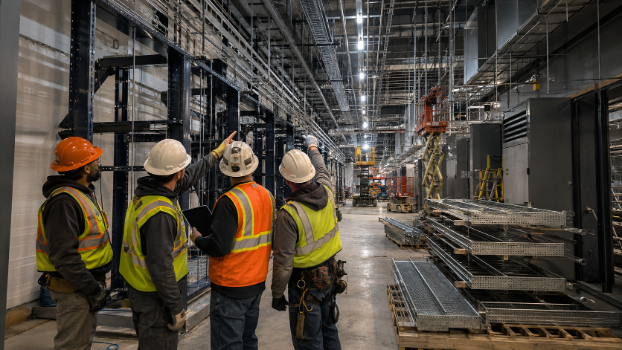
This is where many coordination plans break down. If electrical racks are coordinated above ceiling zones but the structural supports are installed first in a way that blocks access, the model may still be technically correct but practically weak. If large mechanical equipment is set before electrical pathways are roughed in, the remaining routes may require field offsets, added labor, and rework. The issue is not only what fits. It is what can be installed, in what order, by which crew, using which access path.
Electrical Systems Expose the Gap Faster
Electrical infrastructure in data centers is especially sensitive to the disconnect between coordination and installation. Power distribution is not a flexible afterthought. Medium-voltage feeders, bus duct, switchgear lineups, UPS systems, generators, PDUs, grounding networks, cable trays, and conduit banks all carry strict requirements that are not always visible in basic clash detection.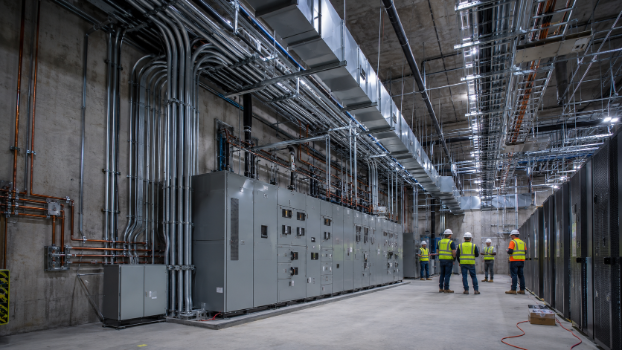
Electrical systems need continuity, clearance, support, heat management, bend radius control, pullability, maintainability, and commissioning access. A few inches of adjustment can affect multiple downstream systems. Moving a cable tray may change conduit stub-ups. Shifting a bus duct may affect equipment alignment. Re-routing feeders may change pull box locations, support spacing, or voltage drop assumptions.
Dense Routing Requires More Than Collision Avoidance
In a data center, overhead and below-slab pathways are often pushed to their limits. Electrical trays, branch conduits, fire alarm pathways, security systems, telecom routes, mechanical piping, ductwork, and structural elements compete for the same high-value space. Coordination may resolve visible conflicts, but still leave the electrical contractor with routing that is difficult to fabricate, hard to support, or inefficient to install.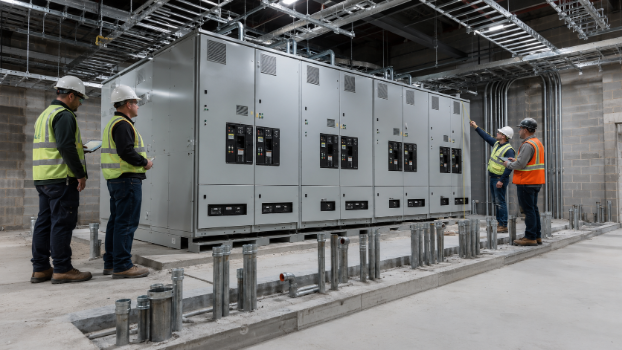
The difference between a coordinated route and an installable route often comes down to trade knowledge. Can the tray be installed in sections? Can the conduit bends be made without excessive offsets? Is there enough room to pull conductors safely? Are junction boxes accessible after ceiling closure? Can prefabricated racks be transported through the building and lifted into place? These questions are not always captured by automated clash reports, but they determine whether the model supports real production.
Field Conditions Rarely Match the Perfect Model
Even strong BIM coordination depends on accurate inputs. The model assumes the latest architecture, structure, equipment layouts, vendor dimensions, and trade requirements are available and correctly represented. On fast-moving data center projects, that assumption is fragile.
Late equipment changes, revised structural details, underground conflicts, owner-driven modifications, and procurement substitutions can all create installation gaps. A switchgear lineup may arrive with slightly different dimensions than expected. A structural opening may be shifted. A housekeeping pad may be poured differently from the coordinated plan. A rack layout may be revised after the overhead routing is already approved.
Small Deviations Create Large Downstream Impacts
The impact of small field changes is amplified in mission-critical facilities because systems are tightly integrated. A minor shift in one major component can force changes across multiple trades. When these changes are handled informally in the field, the model quickly loses its authority. Crews begin solving problems locally, but the broader system logic becomes harder to track.
This is how coordinated projects drift. The model remains clean in meetings, while the field installation quietly evolves. By the time the difference is discovered, the issue may involve installed work, inspection comments, prefabricated assemblies, procurement delays, or commissioning constraints. The cost is no longer only coordination time. It becomes schedule pressure, rework, and reduced confidence in the digital plan.
The Missing Layer Is Installation Intelligence
The strongest BIM workflows do not stop at clash detection. They connect coordination with installation logic. This means model reviews should include field sequencing, access validation, support strategy, prefabrication planning, equipment delivery paths, commissioning requirements, and maintenance clearance.
For electrical work, this requires input from people who understand how power systems are actually built. A modeler can route conduit, but an experienced electrical coordinator understands which route will create fewer pulls, better support conditions, cleaner terminations, and safer installation. A clash report can show where systems conflict, but it cannot fully judge whether the proposed solution respects field productivity.
Constructability Reviews Must Happen Before Approval
Too often, constructability is treated as a late-stage field problem. The better approach is to bring installation thinking into coordination before routes are approved. This includes reviewing installation access, hanger feasibility, clear working space, bend radius, equipment service zones, panel access, firestopping needs, and commissioning pathways.
The goal is not to slow the process down. It is to prevent false progress. Approving a model that looks coordinated but cannot be installed cleanly creates a bigger delay later. A disciplined constructability review gives the field a better plan, reduces last-minute redesign, and helps subcontractors protect production schedules.
Better Handoffs Reduce Field Rework
A major source of installation breakdown is the handoff between BIM coordination teams and field crews. Coordination decisions are often made in meetings, captured in models, and summarized in issue logs. But field crews need more than a resolved model. They need clear installation intent.
Effective handoffs should explain what changed, why it changed, what areas are sensitive, what tolerances matter, and where crews should avoid field adjustment without approval. For complex electrical zones, this may include marked-up views, installation drawings, spool logic, rack references, and clear version control.
Version Control Is a Field Productivity Issue
When crews work from outdated drawings or unclear model exports, even good coordination loses value. In dense data center environments, version confusion can quickly create expensive problems. A feeder route revised in coordination must be reflected in installation drawings, prefab packages, procurement notes, and field layout documents.
Real coordination requires traceability. Teams need to know which model version is approved, what changed from the previous version, and whether the change has been communicated to affected trades. Without that discipline, coordination becomes a meeting activity rather than a production control system.
Closing the Gap Requires Accountability
The gap between BIM coordination and real installation is closed when ownership is clear. Every resolved issue should have a responsible party, a decision record, and a path to field execution. Every major change should be reviewed not only for spatial fit, but also for installation impact. Every model approval should be tied to the version that crews will actually build from.
For data centers, this level of control is not optional. The density, schedule pressure, electrical complexity, and uptime expectations leave little room for vague coordination. A project can have excellent models and still suffer in the field if the installation logic is weak.
The best teams treat BIM as a bridge between design and construction, not as a separate digital exercise. They use coordination to make better installation decisions, not just cleaner models. When BIM, constructability, and field execution are connected, the model becomes more than a coordination artifact. It becomes a reliable path from planned infrastructure to installed performance.