The Fragmentation Problem in Data Center BIM Projects
Data center projects push BIM to its limits. You are not coordinating a single discipline, you are orchestrating power distribution, cooling systems, redundancy models, and uptime-critical infrastructure inside a compressed footprint. The real issue is not modeling complexity itself. It is fragmentation. When BIM coordination breaks into disconnected workflows, fragmented communication, and isolated tools, the model stops being a source of truth. What follows is predictable. Coordination gaps, rework, delayed decisions, and risk to uptime. In mission-critical environments, that is not a minor inefficiency. It is a structural failure in how projects are delivered.
Understanding the Fragmentation Problem in Data Center BIM
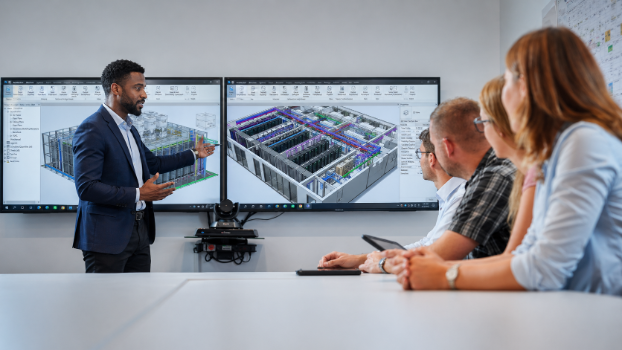
Fragmentation in BIM is the breakdown of continuity between disciplines, systems, and teams. Instead of a unified environment, teams operate across silos. Electrical systems are modeled separately from cooling systems. Field execution diverges from design intent. Fragmented issue management means problems are tracked in emails, spreadsheets, or separate platforms, rather than resolved within the model itself. The result is not just inefficiency. It is loss of control over coordination at the exact moment precision matters most.
Root Causes of Fragmentation in BIM Workflows
Most fragmentation originates from the absence of a centralized system and a true common data environment. When multiple stakeholders rely on different tools without integration, version control becomes unstable. MEP coordination suffers because updates are not synchronized. Manual workflows amplify the problem. Teams rely on meetings instead of real-time coordination. Ownership becomes unclear, and responsibility for resolving clashes or updates gets diluted.
Impact on Data Center Project Outcomes
The impact is visible on-site. Rework increases because coordinated models do not reflect actual conditions. Installations of conduits or cable trays conflict with late-stage HVAC routing changes. Delays cascade through the schedule. More critically, reliability assumptions embedded in the design, such as redundancy or load balancing, become harder to validate. That directly affects uptime, which is the defining metric of any data center.
Core BIM Coordination Framework for Data Centers
Effective BIM coordination is not just about aligning geometry. It is about synchronizing decision-making across disciplines. In data centers, MEP coordination carries the highest risk because electrical and mechanical systems are tightly interdependent. Without structured coordination workflows, even small misalignments escalate quickly.
Clash Detection and Coordination Efficiency
Clash detection is often treated as a checkpoint, but in high-density environments it must be continuous. Automated clash detection identifies spatial conflicts early, but the real value comes from resolving those clashes within a coordinated workflow. When done correctly, it reduces rework and improves constructability. When done in isolation, it becomes another fragmented process.
Eliminating Coordination Gaps
Closing coordination gaps requires more than tools. It requires process discipline. A centralized system for issue tracking, clear ownership of model elements, and real-time updates across teams are essential. When coordination becomes continuous rather than periodic, design intent and field execution stay aligned.
Power Infrastructure Integration in BIM Models
Power systems define the architecture of a data center. Every element, from switchgear to cable trays, must be modeled with precision because failure is not acceptable. BIM becomes the platform where these systems are visualized, validated, and coordinated.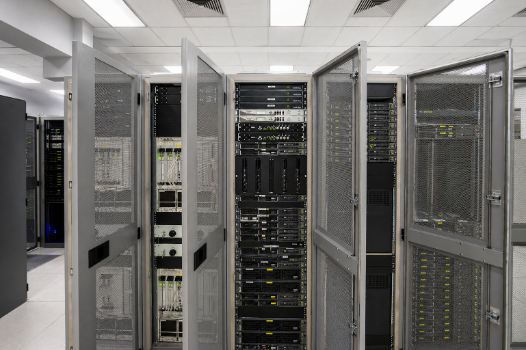
Electrical Systems and Distribution Networks
Accurate modeling of electrical systems involves more than routing conduits. It requires understanding load paths, spatial constraints, and maintenance access. Switchgear placement, cable tray routing, and conduit density must be coordinated with structural and mechanical systems. Any disconnect here creates downstream conflicts that are expensive to resolve in the field.
Redundancy Design and Reliability Models
Redundancy is the backbone of uptime. Models such as N+1 and 2N define how systems respond to failure. A/B power paths and dual power paths must be clearly represented in BIM to ensure independence and reliability. Fragmentation in coordination often undermines these designs, creating hidden dependencies that compromise resilience.
Backup Systems and Energy Continuity
UPS systems, backup generators, and battery systems must be integrated seamlessly into the model. Their placement, routing, and interaction with primary power systems are critical. Without coordinated modeling, these backup systems risk becoming isolated components rather than part of a unified resilience strategy.
Cooling Systems and Thermal Coordination
Cooling systems are inseparable from power systems. As power density increases, thermal management becomes more complex. BIM must capture this interaction accurately.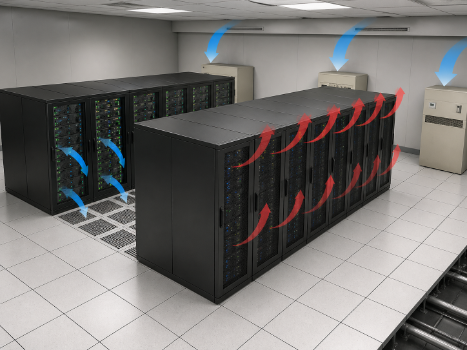
HVAC Routing and Airflow Optimization
HVAC routing in data centers is constrained by space and performance requirements. Airflow modeling ensures that cooling reaches critical equipment efficiently. Coordination between mechanical and electrical systems is essential to avoid conflicts and maintain performance.
Thermal Management Strategies
Hot and cold aisle configurations are standard, but their effectiveness depends on execution. Thermal hotspots often emerge from coordination failures. When airflow paths are obstructed or misaligned, efficiency drops and risk increases.
Digital Integration and Smart Monitoring
The role of BIM does not end at construction. It extends into operations through digital integration.
Digital Twins for Data Center Operations
Digital twins use BIM data to create a living representation of the facility. They allow simulation of system behavior, validation of redundancy models, and optimization of performance over time.
Real-Time Monitoring and Predictive Maintenance
Real-time monitoring connects operational data back to the model. Predictive maintenance uses this data to identify potential failures before they occur. When integrated properly, this reduces downtime and enhances reliability.
Efficiency Metrics and Sustainability in BIM Design
Efficiency and sustainability are no longer optional. They are core design drivers.
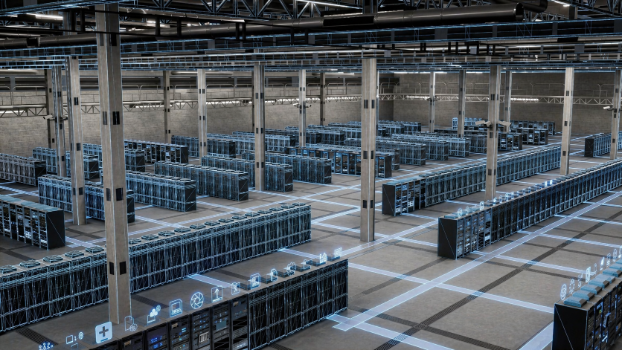
Energy Efficiency and Performance Metrics
Metrics such as PUE, or Power Usage Effectiveness, quantify how efficiently a data center uses energy. BIM supports these metrics by enabling accurate modeling of power and cooling interactions. Energy efficiency is not just about reducing cost. It is about optimizing performance at scale.
Sustainable Data Center Design
Sustainable data center design includes renewable energy integration and resource optimization. BIM provides the framework to evaluate these strategies during design, ensuring they are practical and effective.
Construction Delivery and Execution Optimization
The transition from design to field execution is where fragmentation often becomes visible.
Prefabrication and Modularity in Data Centers
Prefabrication and modularity reduce complexity on-site. By building components off-site based on coordinated models, quality improves and timelines shorten. However, this depends on accurate and complete BIM coordination.
Field Execution and Coordination Alignment
Field execution must align with the model. When it does not, rework increases and schedules slip. Ensuring that the model reflects reality requires continuous validation and feedback from the field.
Future Trends in Data Center BIM and Integration
BIM is evolving beyond coordination into a platform for integration and intelligence.
Convergence of BIM, AI, and Automation
AI is beginning to automate clash detection and optimize system layouts. This reduces manual effort and improves accuracy. Automation helps eliminate fragmentation by standardizing workflows.
Toward Fully Integrated Data Environments
The future lies in fully integrated data environments where design, construction, and operations are connected. A true common data environment ensures continuity across the lifecycle of the facility.
Conclusion: Building Connected, High-Performance Data Centers
Fragmentation is not just a coordination issue. It is a systemic weakness that affects every stage of a data center project. Resolving it requires more than better tools. It demands integrated workflows, disciplined coordination, and alignment across power, cooling, and digital systems. When BIM becomes a connected ecosystem rather than a collection of models, projects achieve the reliability, scalability, and uptime that modern data centers demand.