The Delay Problem in Data Center Coordination
Data center projects rarely suffer from a lack of effort. They suffer when the right information reaches the right team too late. A delayed model update, a missed power requirement, an unresolved cooling conflict, or a late commissioning note can quietly move from one trade to another until it becomes rework, schedule pressure, or uptime risk. In mission-critical facilities, the delay problem is not just about communication speed. It is about infrastructure visibility, decision timing, and the ability to coordinate power, cooling, redundancy, monitoring, and handover before small gaps become operational liabilities.
Understanding the Time Lag Problem in Data Center Coordination
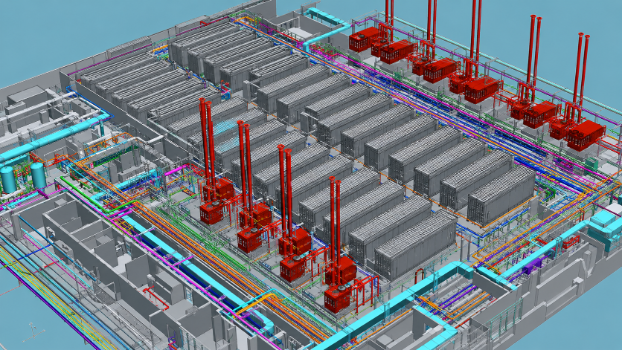
Data center coordination means aligning architecture, MEP coordination, electrical systems, power infrastructure, cooling infrastructure, backup power, monitoring requirements, commissioning evidence, and operations planning into one controlled delivery process. The delay problem appears when a change happens in one system but is not visible fast enough to the teams affected by it.
A power distribution adjustment may affect cable routing, UPS systems, cooling loads, equipment clearances, and testing and commissioning. When that change sits in an email thread, outdated drawing, or unreviewed model revision, the project keeps moving on stale information.
Why Time Lag Is More Dangerous in Data Centers Than Standard Buildings
In a standard commercial building, a late coordination issue may create rework or delay. In a data center, the same issue can threaten uptime, availability, reliability, and resilience. Power and cooling are tightly connected, and the tolerance for failure is much lower.
A small electrical systems update can affect rack densities, airflow management, backup generators, and commissioning scripts. That is why delayed visibility is not a minor workflow issue. It is an infrastructure risk.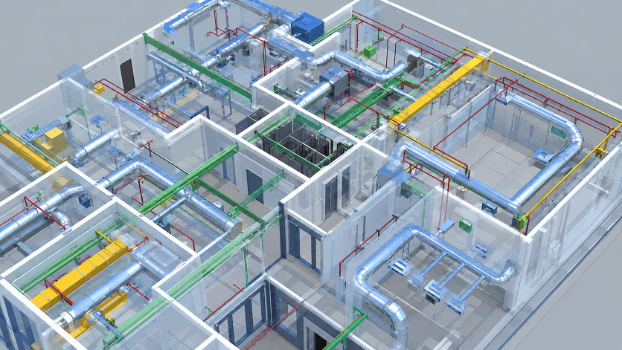
Where Coordination Delays Usually Start
Most coordination delays start in ordinary places: unclear documentation, disconnected trade coordination, late equipment lead times, version confusion, or slow responses to field changes. The problem is rarely one dramatic mistake. It is usually a chain of small delays across the critical path.
By the time the issue reaches handover, the team may know what changed, but not when it changed, who approved it, or which dependent systems were affected.
Core Systems That Make Data Center Coordination Complex
Data centers are difficult to coordinate because every major system depends on another. Power systems, cooling systems, backup power, redundancy, and monitoring dashboards must be designed and validated together. Treating them separately creates hidden risk.
Power Infrastructure and Electrical Systems
Power is the backbone of the facility. Utility feeds, switchgear, transformers, UPS systems, generators, panels, busways, and rack-level distribution must support current demand while leaving room for capacity planning.
The challenge is not only designing the power infrastructure correctly. It is keeping every power change visible across the project. A revised load, feeder path, or electrical room layout can ripple through cooling, redundancy, construction sequencing, and commissioning.
Power Distribution and the Risk of Hidden Changes
Power distribution depends on a clear power chain, from utility service to critical loads. Every conversion point, transfer path, and distribution layer must be coordinated to avoid conversion losses, capacity gaps, or single point of failure conditions.
When distribution changes are hidden or delayed, field teams may install around outdated assumptions. That creates rework and can complicate testing and commissioning.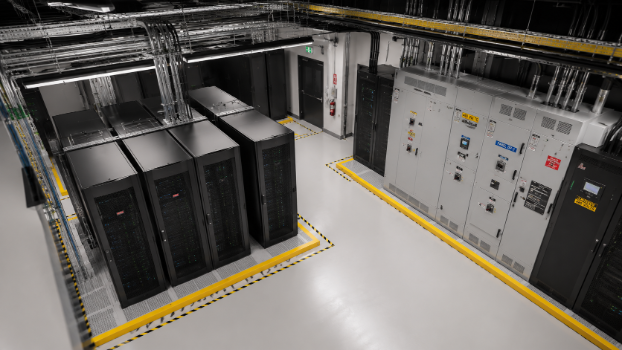
Cooling Systems and Thermal Coordination
Cooling systems are no longer a background mechanical concern. With AI workloads and high-density workloads increasing power density, cooling has become a central coordination issue.
Air cooling, liquid cooling, airflow management, and thermal management all depend on accurate rack layouts, equipment loads, and room conditions. If power changes are not reflected in cooling design quickly, the facility can end up with thermal risk before operations even begin.
Backup Power and Resilience Systems
Backup power protects continuity during outages, but it must be coordinated with real load requirements. UPS systems, backup generators, battery energy storage systems, and BESS strategies need accurate data from the electrical design, redundancy model, and commissioning plan.
A late change in critical load can affect generator sizing, UPS runtime, switchgear logic, and uptime SLAs.
Redundancy, Uptime, and Fault Tolerance
Redundancy is only useful when it is correctly designed, installed, documented, and tested. Uptime depends on more than extra equipment. It depends on coordinated systems that perform under failure conditions.
Understanding N+1, 2N, and 2N+1 Redundancy
N+1 provides one additional component beyond the required capacity. 2N provides a fully mirrored system. 2N+1 adds even more resilience. Each model affects power systems, cooling systems, space, cost, commissioning, and maintenance access.
If teams are not aligned on the redundancy model, they may build a system that looks resilient on paper but behaves differently under load or failure testing.
Tier III and Tier IV Coordination Requirements
Tier III and Tier IV facilities require stronger maintainability and fault tolerance. These environments cannot rely on casual coordination because a missed connection, incomplete bypass path, or undocumented dependency can create a single point of failure.
The higher the tier target, the more important documentation, testing and commissioning, and real-time visibility become.
How Time Lag Creates Uptime Risk
Uptime risk appears when the project cannot trace issues fast enough. A late UPS update, generator sequence change, or cooling conflict may not cause immediate failure, but it can weaken reliability.
Fast root cause analysis and incident response depend on knowing what changed, where it changed, and which systems were affected.
Construction Coordination and the Critical Path
Data center schedules are compressed, and trades often overlap. MEP coordination must happen while procurement, installation, prefabrication, and commissioning plans are already moving.
MEP Coordination Across Dense Building Systems
MEP coordination is difficult because electrical systems, cooling infrastructure, cable trays, ducts, piping, fire protection, and structural supports compete for the same physical space.
A delayed clash update can slow multiple trades. In dense data center corridors, even a small shift can disrupt installation sequencing.
Equipment Lead Times and Late Design Changes
Long equipment lead times make late decisions expensive. UPS systems, backup generators, switchgear, cooling units, and power distribution equipment cannot always be changed quickly once ordered.
This makes early coordination and accurate capacity planning essential to protecting the critical path.
Documentation, Handover, and Version Control
Handover quality depends on accurate documentation. Operations teams need to know what was installed, tested, approved, and changed.
If documentation is scattered, commissioning becomes harder and future troubleshooting becomes slower. Version control is not administrative housekeeping. It is operational protection.
Monitoring, Visibility, and Faster Decision-Making
The solution to coordination delay is not more meetings. It is better infrastructure visibility. Real-time monitoring, DCIM, dashboards, alerts, and performance indicators reduce the gap between issue creation and response.
Real-Time Monitoring and Infrastructure Visibility
Real-time visibility helps teams see changes, system status, and issue ownership sooner. During construction and commissioning, this can prevent stale information from driving field decisions.
DCIM, NOC Dashboards, and Performance Indicators
DCIM platforms and NOC dashboards help track power load, cooling performance, rack densities, alerts, and capacity. These tools become more valuable when they connect infrastructure data to operational decisions.
Root Cause Analysis and Incident Response
When teams can trace changes quickly, root cause analysis improves. Incident response becomes less reactive because teams understand the system history behind the problem.
Technical Depth: Power, Cooling, and Capacity Interdependence
Power, cooling, and capacity cannot be managed as isolated disciplines. Modern data centers are too dense and too dynamic for that.
Power Density and High-Density Workloads
AI workloads and high-density workloads increase rack-level demand. Higher power density requires tighter coordination between power systems, cooling systems, and capacity planning.
Cooling Interaction With Rack Layouts and Workload Changes
Rack layouts directly affect airflow management and thermal management. A late workload change can alter cooling requirements, especially where liquid cooling is introduced.
Power Chain Losses and Efficiency Metrics
Power usage effectiveness, or PUE, depends on how efficiently energy supports IT load. Conversion losses, inefficient cooling, and poor system coordination all increase energy consumption.
Energy Efficiency, Grid Pressure, and Sustainability
Energy efficiency is now a strategic requirement, not a nice-to-have. Data centers must manage energy consumption, grid constraints, peak demand, and carbon footprint while still protecting uptime.
Energy Consumption and PUE
PUE helps measure how efficiently the facility uses energy. Better coordination reduces overprovisioning, unnecessary rework, and inefficient operation.
Renewable Energy, Peak Demand, and Grid Constraints
Renewable energy, demand management, and peak demand planning are becoming central to power strategy. Grid constraints make early infrastructure planning even more important.
Battery Energy Storage Systems and BESS
Battery energy storage systems can support backup power, resilience, peak demand control, and renewable energy integration. But BESS must be coordinated with UPS systems, generators, and load profiles.
Heat Reuse and Carbon Footprint Reduction
Heat reuse is emerging as a sustainability opportunity. It requires strong thermal management, cooling infrastructure planning, and operational coordination.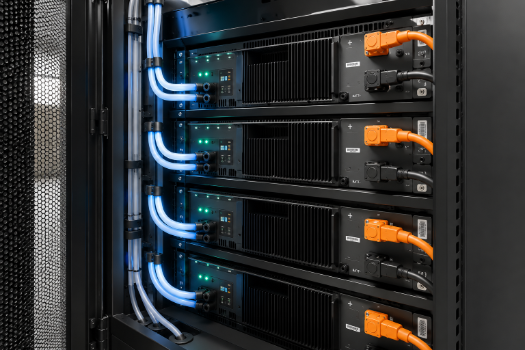
Future Trends in Data Center Coordination
The delay problem will grow as facilities become denser, faster, and more automated. Digital twins, DCIM, predictive monitoring, and automated capacity planning will become central to reducing coordination lag.
Digital Twins and Model-Based Coordination
Digital twins can connect design, construction, commissioning, and operations into a more accurate infrastructure record. Their value depends on keeping model data current and trusted.
Smarter Monitoring and Predictive Response
Predictive monitoring can identify risk before it becomes downtime. Better performance indicators support faster incident response and stronger reliability.
Capacity Planning for AI and High-Density Growth
AI growth will keep increasing demand for power, cooling, and liquid cooling readiness. Capacity planning must account for grid constraints, energy consumption, and future rack densities.
Conclusion: Closing the Visibility Gap Before It Becomes a Project Risk
The delay problem in data center coordination is not just a communication issue. It is a visibility problem across power, cooling, redundancy, backup power, commissioning, monitoring, and sustainability planning. Teams that reduce time lag can protect schedule, improve handover, strengthen uptime confidence, and operate mission-critical infrastructure with fewer surprises.