.png)
Network Systems: The Invisible Layer That Connects Everything
Modern digital infrastructure depends on an unseen but highly engineered layer that quietly orchestrates how data moves, scales, and survives disruption. Network systems are not just about connectivity, they are tightly interwoven with power infrastructure, cooling systems, and operational strategy inside mission-critical environments. In a data center, every packet of data rides on a foundation of electrical stability, thermal balance, and architectural precision. As workloads become more distributed and latency-sensitive, the network becomes the control fabric that ensures performance, uptime, and resiliency across increasingly complex ecosystems.
Understanding Network Systems and Connectivity Foundations
At its core, networking defines how servers, storage, and applications communicate within a data center network and beyond. Connectivity is no longer a simple link between devices, it is a carefully engineered system designed to balance latency, bandwidth, and scalability. High-performance environments depend on predictable data flow, where even microseconds of delay can impact application performance.
Modern infrastructure must support dynamic workloads, meaning network systems are built to scale horizontally. As storage clusters expand and compute nodes increase, the network must maintain consistent throughput without introducing bottlenecks. This requires not only robust physical connectivity but also intelligent traffic management that adapts in real time.
Core Networking Components and Their Roles
Switches, Routers, and Traffic Flow Management
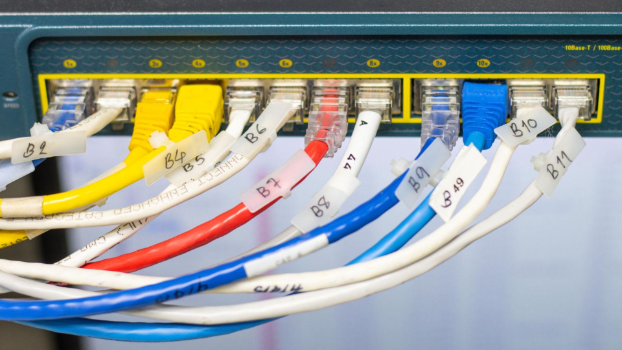
Switches form the backbone of internal communication, enabling high-speed data exchange between servers within the same environment. Routers extend this connectivity externally, managing traffic between networks and ensuring efficient packet delivery. Together, they define how traffic flows through the system, balancing performance and reliability.
Firewalls and Network Security Layers
Firewalls act as the gatekeepers of the network, enforcing security policies and protecting against unauthorized access. In distributed environments, security is embedded into every layer, ensuring that data remains protected even as it moves across virtualized and multi-tenant systems.
Load Balancing and Traffic Prioritization
Load balancing distributes workloads across multiple resources, preventing congestion and maximizing utilization. Traffic prioritization ensures that critical applications receive the bandwidth they require, especially in environments where latency-sensitive workloads coexist with bulk data processing.
Network Architecture Layers and Design Models
Traditional Three-Tier Architecture
The traditional model of core layer, aggregation layer, and access layer provided a structured approach to network design. However, as east-west traffic increased, this architecture introduced latency and scaling limitations.
Spine-and-Leaf Architecture
Spine-and-leaf designs address these challenges by creating a flat, high-performance topology. Every leaf switch connects to every spine, enabling predictable latency and efficient handling of east-west traffic. This architecture inherently supports redundancy and simplifies scaling, making it ideal for modern data center environments.
Advanced Network Virtualization and Overlay Technologies
Underlay vs Overlay Networks
The physical underlay provides the foundational connectivity, while the virtual overlay abstracts network functions, enabling flexibility and rapid deployment. This separation allows operators to scale and modify network behavior without disrupting the underlying infrastructure.
EVPN and VXLAN in Modern Data Centers
Technologies like EVPN and VXLAN enable segmentation and multi-tenancy at scale. They allow workloads to move seamlessly across environments while maintaining consistent network policies, a critical requirement for hybrid and cloud-native architectures.
Virtualization and Network Flexibility
Network virtualization decouples services from hardware, enabling dynamic provisioning and improved resource utilization. This flexibility is essential for supporting workload mobility and evolving application demands.
Control, Data Flow, and Traffic Optimization
Control Plane vs Data Plane
The control plane determines how traffic should flow, while the data plane executes those decisions. Separating these functions allows for greater scalability and more efficient network management.
Equal-Cost Multi-Path (ECMP) and Traffic Distribution
Equal-cost multi-path routing enables traffic to be distributed across multiple paths simultaneously, improving bandwidth utilization and providing built-in redundancy.
Automation and Intent-Based Networking
Automation reduces operational complexity by enabling networks to configure and optimize themselves. Intent-based networking takes this further by aligning network behavior with business objectives, ensuring that infrastructure adapts dynamically to changing demands.
Redundancy, Resiliency, and Uptime Strategies
In mission-critical facilities, uptime is non-negotiable. Redundancy is engineered at every level, from redundant paths in the network to fault-tolerant hardware systems. Resiliency ensures that failures are absorbed without impacting service delivery.
Concurrent maintainability allows systems to be serviced without downtime, while disaster recovery strategies ensure rapid restoration in the event of major disruptions. The tier classification system provides a framework for designing facilities that meet specific uptime requirements, guiding decisions around redundancy and infrastructure investment.
Power Infrastructure and Backup Systems in Networking
Power Systems Supporting Network Operations
Network reliability is directly tied to the stability of power infrastructure. Every switch, router, and server depends on consistent power supply, making electrical design a critical component of network performance.

Backup Power and Continuity Planning
UPS systems provide immediate backup power during outages, bridging the gap until backup generators come online. These systems ensure that network operations continue uninterrupted, even during power disturbances. Efficient power conversion and distribution further enhance reliability and reduce energy loss.
Cooling Systems and Thermal Management
As rack density increases, so does heat output. Effective cooling systems are essential to maintain operational stability and prevent equipment failure. Traditional computer room air conditioning systems are complemented by advanced techniques such as liquid cooling and hot and cold aisle containment.
Thermal strategy plays a key role in optimizing performance, balancing airflow, and managing heat at scale. Proper cooling design directly impacts both equipment longevity and energy efficiency.
Efficiency Metrics and Operational Optimization
Operational efficiency is measured through metrics like power usage effectiveness, which compares total facility power to IT equipment consumption. DCIM platforms provide real-time visibility into energy usage, enabling operators to identify inefficiencies and optimize performance.
Improving efficiency is not just about reducing costs, it is about enhancing reliability and ensuring that infrastructure can scale sustainably.
Scalability, Performance, and High-Speed Infrastructure
High-speed fiber optics enable the rapid movement of data across the network, supporting increasing bandwidth demands. Scalability is achieved through modular design, allowing infrastructure to grow without disrupting existing operations.
Performance optimization focuses on minimizing latency and ensuring consistent throughput, particularly in environments where real-time data processing is critical.
Sustainability and Energy-Efficient Network Design
Sustainability is becoming a central consideration in data center design. Energy efficiency initiatives focus on reducing carbon footprint through renewable energy integration and waste heat recovery.
Sustainable data center design also emphasizes optimizing cooling systems and power infrastructure to minimize environmental impact while maintaining performance.
Future Trends in Network Systems and Innovation
The future of networking is driven by automation, virtualization, and intelligent systems. Intent-based networking and AI-driven optimization are transforming how networks are managed, enabling greater efficiency and adaptability.
As multi-tenancy and workload mobility become standard, network systems must support seamless transitions across environments, ensuring consistent performance and security.
Conclusion: Building Resilient and Future-Ready Network Systems
Network systems are no longer just a layer of connectivity, they are the foundation of modern digital infrastructure. By integrating advanced architectures, robust power systems, and sustainable practices, organizations can build networks that are resilient, efficient, and ready for future demands. The challenge lies in balancing complexity with reliability, ensuring that every component works in harmony to support the invisible layer that connects everything.