
Modeling for Zero Tolerance: BIM in Mission-Critical Facilities
In mission-critical facilities, failure is engineered out long before construction begins. The tolerance for error is effectively zero because even a momentary disruption can cascade into financial loss, operational downtime, or regulatory exposure. This is where BIM evolves beyond coordination into a strategic system for reliability. It allows engineers to model power distribution, cooling interaction, and redundancy pathways with a level of precision that mirrors real-world performance. When applied correctly, BIM becomes the control layer that aligns design intent with operational uptime, ensuring that every component, from UPS systems to airflow paths, functions as part of a cohesive, failure-resistant ecosystem.
Understanding Zero-Tolerance Design in Mission-Critical Facilities
Zero-tolerance design is rooted in the idea that outages are unacceptable, not just unlikely. In a data center, every system is designed around maintaining uptime under both normal and failure conditions. BIM enables this by providing a unified model where power, cooling, and structural systems are coordinated in real time. This reduces ambiguity and ensures that reliability is built into the system rather than verified after the fact.
Role of Reliability and Uptime in Data Center Design
Reliability is quantified through uptime targets, often aligned with Tier standards. Achieving these targets requires layered redundancy and careful load planning. BIM allows engineers to simulate how systems behave under different load conditions, identifying weak points before they manifest in operations. This proactive approach is critical in mission-critical environments where even minor inefficiencies can compromise uptime.
Compliance and Risk Mitigation
Compliance in these facilities is not just regulatory but operational. Systems must perform within strict parameters. BIM supports this by embedding compliance checks directly into the design process. Engineers can validate redundancy, routing, and maintenance access, reducing the risk of non-compliance and ensuring that systems meet both design and operational standards.
Redundancy Modeling Strategies for Continuous Operations
Redundancy is the backbone of mission-critical infrastructure. Without it, reliability cannot be guaranteed. BIM provides the visibility needed to model and validate redundancy strategies across interconnected systems.
N+1 and 2N Architectures in BIM
N+1 and 2N models are standard approaches to redundancy. In an N+1 configuration, additional capacity is built into the system to handle failure scenarios. In a 2N setup, complete duplication ensures full independence. BIM allows these architectures to be visualized spatially, ensuring that redundant systems are not only present but also physically separated to prevent cascading failures.
Backup Systems and Power Supply Continuity
Backup systems, including UPS units, generators, and battery storage, are critical for maintaining power supply during disruptions. BIM enables precise modeling of these systems, including transfer sequences and load distribution. This ensures that transitions between primary and backup systems occur seamlessly, maintaining continuous uptime.
Power Infrastructure and Distribution Systems
Power distribution in a data center is complex, involving multiple layers of transformation, switching, and routing. BIM provides a centralized model where these systems can be coordinated and optimized.
Core Electrical Components in BIM
Key components such as transformers, generators, and UPS systems must be integrated into a cohesive network. BIM allows engineers to model electrical paths, analyze load distribution, and ensure that each component operates within its capacity. This reduces the risk of overload and improves overall efficiency.
Routing and Coordination of Electrical Systems
Routing is often where failures originate. Poorly coordinated electrical pathways can lead to conflicts with mechanical systems or restricted maintenance access. BIM’s clash detection capabilities identify these issues early, allowing for adjustments before construction. This ensures clean routing and long-term maintainability.
Cooling Systems and Thermal Performance Optimization
Cooling systems are directly tied to reliability. As power load increases, so does heat generation. BIM enables the integration of cooling systems with power infrastructure, ensuring balanced performance.
HVAC Systems and Airflow Management
HVAC systems must be designed to maintain consistent airflow across equipment. BIM allows engineers to model airflow patterns, optimizing distribution and preventing inefficiencies. This ensures that cooling capacity aligns with system load.
Identifying and Eliminating Hotspots
Hotspots are a common risk in high-density environments. BIM supports thermal analysis by highlighting areas where cooling is insufficient. Engineers can adjust layouts, airflow, or cooling systems to eliminate these hotspots, improving both reliability and efficiency.
Efficiency and Energy Optimization in BIM
Energy efficiency is increasingly important, not just for cost control but also for sustainability. BIM provides the tools to analyze and optimize energy usage across systems.
Load Management and Energy Efficiency
Effective load management ensures that power is distributed evenly, reducing strain on individual components. BIM enables detailed analysis of load patterns, allowing engineers to optimize energy consumption without compromising uptime.
Cooling Efficiency and System Integration
Cooling efficiency depends on how well systems are integrated. BIM allows for the coordination of cooling systems with power infrastructure, reducing energy waste. Continuous monitoring of performance further enhances efficiency.
Monitoring, Digital Twin, and Operational Intelligence
Modern facilities require real-time insight into system performance. BIM serves as the foundation for digital twin environments, bridging design and operations.
Digital Twin for Real-Time Visibility
A digital twin extends the BIM model into live operations, providing real-time visibility into system performance. This allows operators to track energy usage, airflow, and equipment status, improving decision-making.
Monitoring Systems and Predictive Maintenance
Monitoring systems collect data from across the facility, enabling predictive maintenance strategies. By identifying trends and anomalies, engineers can address issues before they lead to failures, reducing downtime and improving reliability.
Maintenance Planning and Facility Management
Long-term performance depends on effective maintenance planning and facility management. BIM provides the data structure needed to support these activities.
Facility Management Integration
BIM models can be integrated into facility management systems, providing a centralized source of information. This improves operational efficiency and ensures that maintenance activities are aligned with system requirements.
Maintenance Planning for Reliability
Maintenance planning must balance operational demands with system longevity. Predictive maintenance strategies, supported by monitoring data, allow for targeted interventions that minimize disruption and maintain uptime.
Prefabrication, Coordination, and Constructability
Constructability is critical in mission-critical projects, where errors can have significant consequences. BIM enhances coordination and supports prefabrication strategies.
Prefabrication for Speed and Accuracy
Prefabrication reduces on-site complexity and improves installation accuracy. BIM ensures that prefabricated components fit seamlessly into the overall system, reducing delays and errors.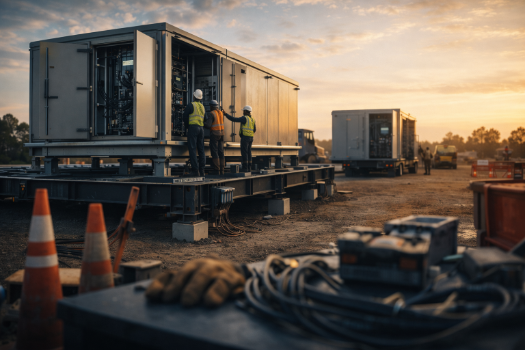
Clash Detection and System Coordination
Clash detection is essential for identifying conflicts between systems. By resolving these issues in the design phase, BIM ensures smooth construction and reliable operation.
Sustainability and Future-Ready Infrastructure
Sustainability is becoming a key consideration in data center design. BIM supports the integration of sustainable practices without compromising performance.
Renewable Energy Integration
Renewable energy sources can be incorporated into the power supply, reducing reliance on traditional energy. BIM allows for the modeling of these systems, ensuring compatibility with existing infrastructure.
Carbon Footprint and Environmental Impact
Reducing carbon footprint requires a holistic approach to design and operation. BIM enables the analysis of energy usage and system efficiency, supporting more sustainable outcomes.
Future Trends in BIM for Mission-Critical Facilities
The role of BIM continues to evolve, driven by advances in technology and increasing demands for reliability.
Advanced Analytics and Automation
Automation and advanced analytics are enhancing BIM’s capabilities, enabling more accurate predictions and optimized system performance. This supports continuous improvement in efficiency and reliability.
The Next Phase of Zero-Tolerance Modeling
The future of BIM in mission-critical facilities lies in fully integrated systems that combine design, construction, and operations. As digital twin technology matures, BIM will become the central platform for managing uptime, efficiency, and sustainability in real time.
Conclusion
Modeling for zero tolerance is not just a design philosophy but an operational necessity. BIM provides the framework to achieve this by integrating redundancy, power distribution, cooling systems, and monitoring into a unified model. As mission-critical facilities continue to evolve, the ability to design, simulate, and manage systems with precision will define success.