
How BIM Improves Sequencing in Data Center Construction
Data center construction leaves no room for sequencing errors. Every cable tray, UPS module, chilled water loop, and switchgear lineup must be installed in a precise order to protect uptime and avoid costly rework. In this environment, BIM is not just a design tool, it becomes a sequencing engine. By linking models, schedules, and field execution, BIM enables teams to visualize construction before it happens, align trades, and execute complex installations with confidence. The result is faster timelines, reduced risk, and a more predictable path to commissioning.
Understanding BIM-Driven Sequencing in Data Center Construction
What is Construction Sequencing in BIM
Construction sequencing in BIM connects geometry with time, transforming static models into dynamic workflows. Through 4D BIM and 4D scheduling, teams link every component to the project schedule, enabling visualization of installation sequencing across phases. This approach supports 4D look-ahead planning, where upcoming tasks are analyzed in advance to identify conflicts, optimize logistics, and refine timelines before field execution begins.
Why Sequencing is Critical for Data Centers
Sequencing in data centers directly impacts uptime and system reliability. With dense electrical and mechanical systems, even minor misalignment in phasing can lead to rework or delays in energization. Fast-track construction schedules demand parallel execution, where sequencing must account for overlapping trades without compromising safety or access. BIM allows teams to coordinate these dependencies, ensuring construction sequencing aligns with operational priorities.
Role of BIM in Improving Project Scheduling and Execution
4D BIM and Schedule Optimization
4D BIM enhances the project schedule by making timelines visual and actionable. Teams can simulate installation sequences, adjust phasing, and evaluate the impact of changes on delivery. This reduces uncertainty and supports faster decision-making. By optimizing sequencing, BIM contributes to improved speed to market while maintaining control over construction timelines.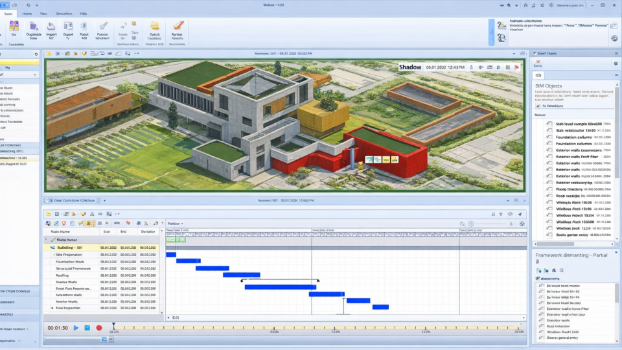
Logistics Planning and Workflow Coordination
Logistics becomes increasingly complex in mission-critical environments. BIM integrates routes, access zones, and material flow into the model, allowing teams to plan installation paths and staging areas. This reduces congestion and ensures efficient coordination between trades. By aligning logistics with sequencing, BIM minimizes disruptions and improves workflow continuity.
Coordination and Clash-Free Execution
BIM Coordination and Federated Models
A federated model brings together architectural, structural, and MEP systems into a single coordinated environment. Through BIM coordination meetings, teams review system interactions and validate constructability. This collaborative approach ensures that all disciplines align, reducing downstream conflicts and improving sequencing accuracy.
Clash Detection and Design Validation
Clash detection is central to sequencing efficiency. Identifying clashes early eliminates RFIs and prevents rework in the field. A clash-free model ensures proper clearances, maintenance access, and routing of systems such as cable trays and chilled water piping. Design validation through BIM confirms that systems can be installed in the planned sequence without interference.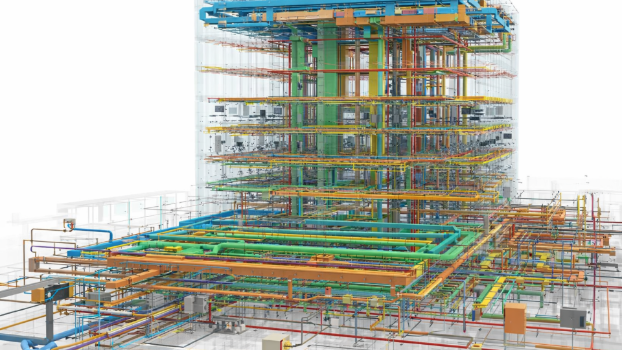
Prefabrication and Modular Construction Integration
Model-Driven Prefabrication Strategies
Model-driven prefabrication allows fabrication teams to extract precise data directly from BIM models. This ensures tight tolerances and consistent quality across components. Digital-to-factory pipelines streamline production, enabling offsite fabrication of systems such as electrical skids and MEP racks. This reduces on-site labor and improves overall efficiency.
Modular Systems and Installation Sequencing
Modular prefabrication supports plug-and-play installation, where prefabricated modules are delivered and installed in sequence. This enables parallel workflows, reducing overall construction duration. BIM ensures that modules fit seamlessly into the design, aligning installation sequencing with project timelines.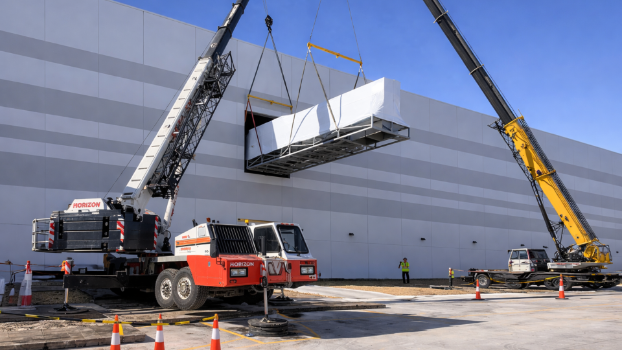
Electrical Infrastructure and Sequencing Complexity
Power Distribution Systems in BIM
Electrical systems in data centers are highly complex, involving MV/LV switchgear, busways, PDU/RPP layouts, and cable trays. BIM provides a detailed representation of these systems, allowing teams to plan installation sequences that minimize conflicts. Integration of generators, UPS systems, and batteries ensures that all components are aligned within the overall electrical architecture.
Redundancy Models and Uptime Assurance
Redundancy models such as N+1, 2N, and 2N+1 are critical for maintaining uptime. BIM enables visualization of fault-tolerant power chains, including dual power feeds and backup generator configurations. Sequencing must account for these redundancies, ensuring that critical systems remain operational during installation and commissioning.
Cooling Systems and Thermal Coordination
Cooling Infrastructure Modeling
Cooling systems, including CRAC, CRAH, and chilled water networks, are integral to data center performance. BIM models these systems in detail, capturing chilled water piping, airflow paths, and equipment placement. This allows teams to coordinate installation sequencing with other trades.
Airflow Management and Thermal Optimization
Airflow management is essential for preventing thermal hotspots. BIM supports the design of hot and cold aisles, containment strategies, and cooling layouts. CFD analysis enables validation of airflow performance, ensuring cooling efficiency. Proper sequencing ensures that airflow pathways are not obstructed during construction, maintaining system performance.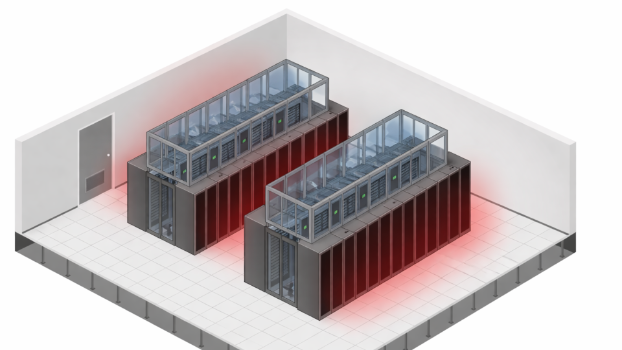
Commissioning, Handover, and Operational Readiness
Commissioning and Systems Testing
Commissioning validates that all systems function as intended. BIM supports the commissioning pipeline by providing accurate data for integrated systems testing. Sequencing plays a critical role here, ensuring that systems are installed and tested in the correct order to achieve operability.
Digital Twin and Asset Management
The BIM model evolves into a digital twin, providing asset data for operations and maintenance. This supports facility management and enables efficient handover. Structured data formats such as COBie ensure that information is accessible for long-term use.
Operations, Maintenance, and Lifecycle Efficiency
Facility Operations and Monitoring Systems
Integration with EPMS/BMS, CMMS, and DCIM platforms allows real-time monitoring of systems. BIM supports this integration by providing accurate asset data, improving operational efficiency and enabling proactive management of infrastructure.
Maintenance and Change Management
Maintenance planning benefits from BIM through improved visibility of systems and access points. Change control processes are supported by accurate models, reducing risk during modifications. This improves MTTR and supports scalability as data center demands evolve.
Energy Efficiency, Sustainability, and Performance Metrics
Energy Modeling and Performance Optimization
Energy modeling within BIM helps optimize energy consumption and improve efficiency. Metrics such as Power Usage Effectiveness (PUE) are used to evaluate performance. BIM enables teams to simulate different scenarios and identify opportunities for improvement.
Sustainability and Carbon Reduction
Sustainability is increasingly important in data center construction. BIM supports carbon reduction by optimizing resource use and reducing waste. This improves ROI while aligning with environmental goals.
Future Trends in BIM for Data Center Construction
Advanced Technologies and Digital Transformation
Digital twin technology and AI-driven BIM workflows are transforming sequencing and construction planning. Automation and real-time data integration enable more accurate decision-making and improved coordination.
Scaling for Next-Generation Data Centers
As data centers scale, BIM supports modular expansion and scalability. Advanced planning tools enable faster deployment, improving speed to market and ensuring that infrastructure can adapt to future demands.
Conclusion: BIM as the Backbone of Efficient Data Center Sequencing
BIM fundamentally changes how sequencing is approached in data center construction. By integrating design, scheduling, and execution, it reduces rework, improves coordination, and ensures reliable system performance. From electrical redundancy to cooling optimization and digital twin integration, BIM aligns construction processes with long-term operational goals, making it an essential tool for delivering modern, high-performance data centers.